
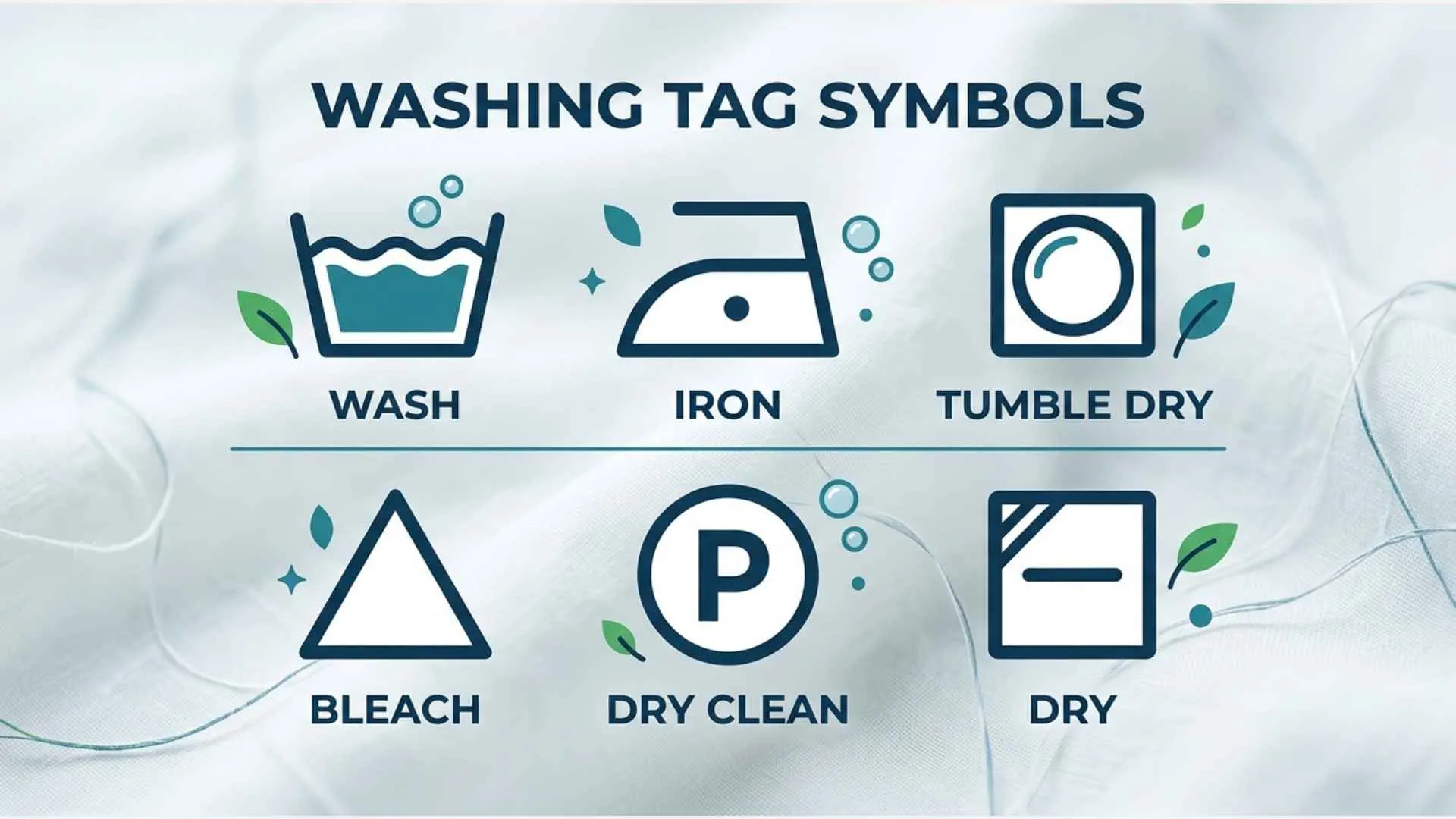
Washing tag symbols may look like simple little icons, but they provide important instructions for keeping your clothes clean, fresh, and in good condition. These symbols tell you whether a garment can be machine washed, hand washed, bleached, tumble dried, ironed, or dry cleaned. Learning what they mean can help you avoid shrinking, fading, stretching, or damaging your favorite clothes.
Every symbol on a clothing care label has a specific purpose. A wash tub, for example, gives information about washing, while a square usually relates to drying and an iron symbol explains ironing instructions. Small lines, dots, numbers, and crosses can change the meaning of these symbols, so understanding these details makes laundry care much easier.
Whether you’re washing a new shirt, delicate sweater, jeans, bedding, or expensive clothing, checking the care label before doing laundry is a smart habit. In this guide, we’ll explain the most common washing tag symbols, what each one means, and how to follow the instructions correctly so your clothes can stay cleaner, safer, and last longer..
Quick Answer
Washing tag symbols are standardized care icons found on clothing labels that explain how to wash, dry, bleach, iron, and dry-clean garments. They help prevent fabric damage by giving clear, universal instructions that anyone can follow regardless of language.
Quick Facts About Washing Tag Symbols
| Aspect | Information |
| Origin | Developed in mid-20th century textile industry standards |
| Historical Significance | Created to reduce clothing damage and unify global care instructions |
| Main Meaning | Guidance for washing, drying, ironing, and fabric care |
| Spiritual Meaning | Represents order, cleanliness, and renewal |
| Cultural Importance | Universal system used across global fashion industries |
| Modern Usage | Found on all mass-produced clothing worldwide |
What Are Washing Tag Symbols?
Washing tag symbols are standardized pictograms printed on clothing care labels to guide users on how to properly maintain garments. These symbols represent instructions such as machine wash, hand wash, bleach usage, drying methods, and ironing temperatures.
The system became widely standardized in the mid-1900s as global textile production increased. Different countries originally used written instructions, but language barriers created confusion. To solve this, organizations like GINETEX in Europe and ISO (International Organization for Standardization) developed universal visual symbols.
Over time, these symbols became a silent global language of clothing care. Whether you buy a shirt in Tokyo, London, or Lahore, the same basic symbols help you understand how to treat it properly.
Deep Symbolic Meaning of Washing Tag Symbols
Although they are practical, washing tag symbols also carry deeper meanings when viewed through psychological and cultural lenses.
Spiritual Level
At a symbolic level, washing tags represent purification and renewal. Washing clothes has always been linked to cleansing energy in human culture. Water symbolism often represents emotional cleansing, rebirth, and new beginnings.
So when you see a washing symbol, it can be seen as a reminder of renewal and letting go of wear and tear, both physically and emotionally.
Psychological Level
Psychologically, these symbols reduce anxiety and decision fatigue. Humans naturally seek patterns and guidance systems. Washing symbols act like cognitive shortcuts that simplify complex decisions.
They also reflect our need for order and control in daily life. A small icon telling us what to do gives a sense of safety and predictability.
Cultural Level
Culturally, washing symbols represent globalization. They are one of the few truly universal communication systems in fashion. They reflect shared human needs such as cleanliness, hygiene, and preservation of resources.
Different cultures may interpret cleanliness differently, but the underlying value remains the same.
Types and Variations of Washing Tag Symbols
1. Washing Symbol (Tub Icon)
- Visual: A small tub filled with water
- Meaning: Machine or hand wash instructions
- Symbolism: Purity and cleansing
- Where It Appears: Everyday clothing, uniforms, textiles
2. Bleaching Symbol (Triangle)
- Visual: Simple triangle shape
- Meaning: Whether bleach is allowed
- Symbolism: Chemical transformation and purification
- Found In: White garments, linens
3. Drying Symbol (Square)
- Visual: Square with different inner markings
- Meaning: Tumble dry or air dry instructions
- Symbolism: Natural balance and energy flow
4. Ironing Symbol (Iron Icon)
- Visual: Iron shape with dots
- Meaning: Heat level for ironing
- Symbolism: Refinement and finishing touch
5. Dry Cleaning Symbol (Circle)
- Visual: Circle icon
- Meaning: Professional cleaning required
- Symbolism: External care and expertise
Each symbol works together like a complete instruction system, forming a full care language for fabrics.
Washing Tag Symbols Across Different Cultures
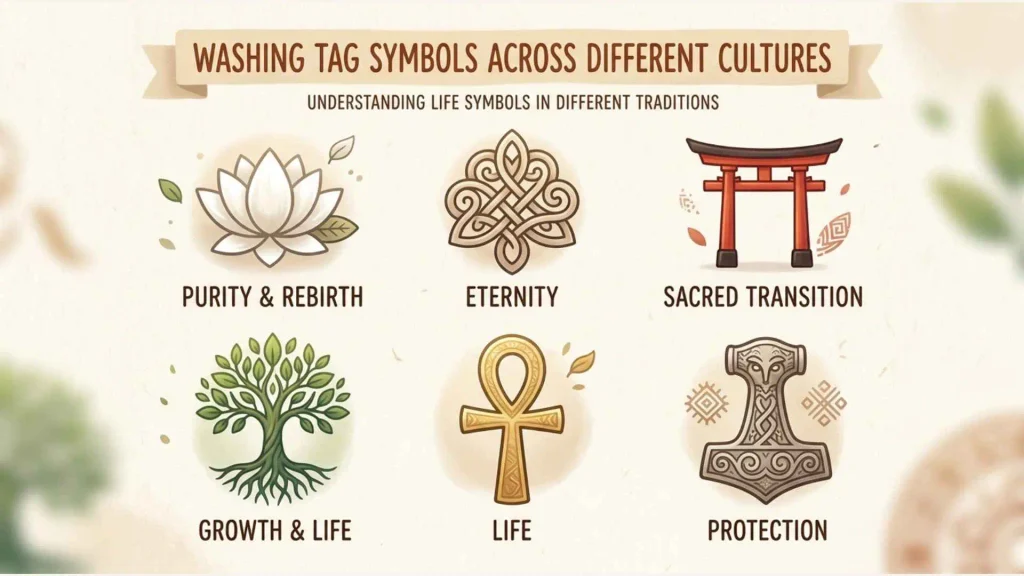
Ancient Egypt
While modern symbols did not exist, Egyptians valued linen purity. Clothes were washed in the Nile, symbolizing spiritual cleanliness.
Ancient Greece
Greeks associated clean garments with honor and social status. Washing was tied to ritual purity in temples.
Roman Culture
Romans used public laundries called fullonicae. Clean clothing symbolized citizenship and discipline.
Eastern Traditions
In many Asian cultures, washing clothes was linked with balance, harmony, and energy flow, especially in water-centered philosophies.
Indigenous Traditions
Some indigenous cultures treated washing as a ritual of renewal, where water carried away negative energy.
Modern Interpretation
Today, washing symbols unify all these ideas into a simple global system of care and responsibility.
Similar Symbols and Their Meanings
| Symbol Type | Similarity | Difference |
| Road Signs | Both provide instructions | Road signs control movement, washing symbols control fabric care |
| Medical Icons | Both ensure safety | Medical symbols protect health, washing symbols protect clothing |
| Recycling Symbols | Both promote sustainability | Recycling focuses on waste, washing focuses on fabric longevity |
Washing Tag Symbols in Mythology and Folklore
In mythology, water has always symbolized purification. In Hindu traditions, sacred rivers like the Ganges represent spiritual cleansing. In Greek mythology, water gods like Poseidon represent life force and transformation.
Washing clothing can be metaphorically linked to the idea of “washing away the old self” and renewing identity. Folklore often uses clean garments to represent moral purity and rebirth.
Washing Tag Symbols in Art, Literature, Movies, and Pop Culture
In literature, clean clothing often symbolizes innocence or new beginnings. In movies, a character changing into clean clothes often represents transformation or redemption.
In fashion photography, care labels are sometimes highlighted to show authenticity and craftsmanship. Even in modern streetwear culture, visible tags have become symbolic of brand identity.
Artists sometimes use washing symbols to comment on consumerism and mass production, turning practical icons into visual metaphors.
Spiritual and Dream Meaning of Washing Tag Symbols
Dream Meaning
Seeing washing symbols in dreams may suggest emotional cleansing or life organization. It can indicate a need to “clean up” thoughts or relationships.
Meditation Symbolism
In mindfulness interpretations, washing symbols represent letting go of emotional clutter and restoring inner balance.
Positive Messages
- Renewal of energy
- Emotional clarity
- Fresh beginnings
Cautionary Messages
- Over-cleansing emotions
- Fear of imperfection
- Need for control
Positive and Negative Meanings of Washing Tag Symbols
| Positive Meaning | Negative Meaning |
| Cleanliness and order | Overthinking daily tasks |
| Protection of clothing | Fear of making mistakes |
| Structure and guidance | Dependence on instructions |
| Sustainability awareness | Anxiety about perfection |
Why Humans Are Attracted to Washing Tag Symbols
Humans are naturally drawn to symbols because the brain processes images faster than text. Washing symbols reduce complexity into simple visual instructions.
From a psychological view, they provide:
- Pattern recognition satisfaction
- Cognitive ease
- Trust in authority systems
- Reduced decision stress
They also represent control in a chaotic world, where even something as simple as laundry becomes structured and predictable.
Modern Uses of Washing Tag Symbols
Today, washing tag symbols are not just functional. They appear in:
- Fashion branding and luxury clothing
- Minimalist design aesthetics
- Social media posts about clothing care
- Educational content for sustainability
- Eco-friendly fashion movements
- Textile industry packaging
Some designers even incorporate these symbols into artwork and clothing prints as a statement about modern consumer culture.
Interesting Facts About Washing Tag Symbols
- They are based on international ISO standards.
- Most people ignore at least one symbol when doing laundry.
- The symbols are designed to be understood without language.
- Incorrect washing is one of the top reasons clothes are discarded early.
- Some luxury brands simplify or redesign tags for aesthetic appeal.
- The symbols have remained mostly unchanged for decades.
- They are part of sustainability efforts to reduce textile waste.
Frequently Asked Questions
1. What do washing tag symbols mean?
They are visual instructions on clothing labels that explain how to wash, dry, iron, and care for garments properly.
2. Why are washing symbols important?
They prevent fabric damage, extend clothing life, and help maintain color and texture.
3. Who created washing tag symbols?
They were developed by international textile organizations like ISO and GINETEX.
4. Are washing symbols the same worldwide?
Yes, most countries follow standardized versions of the same core symbols.
5. What happens if I ignore washing symbols?
Clothes may shrink, fade, or get damaged due to improper care.
Conclusion
Washing tag symbols are more than laundry instructions. They are a universal language of care, preservation, and responsibility.
They connect modern fashion with ancient ideas of cleanliness and renewal.
Understanding them helps protect your clothes and reduces waste in everyday life.
In a simple way, they remind us that even small details carry meaning and importance in life.
 Sarah Thompson
 Michael Rivera