
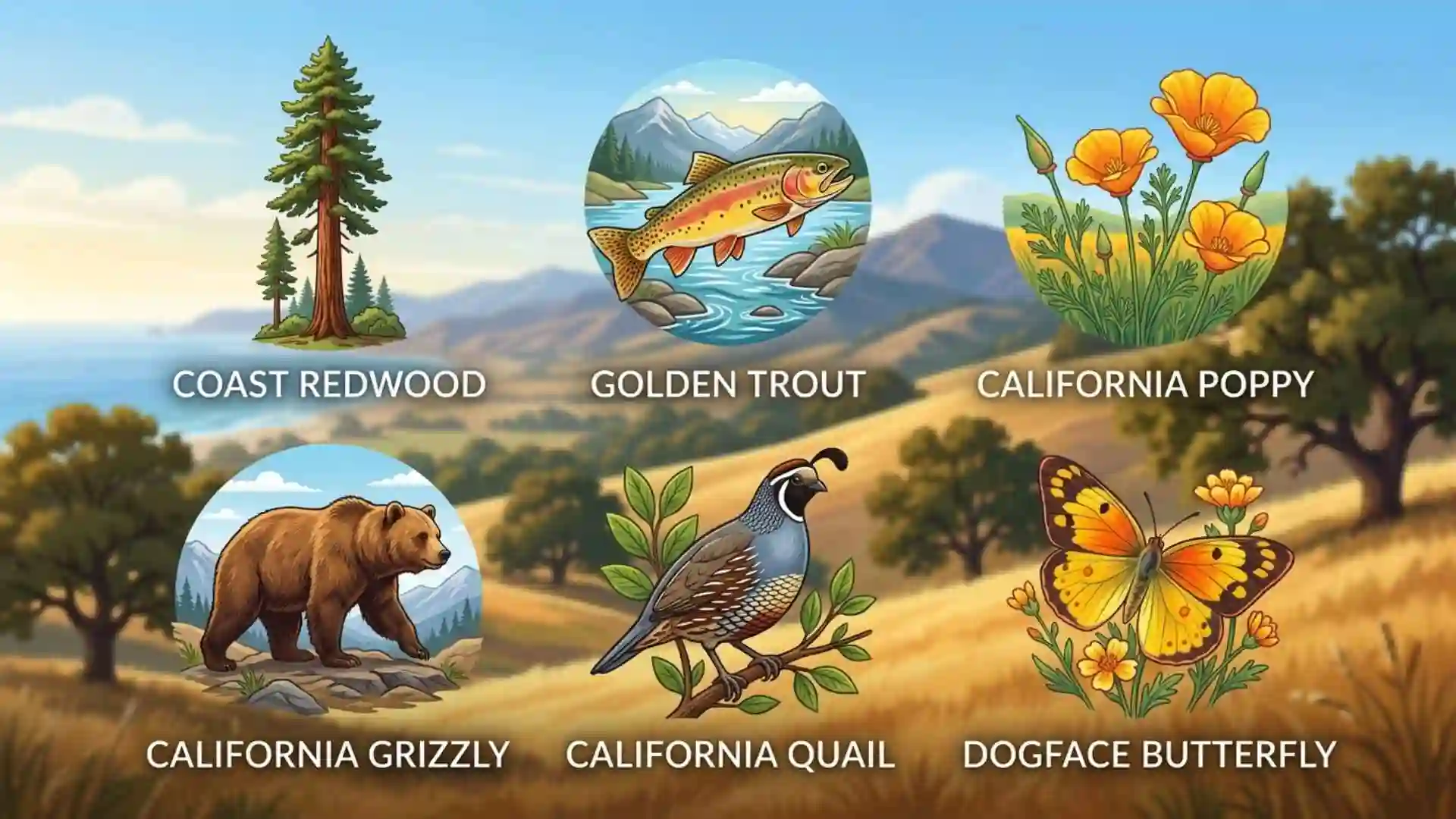
California is known for its diverse landscapes, rich history, and strong cultural identity, and its official state symbols reflect that heritage. From the California poppy and grizzly bear to the state flag, bird, tree, and mineral, each symbol represents an important part of California’s natural environment, history, or traditions. Together, these symbols help tell the story of the Golden State.
California state symbols were adopted at different points in the state’s history, often to recognize something that people felt represented California’s character. Some symbols celebrate the state’s wildlife and natural beauty, while others connect to its agriculture, geography, Native heritage, or historical development. Understanding when and why these symbols were chosen makes them more meaningful than simply being official emblems.
In this complete guide to California state symbols, you’ll discover the history, meaning, and cultural importance behind California’s most recognized official symbols. Whether you are a student, teacher, California resident, traveler, or simply interested in American state symbolism, this guide provides a simple way to explore what each symbol represents and why it continues to matter today.
Quick Answer: What Are California State Symbols?
California state symbols are official emblems, plants, animals, objects, and traditions recognized by the state government to represent California’s history, culture, environment, and values. They include the state flag, flower, bird, tree, animal, mineral, and many other symbols connected to California’s identity.
Quick Facts About California State Symbols
| Aspect | Information |
| Origin | Many California state symbols were officially adopted during the 19th and 20th centuries |
| Historical Significance | They represent California’s natural resources, history, independence, and cultural development |
| Main Meaning | Pride, strength, diversity, beauty, and connection to nature |
| Spiritual Meaning | Harmony with the land, resilience, renewal, and transformation |
| Cultural Importance | They unite Californians through shared heritage and traditions |
| Modern Usage | Used in education, government, tourism, art, branding, and celebrations |
What Are California State Symbols?
California state symbols are official representations chosen to reflect the unique character of the state. These symbols help people understand what makes California different from other regions of the United States.
California became the 31st U.S. state in 1850 during the period known as the California Gold Rush. The rapid growth that followed created a need for shared symbols that represented independence, opportunity, and the natural richness of the region.
Over time, California selected symbols connected to its landscapes, wildlife, agriculture, and history. Many of these symbols highlight the relationship between humans and the environment.
For example, the California grizzly bear became a powerful symbol of strength and independence. Although grizzly bears no longer live in the wild in California, the animal remains a lasting reminder of the state’s wilderness heritage and appears on the California state flag.
The California state symbols also reflect the state’s agricultural importance, including the golden poppy, which represents beauty and resilience, and the redwood tree, which represents longevity and endurance.
Deep Symbolic Meaning of California State Symbols
Spiritual Meaning of California State Symbols
California state symbols often carry spiritual meanings connected to nature, growth, and transformation.
The golden poppy, for example, represents renewal because it returns every spring with bright orange flowers across California landscapes. It symbolizes hope, optimism, and the ability to flourish after difficult seasons.
The giant redwood tree represents wisdom and connection. These ancient trees can live for thousands of years, reminding people of patience, strength, and the importance of protecting nature.
The state’s symbols create a spiritual connection between people and the land. They remind Californians that identity is not only built through cities and technology but also through mountains, forests, oceans, and deserts.
Psychological Meaning of California State Symbols
From a psychological perspective, symbols help people create emotional connections with places.
Psychologist Carl Jung explained that symbols often represent shared human experiences and collective memories. California’s symbols work in a similar way by creating feelings of belonging and pride.
The bear represents courage and independence. The poppy represents joy and possibility. The redwood represents stability and endurance.
These images become mental reminders of values people admire and want to preserve.
Cultural Meaning of California State Symbols
California’s symbols reflect the many communities that have shaped the state. Native American cultures, Spanish influence, Mexican heritage, immigrant communities, and modern innovation have all contributed to California’s identity.
The symbols connect past generations with present-day residents by preserving stories about the land, people, and experiences that define California.
Types and Variations of California State Symbols
California State Flag
Visual Description:
The California state flag features a white background, a red stripe along the bottom, a red star, and a California grizzly bear walking on green grass.
Meaning:
The bear represents strength, courage, and independence. The star symbolizes sovereignty and the state’s history of self-rule.
Symbolism:
The flag reflects California’s struggle for independence during the Bear Flag Revolt of 1846.
Cultural Connection:
The flag is one of the strongest symbols of California pride and appears at government buildings, schools, sporting events, and celebrations.
Where It Appears:
Government offices, historical sites, merchandise, art, and public events.
California Golden Poppy
Visual Description:
A bright orange flower with delicate petals that grows throughout California.
Meaning:
The golden poppy represents beauty, hope, and resilience.
Symbolism:
Its ability to grow in dry conditions represents strength and adaptation.
Cultural Connection:
The flower has been California’s official state flower since 1903.
Where It Appears:
Gardens, artwork, educational materials, tourism campaigns, and environmental projects.
California Grizzly Bear
Visual Description:
A large brown bear featured on the state flag.
Meaning:
Strength, independence, and protection.
Symbolism:
The bear reflects California’s wild landscapes and frontier history.
Cultural Connection:
The grizzly was an important part of early California history before disappearing from the state in the early 20th century.
Where It Appears:
The state flag, government symbols, museums, and historical references.
Coast Redwood Tree
Visual Description:
A massive evergreen tree with a tall, reddish trunk.
Meaning:
Longevity, wisdom, and natural power.
Symbolism:
Redwoods represent endurance because they survive for centuries.
Cultural Connection:
Native communities have long valued these forests for resources, traditions, and spiritual connections.
Where It Appears:
Northern California forests, conservation areas, literature, and environmental movements.
California Quail
Visual Description:
A small bird with a curved black plume on its head.
Meaning:
Community, cooperation, and adaptability.
Symbolism:
Quails often move together in groups, representing connection and social bonds.
Cultural Connection:
The quail became California’s official state bird in 1931.
Where It Appears:
Wildlife education, nature programs, and conservation efforts.
California State Symbols Across Different Cultures
Native American Traditions
Before California became a state, Indigenous peoples had deep relationships with the land and its natural symbols.
Many Native California cultures viewed animals, plants, and landscapes as meaningful parts of life rather than simple resources. The redwood forests, rivers, and wildlife carried spiritual and cultural importance.
Ancient Egyptian Connections
Ancient Egypt often used animals and natural elements as symbols of power and spiritual meaning. While California state symbols are not directly Egyptian, similar ideas appear through the use of animals and plants to represent protection, renewal, and strength.
For example, the bear’s symbolism of power connects with the broader human tradition of using animals as representations of courage.
Ancient Greek Influence
Ancient Greeks connected plants and animals with mythology and human qualities. The olive tree represented peace and wisdom, while animals such as lions represented bravery.
California’s poppy and redwood carry similar symbolic roles by representing beauty, endurance, and harmony with nature.
Roman Culture
Romans used symbols on flags, coins, and public buildings to communicate identity and authority.
California’s state flag follows this ancient tradition by using imagery to express independence and shared values.
Eastern Traditions
Many Eastern philosophies emphasize balance between humans and nature. California’s environmental symbols, especially the redwood tree, reflect ideas of harmony, patience, and respect for the natural world.
Modern Interpretations
Today, California state symbols represent more than government identity. They appear in environmental movements, tourism, education, and personal expressions of state pride.
Similar Symbols and Their Meanings
| Symbol | Similar Symbol | Similarity | Difference |
| Grizzly Bear | Eagle | Both represent strength and freedom | Bear focuses more on wilderness and independence |
| Golden Poppy | Rose | Both represent beauty | Poppy represents resilience and California identity |
| Redwood Tree | Oak Tree | Both symbolize endurance | Redwood emphasizes ancient forests and longevity |
| State Flag | National Flags | Both represent identity | California’s flag focuses on state history |
A common misunderstanding is that symbols have only one meaning. In reality, symbolism changes depending on historical, cultural, and personal perspectives.
California State Symbols in Mythology and Folklore
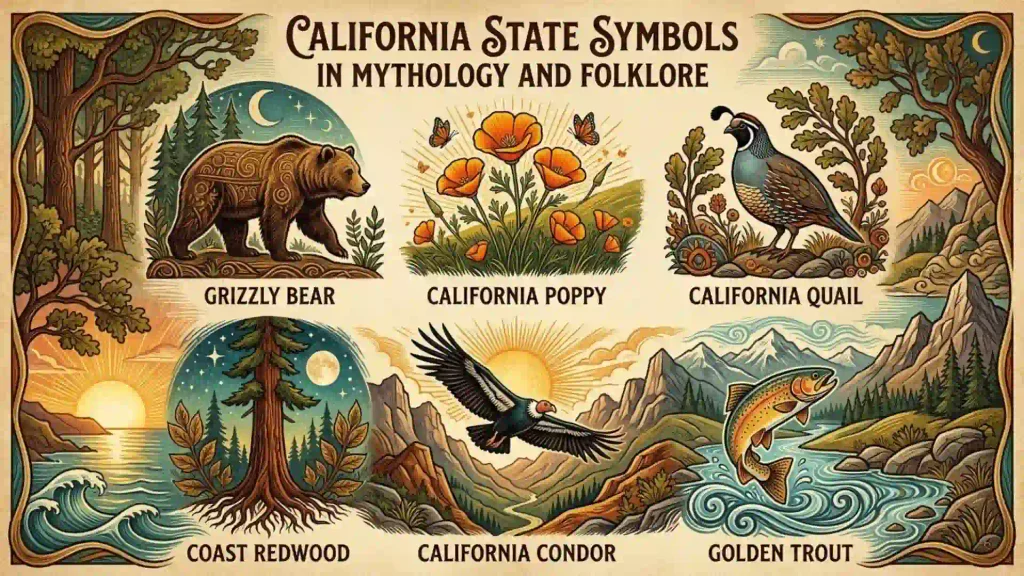
Although California state symbols are not based on traditional mythology like Greek or Norse legends, many have developed their own stories.
The California grizzly bear became connected to tales of wilderness and frontier independence. During the Bear Flag Revolt, settlers used the bear as a symbol of resistance and self-determination.
The redwood forests have inspired countless stories about ancient landscapes and the relationship between humans and nature. Indigenous legends throughout California often include animals, mountains, and natural features as meaningful beings.
These stories continue to shape how people emotionally understand California today.
California State Symbols in Art, Literature, Movies, and Pop Culture
California symbols appear throughout American culture.
The golden poppy appears in paintings, photography, and travel advertisements because it represents California’s sunny landscapes.
The redwood forests have inspired writers, filmmakers, and environmental artists. Their enormous size creates a feeling of mystery and wonder.
The grizzly bear appears in sports logos, historical artwork, and California-themed products. It has become an instantly recognizable image of the state.
Modern tattoos, clothing designs, jewelry, and home decorations often use California symbols to express pride, memories, and personal connections.
Spiritual and Dream Meaning of California State Symbols
Dreams involving California state symbols can have different interpretations depending on the person’s experiences.
A bear in a dream may represent courage, protection, or personal strength.
A flower such as the golden poppy may symbolize new beginnings, happiness, or emotional healing.
A tree may represent growth, stability, family connections, or a desire for deeper roots.
Spiritually, these symbols often encourage people to respect nature, embrace change, and recognize their own inner strength.
Positive and Negative Meanings of California State Symbols
| Positive Meaning | Negative Meaning |
| Strength | Aggression |
| Beauty | Fragility |
| Independence | Isolation |
| Growth | Change and uncertainty |
| Protection | Fear of loss |
A symbol can represent both positive and negative ideas because human experiences are complex. Strength can become stubbornness, and independence can become loneliness.
Why Humans Are Attracted to California State Symbols
Humans naturally connect with symbols because they turn ideas into images.
A simple picture of a bear can represent courage. A flower can represent hope. A tree can represent generations of history.
California state symbols create emotional connections because they remind people of experiences, memories, and shared values.
They also help people feel connected to a larger community. A person wearing a California poppy design may be expressing love for nature, memories of home, or admiration for the state’s culture.
Modern Uses of California State Symbols
California state symbols continue to appear in many areas of modern life.
Tattoos and Jewelry
People often choose California symbols as personal reminders of home, adventure, freedom, or important memories.
Fashion and Design
California imagery appears on clothing, accessories, posters, and artwork because these symbols are widely recognized.
Branding
Businesses often use California-related imagery to communicate ideas of quality, innovation, nature, and lifestyle.
Social Media
People use California symbols online to express travel experiences, state pride, and personal identity.
Home Decor
Artwork featuring poppies, bears, beaches, and redwood forests helps bring California’s natural beauty into living spaces.
Interesting Facts About California State Symbols
- The golden poppy became California’s official state flower in 1903.
- The California grizzly bear on the state flag represents a species that no longer exists in the wild within California.
- California’s state tree, the coast redwood, includes some of the tallest trees on Earth.
- The California quail became the official state bird in 1931.
- The Bear Flag Revolt influenced the design of California’s state flag.
- California has one of the most diverse collections of official state symbols in the United States.
- Many California symbols highlight environmental conservation and protection.
Frequently Asked Questions
What is California’s most famous state symbol?
The California grizzly bear and the golden poppy are among the most recognizable California state symbols.
Why is the golden poppy a California symbol?
The golden poppy represents beauty, resilience, and the natural landscapes of California.
What does the California bear symbolize?
The California bear symbolizes strength, independence, courage, and the state’s historical identity.
What tree represents California?
The coast redwood is California’s official state tree and represents endurance and natural beauty.
Why are state symbols important?
State symbols preserve history, create cultural connections, and help people understand shared values.
Conclusion
California state symbols are more than official images. They are powerful reminders of history, nature, and human connection. Each symbol carries stories of resilience, independence, beauty, and belonging.
From the golden poppy fields to the ancient redwood forests, these symbols represent the spirit of a state shaped by diversity and dreams. They continue to inspire generations by showing how a place can become part of a person’s identity and heart.
 John Mercer
 Michael Rivera