
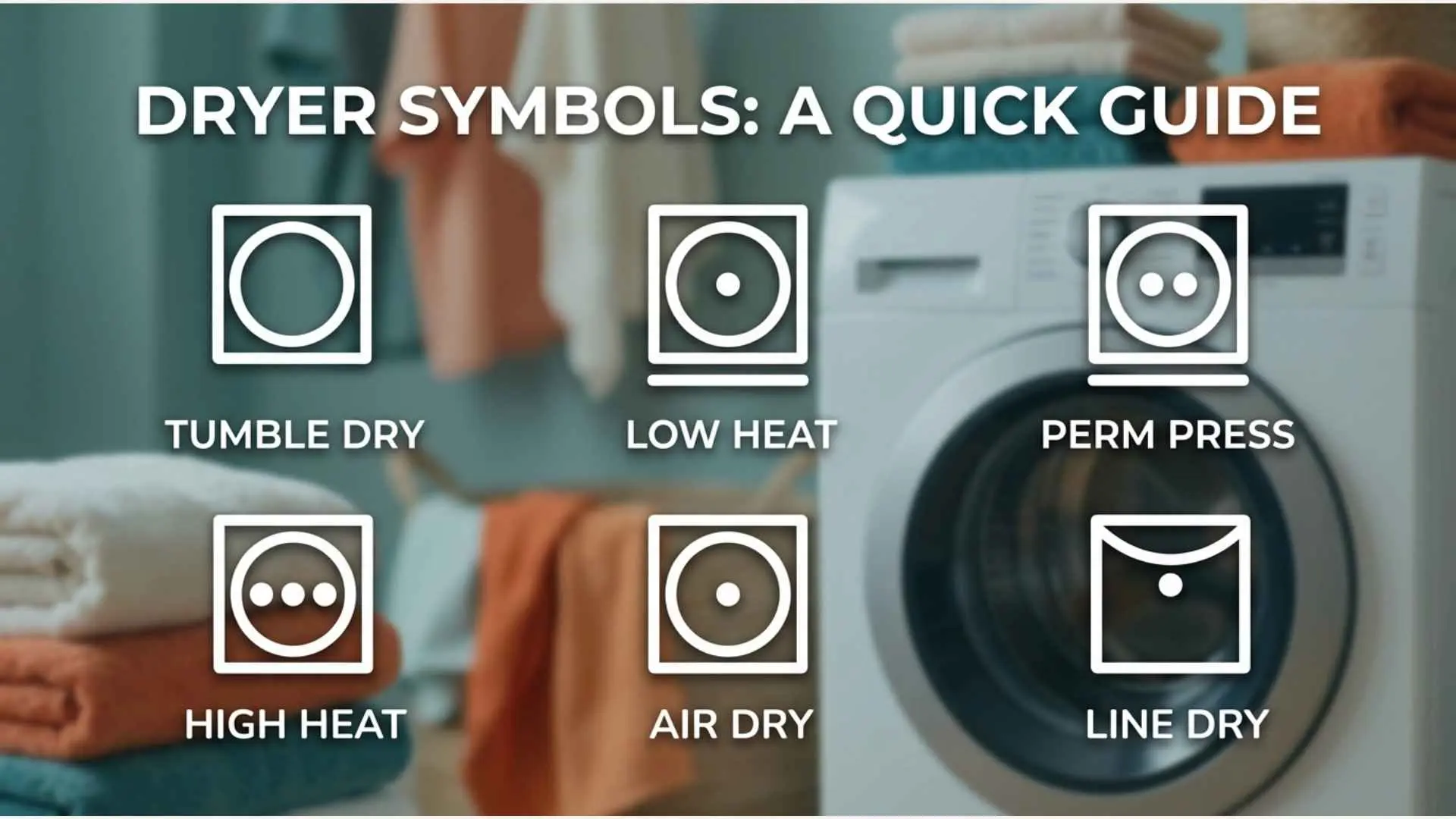
Laundry labels can feel confusing when you see a circle, square, dots, or crossed-out symbol without knowing what each one means. Dryer symbols are designed to tell you how a garment should be dried safely, including whether it can go in a tumble dryer, which heat setting to use, and when air drying is a better choice.
Understanding these laundry icons can help protect your clothes from shrinking, fading, stretching, and fabric damage. A symbol with dots may indicate the recommended heat level, while a crossed-out dryer symbol means the garment should not be tumble dried. These small icons provide important care instructions that can make your clothes last longer.
In this guide, you’ll learn what the most common dryer symbols and laundry icons mean in simple terms. We’ll explain the difference between low, medium, and high heat, show you how to recognize symbols for air drying and drip drying, and explain the hidden care instructions you may find on clothing labels.
Quick Answer
Dryer symbols are laundry care icons found on clothing labels that explain how an item should be dried. They show whether clothes can be tumble dried, dried with low or high heat, air dried, hung, laid flat, or kept away from dryers. These symbols help prevent fabric damage and maintain clothing quality.
Quick Facts About Dryer Symbols
| Aspect | Information |
| Origin | Developed through international textile care labeling systems to create universal clothing instructions |
| Historical Significance | Reduced clothing damage by giving consumers standardized fabric care guidance |
| Main Meaning | Shows the correct drying method for garments |
| Spiritual Meaning | Represents care, preservation, balance, and respect for valuable possessions |
| Cultural Importance | Creates a shared visual language understood across different countries |
| Modern Usage | Found on clothing tags, laundry machines, appliance manuals, and digital care guides |
What Are Dryer Symbols?
Definition of Dryer Symbols
Dryer symbols are visual instructions printed on clothing labels that explain the safest way to dry a garment after washing. They are part of a larger group of laundry care symbols that also include washing, bleaching, ironing, and dry-cleaning instructions.
A dryer symbol usually appears as a square shape. Inside the square, additional marks explain the drying method. The most common symbol is a square containing a circle, which represents tumble drying.
These symbols replace long written instructions with simple images that can be understood quickly, even when clothing is manufactured in different countries.
Origin and Historical Background
Before standardized laundry symbols existed, people relied on written instructions or personal knowledge to care for fabrics. As clothing production became global during the 20th century, manufacturers needed a universal system.
Organizations such as the International Organization for Standardization (ISO) helped create internationally recognized textile care symbols. Countries including the United States, Canada, Japan, and many European nations adopted similar systems.
The goal was simple: create a visual language that could communicate fabric care without depending on translation.
Evolution of Dryer Symbols
Early clothing labels often contained only basic washing instructions. As synthetic fabrics, delicate materials, and advanced laundry machines became common, drying instructions became more detailed.
Modern dryer symbols now communicate:
- Heat level
- Whether tumble drying is allowed
- Whether natural drying is recommended
- Whether special care is required
Today, these symbols work alongside smart dryers and energy-efficient appliances to improve clothing care.
Deep Symbolic Meaning of Dryer Symbols
Although dryer symbols are practical instructions, they also represent broader ideas connected to care, preservation, and responsibility.
Spiritual Level
From a symbolic perspective, dryer symbols represent the importance of protecting what we value. Clothing is not only fabric; it often carries memories, identity, and personal meaning.
A favorite sweater, family garment, or special outfit may represent important moments in life. Proper drying becomes an act of respect toward those memories.
The symbols remind us that small actions can preserve something meaningful for a longer time.
Psychological Level
Human beings naturally seek order and patterns. Dryer symbols satisfy this psychological need by turning complicated fabric-care decisions into simple visual signals.
Carl Jung’s concept of archetypes explains how humans respond to shared symbols. A circle, line, or dot can communicate an idea instantly because our brains are designed to recognize patterns.
Dryer symbols create confidence because they remove uncertainty. Instead of guessing whether heat will damage clothing, people receive clear guidance.
Cultural Level
Across cultures, caring for clothing has represented responsibility, cleanliness, and respect. Traditional societies often passed fabric-care knowledge through generations.
Modern dryer symbols continue this tradition in a global form. They allow people from different languages and backgrounds to understand the same message.
Types and Variations of Dryer Symbols
Dryer symbols appear in several forms. Each variation provides a different instruction.
Tumble Dry Symbol
Visual Description: A square containing a circle.
Meaning: The garment can be dried in a tumble dryer.
Symbolism: Represents flexibility and convenience in modern laundry care.
Cultural Connection: Common worldwide because tumble dryers are widely used in modern homes.
Where It Appears:
- Clothing labels
- Appliance manuals
- Laundry guides
Tumble Dry Low Heat Symbol
Visual Description: A square with a circle containing one dot.
Meaning: Use a low-temperature dryer setting.
Symbolism: Represents gentle protection and careful handling.
Best For:
- Synthetic fabrics
- Delicate clothing
- Lightweight materials
Using high heat on these items may cause shrinking, stretching, or damage.
Tumble Dry Medium Heat Symbol
Visual Description: A square with a circle containing two dots.
Meaning: Dry using medium heat.
Symbolism: Represents balance between efficiency and protection.
Common Materials:
- Cotton blends
- Everyday clothing
- Towels
Tumble Dry High Heat Symbol
Visual Description: A square with a circle containing three dots.
Meaning: High heat drying is allowed.
Symbolism: Represents strength and durability.
Common Examples:
- Heavy cotton towels
- Thick bedding
- Durable fabrics
Do Not Tumble Dry Symbol
Visual Description: A square with a circle crossed out.
Meaning: The garment should not be placed in a dryer.
Symbolism: Represents caution and preservation.
Common Materials:
- Wool
- Silk
- Certain decorative fabrics
Line Dry Symbol
Visual Description: A curved line inside a square.
Meaning: Hang the item to dry naturally.
Symbolism: Represents simplicity, natural processes, and traditional care.
Drip Dry Symbol
Visual Description: Vertical lines inside a square.
Meaning: Allow water to drip from the garment without wringing.
Common For:
- Delicate fabrics
- Clothing that loses shape easily
Dry Flat Symbol
Visual Description: A horizontal line inside a square.
Meaning: Lay the garment flat while drying.
Common For:
- Wool sweaters
- Knitted clothing
Dry In Shade Symbol
Visual Description: A shaded corner inside the drying square.
Meaning: Keep the garment away from direct sunlight.
Purpose:
- Prevent fading
- Protect sensitive fabrics
Dryer Symbols Across Different Cultures
Ancient Egypt
Ancient Egyptians valued clean and well-maintained clothing, especially linen garments. Although modern dryer symbols did not exist, their textile traditions emphasized careful handling of fabrics.
Linen was treated as a valuable material connected with purity and social status.
Ancient Greece
Greek culture associated clothing with identity, beauty, and social position. Fabric care was important because garments represented personal appearance and community belonging.
The idea of preserving clothing quality continues through modern laundry symbols.
Roman Culture
Romans developed advanced textile production and cleaning practices. Clothing maintenance reflected organization and personal responsibility.
Modern care symbols follow a similar philosophy by creating systems for proper maintenance.
Eastern Traditions
Many Asian cultures developed detailed methods for caring for silk, cotton, and traditional garments.
For example, silk preservation practices in China and Japan emphasized gentle handling, natural drying, and protection from environmental damage.
Indigenous Traditions
Indigenous communities worldwide often treated clothing, textiles, and woven materials as culturally meaningful objects.
Natural drying methods and careful preservation remain important parts of traditional textile knowledge.
Modern Interpretations
Today, dryer symbols represent global communication. A person can purchase clothing from another country and understand its care instructions without knowing the original language.
Similar Symbols and Their Meanings
| Symbol Type | Meaning | Main Difference |
| Washing Symbol | How to clean clothing with water | Focuses on washing method |
| Bleach Symbol | Whether bleach is safe | Focuses on chemical treatment |
| Iron Symbol | Heat treatment after washing | Focuses on removing wrinkles |
| Dryer Symbol | How clothing should be dried | Focuses on moisture removal |
A common misunderstanding is assuming all fabrics can handle the same drying method. Different fibers react differently to heat and movement.
Dryer Symbols in Art, Literature, Movies, and Pop Culture
Dryer symbols rarely appear as artistic subjects, but their influence can be seen in modern design and consumer culture.
In Product Design
Laundry symbols demonstrate how simple visual communication can solve everyday problems. Their clean shapes influence modern icon design.
In Fashion
Fashion brands use care symbols to educate customers about protecting expensive materials.
In Sustainable Living
As people become more environmentally conscious, dryer symbols encourage responsible clothing care by reducing unnecessary damage and replacement.
In Technology
Smart dryers increasingly recognize fabric types and automatically adjust settings based on care information.
Spiritual and Dream Meaning of Dryer Symbols
Although dryer symbols are practical rather than traditional spiritual symbols, people may interpret them metaphorically.
Dream Interpretation
Seeing clothing-care symbols in dreams may represent:
- Protecting personal identity
- Preparing for change
- Organizing life responsibilities
- Removing emotional burdens
Meditation and Reflection
The idea behind dryer symbols can represent transformation. Just as wet fabric changes through drying, people also experience growth through life experiences.
Positive Messages
Dryer symbols may symbolize:
- Care
- Renewal
- Patience
- Protection
- Personal growth
Cautionary Messages
They may also remind people about:
- Ignoring important details
- Rushing processes
- Failing to protect valuable things
Positive and Negative Meanings of Dryer Symbols
| Positive Meaning | Negative Meaning |
| Care and responsibility | Fear of making mistakes |
| Preservation | Overthinking simple tasks |
| Organization | Dependence on instructions |
| Protection | Lack of confidence without guidance |
| Balance | Avoiding experimentation |
A symbol itself is neutral. Its meaning depends on how people understand and use it.
Why Humans Are Attracted to Dryer Symbols
Humans naturally prefer clear communication. Symbols work because they deliver information faster than words.
A simple icon can cross language barriers, which makes it powerful in a global society.
Psychologically, symbols create a feeling of control. Laundry mistakes can be frustrating, especially when expensive clothing is damaged. Dryer symbols reduce uncertainty by offering guidance.
They also connect with cultural memory. People learn symbols over time and pass that knowledge to others.
Modern Uses of Dryer Symbols
Clothing Labels
The most common use is on garment tags, helping consumers choose the correct drying method.
Laundry Appliances
Dryers display similar symbols to explain settings such as:
- Low heat
- Delicate cycle
- Air dry
- Permanent press
Sustainable Fashion
Proper drying helps clothing last longer, reducing waste and supporting environmentally friendly habits.
Home Organization
Many households use dryer symbols as part of laundry education, teaching children how to care for clothing.
Digital Platforms
Online clothing stores increasingly display care symbols to help customers make informed purchases.
Interesting Facts About Dryer Symbols
- Dryer symbols are designed to work internationally without relying on language.
- A circle inside a square is one of the most recognized laundry symbols worldwide.
- The number of dots inside a dryer symbol represents heat intensity.
- Incorrect drying is one of the main causes of clothing shrinkage.
- Natural drying methods existed thousands of years before modern dryers.
- Smart appliances now use technology to automate fabric protection.
- Clothing labels combine science, design, and communication principles.
- Dryer symbols help reduce textile waste by encouraging proper care.
Frequently Asked Questions
What does the dryer symbol mean on clothes?
The dryer symbol shows how a garment should be dried. A square with a circle usually means tumble drying is allowed.
What does a circle with dots mean on a dryer symbol?
Dots indicate heat level. One dot means low heat, two dots mean medium heat, and three dots mean high heat.
What does a crossed-out dryer symbol mean?
A crossed-out dryer symbol means the clothing should not be placed in a tumble dryer.
Why are dryer symbols important?
Dryer symbols prevent clothing damage by explaining the safest drying method for each fabric type.
Are dryer symbols the same worldwide?
Most dryer symbols are internationally recognized, although small regional differences may exist.
Conclusion
Dryer symbols are more than simple laundry icons. They represent a universal language of care, protection, and responsibility. From ancient textile traditions to modern smart appliances, humans have always searched for ways to preserve valuable materials. Understanding these symbols helps protect clothing, save money, and reduce waste. Every small symbol carries a message: care today creates lasting value tomorrow.
 Sarah Thompson
 Michael Rivera