
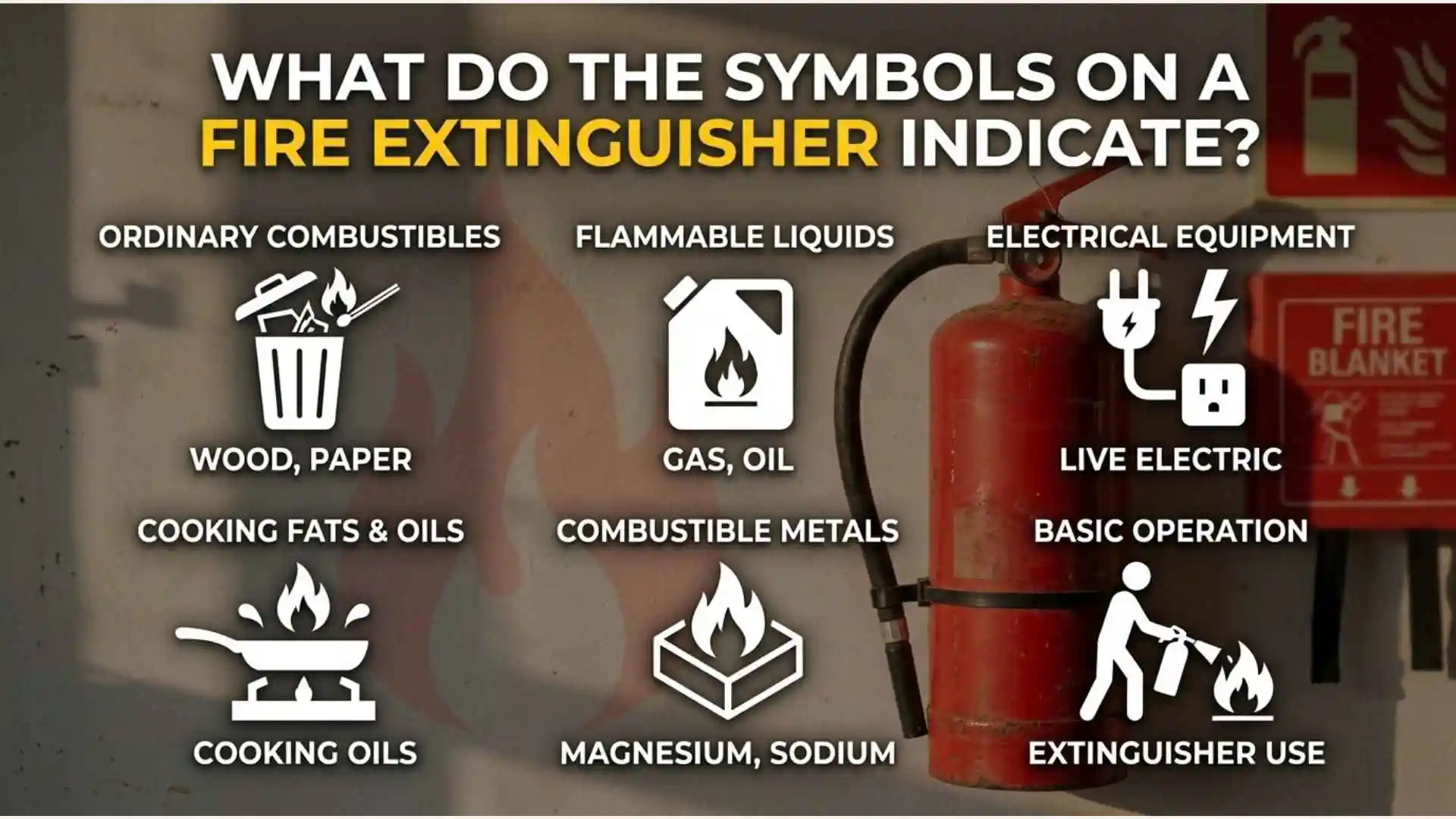
Fire extinguisher symbols provide important information about what type of fire an extinguisher is designed to put out. These symbols usually appear on the label and help you identify the fire classes the extinguisher can safely handle. Understanding them can make it easier to choose the right extinguisher during an emergency and avoid using the wrong type on a dangerous fire.
Different fires involve different materials, such as wood and paper, flammable liquids, gases, cooking oils, or electrical equipment. Because these fires behave differently, extinguishers are made with specific agents for particular fire classes. The symbols help communicate this information quickly, even when there is little time to read detailed instructions.
In this guide, you’ll learn what the symbols on a fire extinguisher indicate, what the major fire classes mean, and how common extinguisher labels relate to different types of fires. You’ll also discover why choosing the correct extinguisher matters and what important safety precautions to follow when dealing with a fire
Quick Answer
The symbols on a fire extinguisher indicate the types of fires the extinguisher is designed to put out. These symbols represent fire classes such as ordinary combustibles, liquids, electrical equipment, metals, and cooking oils. They help people quickly identify the safest extinguisher for a specific fire.
Quick Facts About What Do the Symbols on a Fire Extinguisher Indicate?
| Aspect | Information |
| Origin | Fire classification symbols developed as safety systems evolved to identify different fire hazards |
| Historical Significance | Helped standardize firefighting methods and reduce injuries caused by using incorrect extinguishers |
| Main Meaning | Symbols show which types of fires an extinguisher can safely extinguish |
| Spiritual Meaning | Represent awareness, protection, preparation, and responsibility toward human life |
| Cultural Importance | Fire safety symbols are globally recognized signs of prevention and protection |
| Modern Usage | Found on fire extinguishers in homes, offices, vehicles, factories, schools, and public buildings |
What Do the Symbols on a Fire Extinguisher Indicate?
Fire extinguisher symbols indicate the class of fire that a particular extinguisher is designed to fight. These symbols act as a visual language that allows people to make fast decisions during dangerous situations.
A fire is not always the same. A flame caused by burning paper behaves differently from a fire caused by gasoline, electrical equipment, or cooking oil. Because each fire requires a different extinguishing method, safety organizations created fire classifications.
The symbols printed on extinguishers help users answer an important question:
“Is this extinguisher safe and effective for this fire?”
Using the wrong extinguisher can make a fire worse. For example, spraying water on an electrical fire may create a shock hazard, while using the wrong chemical on a metal fire may cause dangerous reactions.
The Historical Background of Fire Extinguisher Symbols
Human beings have controlled fire for thousands of years. Ancient civilizations such as the Greeks and Romans developed early firefighting methods, including organized groups dedicated to protecting cities from destructive flames.
However, modern fire classification systems developed much later as industries introduced new fire risks. The growth of factories, electrical systems, automobiles, and chemical industries created new types of fires that required specialized solutions.
Organizations such as the National Fire Protection Association (NFPA) helped create standardized fire safety guidelines. Today, fire extinguisher symbols provide a universal safety message understood across many countries.
Why Fire Extinguisher Symbols Became Important
Before standardized symbols existed, people often relied on guesswork during emergencies. This created dangerous situations where individuals used ineffective or harmful methods.
Symbols improved safety by providing:
- Faster identification during emergencies
- Better public awareness
- Reduced property damage
- Improved workplace safety
- Clear communication across languages
A simple picture can communicate a complex safety message instantly.
Understanding the Different Fire Extinguisher Symbols
Fire extinguisher symbols usually appear as icons inside colored shapes. These markings identify the types of materials involved in the fire.
Class A Symbol: Ordinary Combustible Materials
Visual Description: A green triangle containing the letter “A” and often showing burning wood or trash.
Meaning: Designed for fires involving ordinary combustible materials.
Examples include:
- Wood
- Paper
- Cloth
- Cardboard
- Plastics
Symbolism: The Class A symbol represents everyday materials found in homes and workplaces.
Where It Appears:
- Homes
- Schools
- Offices
- Libraries
- Storage areas
A Class A fire often begins with familiar objects. A forgotten candle near paper or an overheated appliance near fabric can quickly create this type of emergency.
Class B Symbol: Flammable Liquids and Gases
Visual Description: A red square containing the letter “B,” sometimes shown with a fuel-related image.
Meaning: Used for fires caused by flammable liquids and gases.
Examples include:
- Gasoline
- Oil
- Paint
- Solvents
- Propane
Symbolism: The Class B symbol represents energy, movement, and transformation because many fuels release intense energy when burned.
Where It Appears:
- Garages
- Workshops
- Fuel stations
- Industrial areas
Water is generally ineffective against Class B fires because liquids such as gasoline can spread across the surface of water.
Class C Symbol: Electrical Fires
Visual Description: A blue circle containing the letter “C.”
Meaning: Indicates fires involving energized electrical equipment.
Examples include:
- Computers
- Electrical panels
- Appliances
- Wiring systems
Symbolism: The Class C symbol represents modern technology and the invisible energy systems that power daily life.
Where It Appears:
- Data centers
- Offices
- Homes
- Factories
Once electrical equipment is disconnected from power, the fire classification may change depending on the burning material.
Class D Symbol: Combustible Metals
Visual Description: A yellow star containing the letter “D.”
Meaning: Designed for fires involving combustible metals.
Examples include:
- Magnesium
- Titanium
- Lithium
- Sodium
Symbolism: The Class D symbol represents rare but powerful forces found in advanced industries.
Where It Appears:
- Laboratories
- Manufacturing facilities
- Aerospace industries
Metal fires require special extinguishing agents because ordinary methods may create dangerous reactions.
Class K Symbol: Cooking Oil and Fat Fires
Visual Description: A black hexagon containing the letter “K.”
Meaning: Used for fires involving cooking oils and fats.
Examples include:
- Restaurant deep fryers
- Commercial kitchens
- Cooking oil fires
Symbolism: Class K represents protection in one of the most common household and commercial fire environments.
Where It Appears:
- Restaurants
- Cafeterias
- Commercial kitchens
These fires are especially dangerous because adding water can cause burning oil to explode and spread flames.
Deep Symbolic Meaning of Fire Extinguisher Symbols
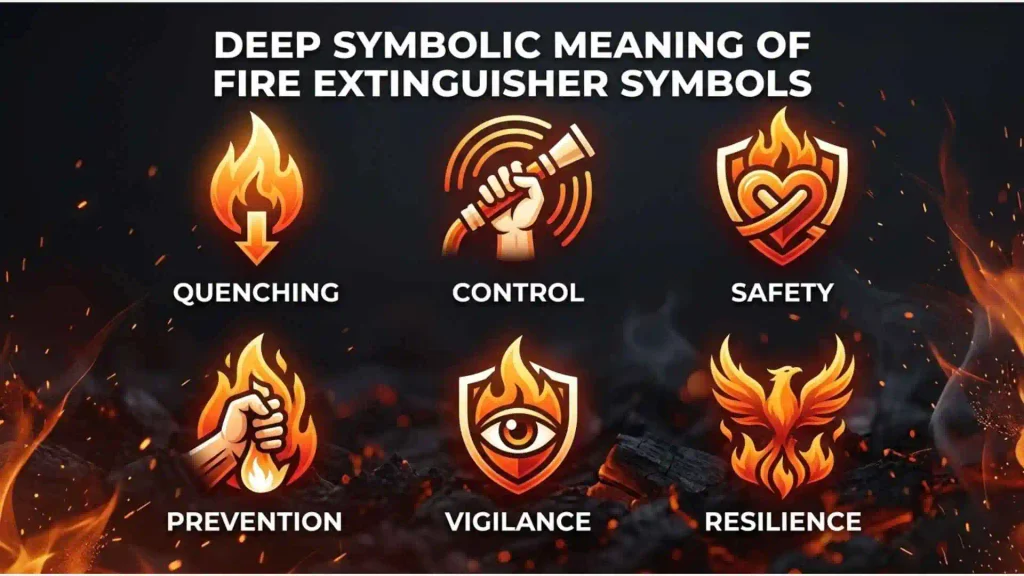
Although fire extinguisher symbols are practical safety signs, they also carry deeper human meanings.
Spiritual Level
Fire has always held symbolic importance in human cultures. It represents both creation and destruction.
Across history, fire has been connected with:
- Transformation
- Purification
- Energy
- Renewal
- Human progress
Fire extinguisher symbols represent the balance between respecting natural forces and controlling dangerous situations.
They remind people that power requires responsibility.
A flame can provide warmth and light, but uncontrolled fire can destroy homes, communities, and lives.
Psychological Level
From a psychological perspective, symbols help humans process information quickly.
Swiss psychologist Carl Jung studied how symbols influence human thinking through shared meanings and archetypes.
Fire often appears as an archetype representing:
- Change
- Emotion
- Danger
- Passion
- Renewal
Fire extinguisher symbols transform fear into knowledge. Instead of seeing fire only as a threat, people learn how to respond calmly.
Cultural Level
Fire has different meanings across societies.
Some cultures view fire as sacred and connected to spiritual ceremonies. Others associate it with innovation and human achievement.
Fire extinguisher symbols represent a modern cultural idea:
Human beings can coexist with powerful natural forces through knowledge and preparation.
Fire Extinguisher Symbols Across Different Cultures
Ancient Egypt
Ancient Egyptians viewed fire as a powerful force connected with protection, transformation, and divine energy.
Although they did not use modern extinguisher symbols, their relationship with fire influenced later symbolic interpretations.
Ancient Greece
The Greeks connected fire with knowledge and civilization.
The myth of Prometheus bringing fire to humanity represents progress, intelligence, and the power of discovery.
Roman Culture
Romans developed organized firefighting groups known as the Vigiles to protect cities from fires.
Their efforts created early examples of structured fire safety systems.
Eastern Traditions
Many Eastern traditions view fire as a symbol of purification and spiritual transformation.
In Hindu traditions, fire plays an important role in ceremonies through Agni, the fire deity representing energy and communication between humans and the divine.
Indigenous Traditions
Many Indigenous cultures respect fire as a natural force connected with renewal, community, and environmental balance.
Controlled fire practices have been used for land management and cultural ceremonies.
Modern Interpretations
Today, fire symbols focus less on mythology and more on protection, emergency response, and public safety.
Modern society uses symbols as a universal language that crosses cultural and language barriers.
Similar Symbols and Their Meanings
| Symbol | Meaning | Difference |
| Fire Extinguisher Symbols | Identify fire types and safety methods | Focus on emergency response |
| Fire Warning Signs | Alert people about danger | Focus on awareness |
| Flame Symbols | Represent fire or heat | Do not always indicate a specific hazard |
| Emergency Exit Symbols | Guide evacuation | Focus on escape routes |
A common misconception is that all fire symbols mean the same thing. However, extinguisher symbols provide specific technical information.
Fire Extinguisher Symbols in Art, Literature, and Popular Culture
Fire has appeared throughout human storytelling as a symbol of conflict, transformation, and power.
In literature, fire often represents:
- Rebirth
- Destruction
- Freedom
- Knowledge
In movies and television, fire symbols frequently appear in disaster scenes to communicate danger instantly.
Modern design also uses fire-related symbols in:
- Safety campaigns
- Industrial branding
- Educational materials
- Emergency training
Unlike artistic fire symbols, extinguisher symbols have a direct practical purpose.
Spiritual and Dream Meaning of Fire Symbols
People often interpret fire symbols in dreams and spiritual experiences.
A dream involving fire may represent:
Positive Interpretations
- Personal growth
- Emotional change
- New beginnings
- Inner strength
Cautionary Interpretations
- Conflict
- Stress
- Loss of control
- Fear of change
A fire extinguisher in a dream may symbolize:
- The ability to solve problems
- Emotional control
- Protection from harm
- Preparation for challenges
These interpretations are cultural and personal rather than scientific explanations.
Positive and Negative Meanings of Fire Extinguisher Symbols
| Positive Meaning | Negative Meaning |
| Safety | Danger awareness |
| Preparation | Fear of emergencies |
| Protection | Reminder of potential destruction |
| Knowledge | Recognition of risk |
| Responsibility | Warning of possible threats |
The same symbol can represent both protection and danger because it exists because a threat exists.
Why Humans Are Attracted to Safety Symbols
Humans naturally search for patterns and meanings.
Safety symbols work because the brain processes visual information faster than written instructions. During emergencies, people may not have time to read detailed explanations.
Symbols create instant understanding.
They connect with:
- Human survival instincts
- Collective memory
- Emotional recognition
- Learned behavior
A simple triangle, square, or circle can communicate information that protects lives.
Modern Uses of Fire Extinguisher Symbols
Fire extinguisher symbols appear in many areas of modern life.
Homes
Families use fire extinguishers to protect against kitchen fires, electrical problems, and accidental flames.
Workplaces
Businesses use symbols to meet safety regulations and train employees.
Vehicles
Many commercial vehicles carry extinguishers with clear fire class markings.
Public Buildings
Schools, hospitals, airports, and shopping centers rely on standardized symbols for public safety.
Education and Training
Fire safety courses teach people how to recognize extinguisher labels before emergencies happen.
Interesting Facts About Fire Extinguisher Symbols
- Fire extinguisher symbols are designed to be understood quickly, even by people who speak different languages.
- Different countries may use slightly different symbol styles while keeping similar meanings.
- Using the wrong extinguisher can increase danger instead of reducing it.
- The earliest fire extinguishers were developed centuries ago, but modern classifications came with industrial growth.
- Fire safety symbols combine science, psychology, and visual communication.
- Commercial kitchens often require specialized Class K extinguishers because cooking oil fires behave differently from other fires.
- Fire classification systems continue evolving as new technologies create new hazards.
- Symbols reduce panic by giving people clear instructions during stressful moments.
Frequently Asked Questions
What do the symbols on a fire extinguisher indicate?
The symbols indicate which types of fires an extinguisher can safely fight, such as wood, fuel, electrical equipment, metals, or cooking oils.
What does the letter A mean on a fire extinguisher?
The letter A means the extinguisher is suitable for ordinary combustible materials like paper, wood, cloth, and cardboard.
What does the B symbol on a fire extinguisher mean?
The B symbol indicates that the extinguisher can be used on flammable liquids and gases such as gasoline, oil, and paint.
Why are fire extinguisher symbols important?
They help people quickly choose the correct extinguisher and prevent dangerous mistakes during emergencies.
Can one fire extinguisher handle multiple fire types?
Yes. Many extinguishers are multi-class and display several symbols showing the different fires they can fight.
Conclusion
The symbols on a fire extinguisher indicate much more than simple labels. They represent knowledge, preparation, and humanity’s ability to control dangerous forces.
From ancient fire traditions to modern safety systems, symbols have helped people understand and respond to threats.
Learning these markings can protect property, prevent injuries, and save lives.
A small symbol can carry a powerful message: awareness creates safety.
 Sarah Thompson
 John Mercer