
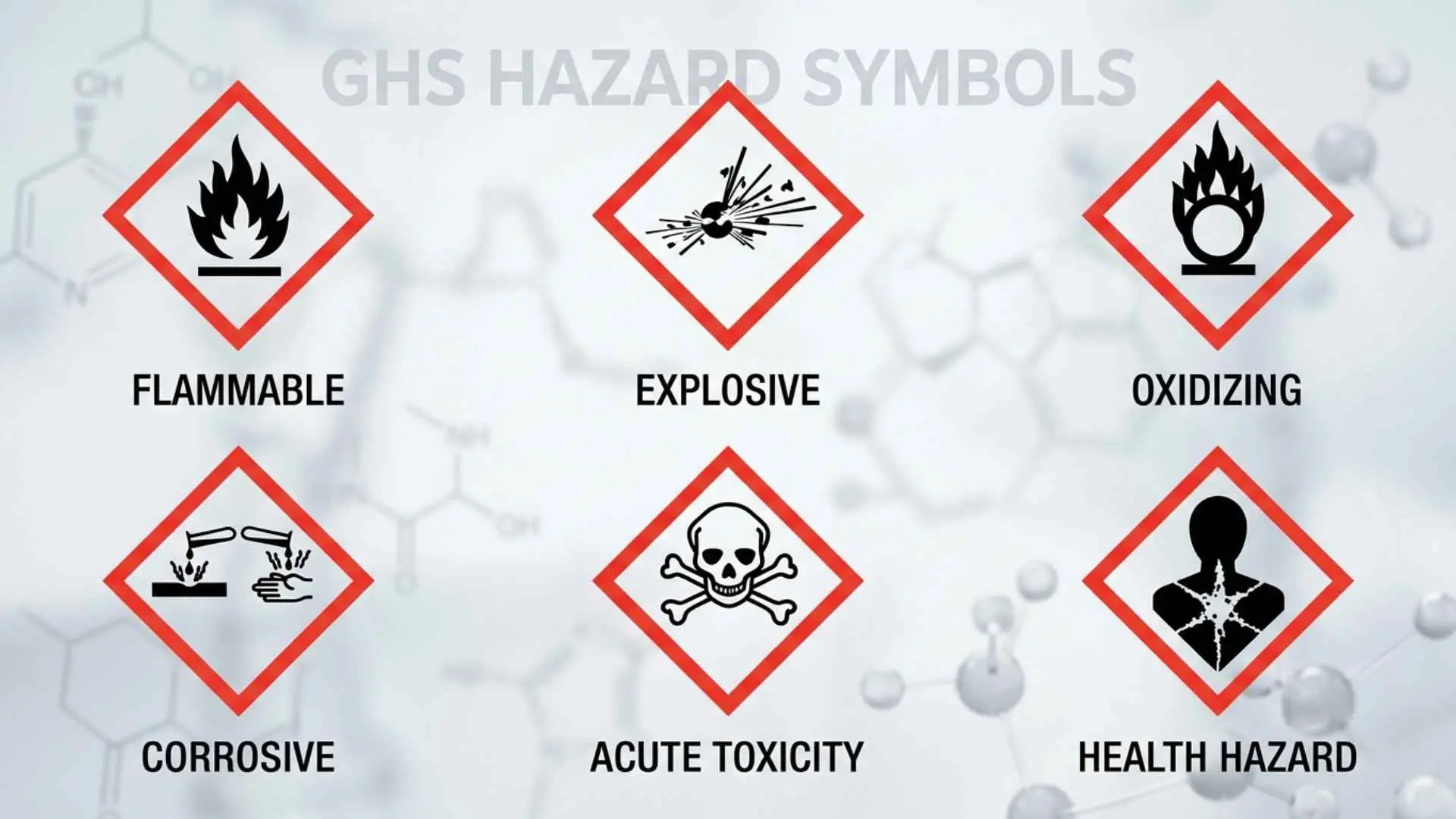
GHS symbols are internationally recognized hazard pictograms used to communicate the dangers of chemicals and hazardous substances. You can find these symbols on chemical containers, workplace labels, safety data sheets, and other hazard communication materials. Each symbol uses a simple graphic inside a red diamond to quickly show whether a substance may be flammable, toxic, corrosive, harmful to health, or dangerous to the environment.
The Globally Harmonized System of Classification and Labelling of Chemicals (GHS) was created to make chemical hazard information easier to understand across countries and industries. Before GHS, different regions often used different labeling systems, which could create confusion for workers, consumers, and emergency responders. Standardized symbols help communicate important safety information even when people speak different languages.
Understanding GHS hazard symbols and their meanings can help you recognize potential risks before handling, storing, transporting, or disposing of a chemical. In this guide, you’ll learn about the history of GHS, the different types of GHS pictograms, what each symbol means, where they are used, and why they are important for workplace and everyday chemical safety.
Quick Answer
GHS symbols are internationally recognized hazard pictograms used in the Globally Harmonized System of Classification and Labelling of Chemicals (GHS). They identify chemical dangers such as toxicity, flammability, corrosion, and environmental harm. These symbols help people safely handle, store, transport, and dispose of hazardous substances worldwide.
Quick Facts About GHS Symbols
| Aspect | Information |
| Origin | Developed through the United Nations Globally Harmonized System of Classification and Labelling of Chemicals |
| Historical Significance | Created to establish one worldwide chemical hazard communication system |
| Main Meaning | Communicate specific chemical dangers through standardized pictograms |
| Spiritual Meaning | Represents awareness, protection, responsibility, and respect for natural forces |
| Cultural Importance | Creates a universal safety language understood across countries |
| Modern Usage | Found on chemical containers, workplaces, laboratories, transportation labels, and safety documents |
What Are GHS Symbols?
Definition of GHS Symbols
GHS symbols are visual warning signs used to identify chemical hazards. The term GHS stands for the Globally Harmonized System of Classification and Labelling of Chemicals, a framework created by the United Nations to make chemical safety information consistent worldwide.
Before GHS symbols existed, different countries used different warning labels. A chemical considered dangerous in one country might have a completely different symbol elsewhere. This created confusion, especially for international trade, scientific research, and workplace safety.
GHS symbols solved this problem by creating a universal visual language.
Origin and Historical Background
The development of GHS began in the late 20th century when international organizations recognized the need for better chemical communication. Countries had different regulations, classification methods, and labeling systems.
The United Nations launched the GHS project during the 1992 Earth Summit in Rio de Janeiro. Experts from governments, industries, scientists, and international organizations worked together to create a standardized approach.
The first official version of the GHS Purple Book was published in 2003. Since then, many countries have adopted GHS standards, including the United States, members of the European Union, Canada, Australia, and Japan.
Why GHS Symbols Became Important
Chemicals are used everywhere, from factories and hospitals to homes and schools. However, many chemicals can cause harm if misunderstood.
GHS symbols help people quickly answer important questions:
- Is this substance flammable?
- Can it damage skin or eyes?
- Is it poisonous?
- Can it harm the environment?
- Does it require special protection?
A simple image can communicate danger faster than a long paragraph of text.
Deep Symbolic Meaning of GHS Symbols
Spiritual Level
Although GHS symbols are scientific safety tools, they also carry deeper symbolic meanings connected to human awareness and responsibility.
Symbolism of Protection
Many GHS symbols represent the idea of protecting life. They remind humans that knowledge must be combined with caution.
A flame symbol, for example, represents the power of fire. Fire has always been viewed as both a creator and destroyer. It provides warmth and energy but can also cause destruction when uncontrolled.
Inner Awareness and Responsibility
GHS symbols encourage mindfulness. They represent the relationship between humans and powerful forces found in nature.
The message behind these symbols is simple:
Respect what you do not fully control.
Psychological Level
Human Response to Warning Symbols
Humans naturally respond to visual warnings. The brain processes images faster than written information, which makes symbols extremely effective during emergencies.
A skull and crossbones symbol immediately creates a sense of danger without requiring language skills.
Jungian Symbolism and Universal Archetypes
Swiss psychologist Carl Jung explored the idea of universal symbols, known as archetypes, that appear across cultures.
GHS symbols connect with these psychological patterns:
- Fire represents energy and destruction.
- Corrosion represents decay and damage.
- The skull represents mortality and danger.
- The environment symbol represents the connection between humans and nature.
These images activate deep emotional responses that encourage safer behavior.
Cultural Level
GHS symbols have become part of global safety culture. Unlike traditional symbols connected to specific religions or civilizations, these signs belong to a worldwide scientific community.
They appear in:
- Laboratories
- Manufacturing plants
- Universities
- Hospitals
- Transportation systems
- Household products
Their universal meaning helps people from different backgrounds understand risks.
Types and Variations of GHS Symbols
The GHS system includes nine main hazard pictograms. Each symbol has a specific meaning.
Explosive Symbol
Visual Description
The explosive symbol shows an exploding object inside a red diamond border.
Meaning
It warns that a substance may explode under certain conditions.
Symbolism
Explosion represents sudden transformation, uncontrolled energy, and powerful chemical reactions.
Cultural Connection
Humans have always feared uncontrolled forces, from natural disasters to technological accidents. This symbol visually represents unpredictable energy.
Where It Appears
Common locations include:
- Fireworks
- Explosive chemicals
- Certain industrial materials
- Laboratory substances
Flammable Symbol
Visual Description
A flame icon appears inside a red diamond.
Meaning
It identifies substances that can catch fire easily.
Symbolism
Fire has dual meanings throughout history. It represents life, creativity, warmth, and destruction.
Cultural Connection
Ancient civilizations often viewed fire as a sacred element. The GHS flame symbol connects modern science with this ancient understanding of fire’s power.
Where It Appears
Found on:
- Gasoline
- Alcohol-based products
- Solvents
- Aerosols
Oxidizing Symbol
Visual Description
A flame appears above a circle.
Meaning
It indicates substances that can intensify fires.
Symbolism
The symbol represents amplification and increased energy.
Where It Appears
Used for:
- Industrial oxidizers
- Certain laboratory chemicals
- Chemical manufacturing materials
Gas Under Pressure Symbol
Visual Description
A gas cylinder appears inside a red diamond.
Meaning
It warns that a container holds compressed or liquefied gas.
Symbolism
It represents stored power and hidden pressure.
Where It Appears
Examples include:
- Medical oxygen cylinders
- Industrial gases
- Refrigerants
Corrosive Symbol
Visual Description
Liquid dripping from test tubes damages a hand and metal surface.
Meaning
It identifies substances that can burn skin or destroy materials.
Symbolism
Corrosion represents gradual damage and transformation.
Where It Appears
Used for:
- Strong acids
- Strong bases
- Industrial cleaners
Toxic Symbol
Visual Description
A skull and crossbones appears inside the warning diamond.
Meaning
It warns of substances that can cause serious poisoning or death.
Symbolism
The skull is one of humanity’s oldest danger symbols. It represents mortality and the need for caution.
Where It Appears
Found on highly toxic chemicals and dangerous substances.
Health Hazard Symbol
Visual Description
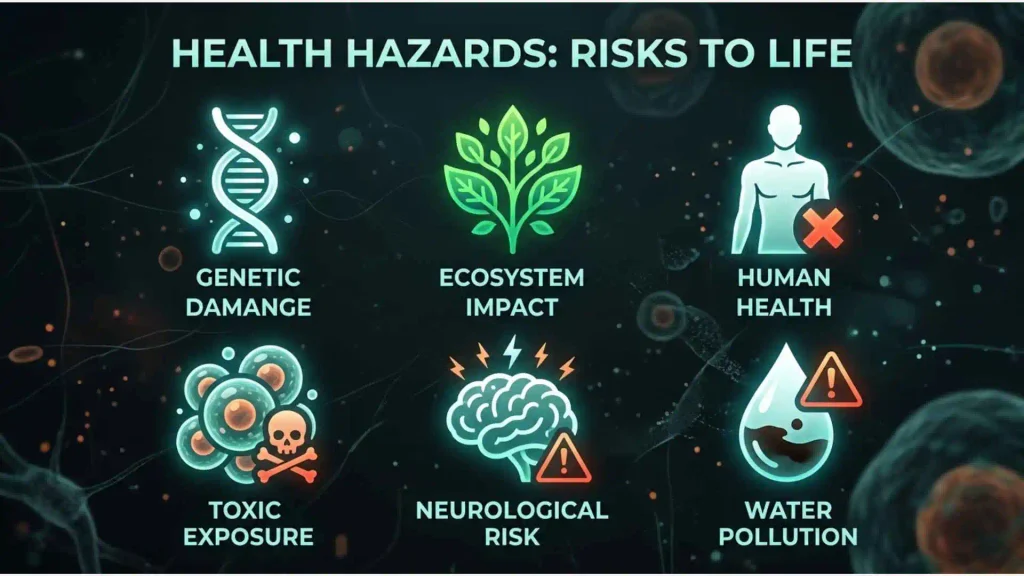
A human silhouette with a star-shaped mark on the chest.
Meaning
It warns about serious long-term health effects.
Risks Include:
- Cancer
- Organ damage
- Respiratory problems
- Reproductive harm
Symbolism
The human figure emphasizes that the danger affects the body itself.
Environmental Hazard Symbol
Visual Description
A dead tree and fish appear inside the symbol.
Meaning
It warns that a substance can harm aquatic life and ecosystems.
Symbolism
It represents humanity’s relationship with nature.
Where It Appears
Used on:
- Pesticides
- Industrial chemicals
- Polluting substances
Irritant Symbol
Visual Description
An exclamation mark appears inside a red diamond.
Meaning
It indicates less severe health hazards.
Risks Include:
- Skin irritation
- Eye irritation
- Allergic reactions
Symbolism
It represents caution before harm occurs.
GHS Symbols Across Different Cultures
Ancient Egypt
Ancient Egyptians did not use modern GHS symbols, but they understood the importance of signs and visual communication.
Their writing system, hieroglyphics, used images to communicate complex ideas. Symbols represented concepts such as life, death, protection, and transformation.
Modern hazard symbols follow a similar principle by using images to communicate meaning quickly.
Ancient Greece
Greek civilization contributed greatly to science and medicine. Greek thinkers studied substances, poisons, and natural elements.
The idea of classifying dangerous materials connects with Greek traditions of observation and knowledge.
Roman Culture
Romans used signs and markings for public communication, military organization, and trade.
Their practical approach to labeling influenced later systems of organization and safety.
Eastern Traditions
Many Eastern philosophies emphasize balance between humans and nature.
GHS environmental symbols reflect this idea by reminding people that chemical actions affect the natural world.
Indigenous Traditions
Many Indigenous cultures have deep respect for natural elements such as fire, water, plants, and animals.
Environmental hazard symbols connect with this worldview by showing the consequences of harming ecosystems.
Modern Interpretations
Today, GHS symbols represent global cooperation. They show how science can create a shared language for protecting people.
Similar Symbols and Their Meanings
| Symbol System | Similarity | Difference |
| GHS Symbols | Uses visual warnings | Focused specifically on chemical hazards |
| Traffic Signs | Uses universal images | Focused on transportation safety |
| Biohazard Symbol | Represents danger | Specifically warns about biological risks |
| Recycling Symbols | Communicates environmental ideas | Focuses on sustainability |
A common misconception is that all warning symbols mean the same thing. However, each system has a specific purpose.
GHS Symbols in Mythology and Folklore
Although GHS symbols are modern creations, many of their images connect with ancient stories.
Fire has appeared in myths worldwide:
- Greek mythology describes Prometheus bringing fire to humanity.
- Many cultures consider fire a sacred force.
- Folklore often portrays poison as a hidden danger.
The skull symbol also appears throughout history as a reminder of mortality. Pirates famously used skull imagery to represent danger, and modern society continues to recognize this connection.
GHS Symbols in Art, Literature, Movies and Pop Culture
Art
Artists often use warning symbols to discuss technology, pollution, and human responsibility.
Literature
Writers use symbols of danger to explore themes such as fear, survival, and consequences.
Movies
Films featuring laboratories, disasters, or environmental crises often include chemical warning signs to create realism.
Tattoos and Fashion
Some people use hazard imagery as artistic expressions of:
- Rebellion
- Strength
- Awareness
- Personal transformation
Modern Design
Safety symbols influence:
- Packaging design
- Educational materials
- Workplace communication
Spiritual and Dream Meaning of GHS Symbols
Dream interpretations vary depending on personal experiences, but warning symbols may represent awareness and caution.
Common interpretations include:
| Dream Symbol | Possible Meaning |
| Fire Symbol | Transformation, passion, or uncontrolled emotions |
| Skull Symbol | Change, endings, or fear |
| Environmental Symbol | Concern for nature or personal responsibility |
| Warning Sign | Need for awareness or preparation |
Spiritually, these symbols can remind people to pay attention to hidden risks in life.
Positive and Negative Meanings of GHS Symbols
| Positive Meaning | Negative Meaning |
| Protection | Fear |
| Awareness | Danger |
| Knowledge | Threat |
| Responsibility | Harm |
| Respect for nature | Environmental damage |
A symbol itself is neutral. Its meaning depends on context and how humans respond to it.
Why Humans Are Attracted to GHS Symbols
Humans are naturally drawn to symbols because they simplify complex ideas.
A single image can communicate:
- Danger
- Safety
- Action
- Emotion
Symbols also connect with collective memory. Across history, humans have used images to survive, communicate, and organize societies.
GHS symbols continue this tradition by transforming scientific information into understandable visual messages.
Modern Uses of GHS Symbols
Workplace Safety
Factories and laboratories use these symbols to protect employees.
Education
Schools teach students how to recognize chemical risks.
Packaging
Household products display hazard pictograms to inform consumers.
Transportation
Chemical shipments use GHS labels to guide safe handling.
Digital Communication
Safety organizations use these symbols in online training and educational materials.
Interesting Facts About GHS Symbols
- The GHS system was created by the United Nations.
- GHS symbols use red diamond borders because red is internationally associated with warning.
- The system helps reduce language barriers in chemical safety.
- The skull and crossbones symbol is one of the oldest danger images in human history.
- The GHS Purple Book receives regular updates as scientific knowledge changes.
- Many household cleaning products display GHS symbols.
- Countries can adopt GHS standards while maintaining their own chemical regulations.
- The system improves international chemical trade safety.
Frequently Asked Questions
What does GHS stand for?
GHS stands for Globally Harmonized System of Classification and Labelling of Chemicals. It creates worldwide standards for chemical hazard communication.
How many GHS symbols are there?
There are nine main GHS hazard pictograms covering physical, health, and environmental dangers.
Why are GHS symbols important?
GHS symbols help people quickly recognize chemical hazards and take appropriate safety precautions.
Where are GHS symbols used?
They are used on chemical containers, workplace labels, safety documents, transportation materials, and consumer products.
Are GHS symbols the same in every country?
The basic symbols are internationally standardized, although countries may have additional safety regulations.
Conclusion
GHS symbols are more than simple warning images. They represent global cooperation, scientific responsibility, and humanity’s effort to live safely with powerful substances. From ancient symbolic traditions to modern safety systems, these signs show how images can protect lives. Understanding GHS symbols means understanding the connection between knowledge, caution, and respect for the world around us.
 Sarah Thompson
 Michael Rivera