
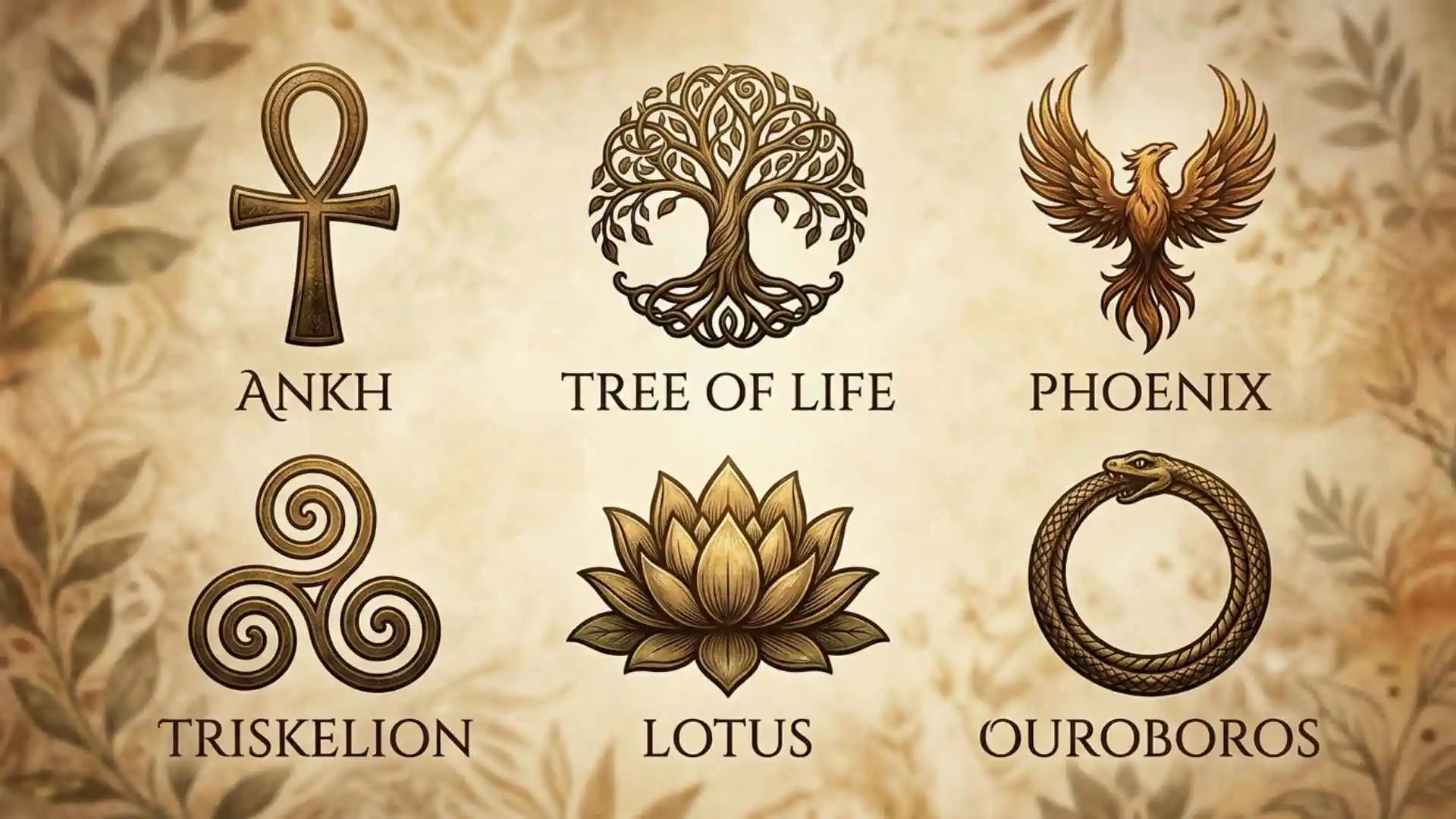
Death is one of the few experiences shared by every culture, yet people have represented it in remarkably different ways. Symbols of death can appear in art, religion, literature, jewelry, tattoos, monuments, folklore, and everyday traditions. From skulls and black roses to hourglasses and ravens, these symbols can represent mortality, grief, transformation, remembrance, or the mystery of what comes after life.
Throughout history, different civilizations have given death symbols their own meanings. Ancient cultures often connected certain animals, objects, and natural events with the underworld, spirits, or the cycle of life and death. In other traditions, death symbolism is less about an ending and more about change, rebirth, remembrance, and the transition into another state of existence. This is why the same symbol may have different meanings depending on its cultural or religious context.
In this guide, we’ll explore some of the most recognizable symbols of death, their historical origins, and what they mean across different cultures. You’ll discover the symbolism behind familiar images such as skulls, skeletons, black candles, ravens, crows, wilted flowers, and the Grim Reaper, along with lesser-known symbols connected to mortality and the afterlife.
Quick Answer
Symbols of death are visual signs, objects, or images that represent mortality, the end of life, transformation, spiritual transition, or the unknown. Common examples include skulls, skeletons, ravens, hourglasses, black flowers, and the Grim Reaper. Different cultures interpret these symbols through religious beliefs, traditions, and personal experiences.
Quick Facts About Symbols of Death
| Aspect | Information |
| Origin | Ancient civilizations used death symbols in burial rituals, religious ceremonies, and storytelling. |
| Historical Significance | They helped societies understand mortality, the afterlife, and spiritual transformation. |
| Main Meaning | Death, endings, change, mystery, and the passage of time. |
| Spiritual Meaning | Transition, rebirth, soul journeys, and connection between life and the afterlife. |
| Cultural Importance | Found in Egyptian, Greek, Roman, Asian, Indigenous, and modern traditions. |
| Modern Usage | Used in art, tattoos, fashion, movies, literature, and personal expression. |
What Are Symbols of Death?
Symbols of death are images, objects, creatures, or signs that represent the concept of mortality and the end of physical existence. However, these symbols do not always represent fear or sadness. In many cultures, death is viewed as a natural part of existence, symbolizing change, renewal, and spiritual evolution.
Since ancient times, humans have searched for ways to understand death. Because death is universal but mysterious, societies created visual symbols to express their beliefs about what happens after life ends.
Ancient Egyptians, for example, developed complex symbols related to death and the afterlife. They believed death was not a final ending but a transition into another spiritual world. Their burial practices, including pyramids and funerary artwork, reflected this belief.
Over time, symbols of death evolved. Medieval Europe often associated death with warning and judgment, while modern interpretations frequently connect death symbols with personal growth, acceptance, and transformation.
Deep Symbolic Meaning of Symbols of Death
Spiritual Level
On a spiritual level, symbols of death often represent transformation rather than complete destruction. Many traditions view death as a doorway between different states of existence.
The skull, for example, appears in many spiritual traditions as a reminder that physical life is temporary. It encourages people to focus on wisdom, consciousness, and the meaning behind human existence.
In Buddhism, reflections on death are used as a way to understand impermanence. Accepting that all things change can lead to greater awareness and compassion.
Death symbols can also represent:
- Spiritual awakening
- The end of old habits
- Personal transformation
- The journey of the soul
- Connection with ancestors
Psychological Level
From a psychological perspective, symbols of death connect with deep human emotions and unconscious thoughts. The famous psychologist Carl Jung studied archetypes, universal images found across cultures.
Death is one of the strongest human archetypes because every person experiences the reality of mortality. Symbols of death often attract attention because they represent mystery, fear, curiosity, and change.
Psychologically, death symbols may represent:
- Fear of the unknown
- Acceptance of change
- Personal growth
- Hidden emotions
- The need for renewal
A person wearing a skull tattoo, for example, may not be celebrating death. They might be expressing survival, strength, overcoming hardship, or awareness of life’s limited nature.
Cultural Level
Different societies create unique meanings around death symbols based on their history and beliefs.
In Mexico, the skull is connected with Día de los Muertos (Day of the Dead), a celebration honoring deceased loved ones. The colorful sugar skull represents remembrance, love, and family connection.
In contrast, medieval European cultures often used skulls and skeletons as reminders of human mortality and moral responsibility.
The same symbol can carry different meanings depending on the cultural setting.
Types and Variations of Symbols of Death
Skull
Visual Description: A human skull showing the bones of the head, often represented alone or with crossed bones.
Meaning: Mortality, wisdom, equality, and the temporary nature of life.
Symbolism: The skull reminds people that all humans share the same final destination regardless of wealth or status.
Cultural Connection:
- Día de los Muertos celebrations
- Pirate imagery
- Medieval artwork
- Gothic fashion
Where It Appears:
- Tattoos
- Jewelry
- Paintings
- Religious artwork
- Movies
Skeleton
Visual Description: The complete structure of human bones.
Meaning: The physical remains of life and the connection between body and mortality.
Symbolism: Skeletons often represent death, ancestors, and the hidden reality beneath human appearance.
Cultural Connection:
- European medieval art
- Halloween traditions
- Dance of Death artwork
Where It Appears:
- Literature
- Horror films
- Historical paintings
Grim Reaper
Visual Description: A hooded figure carrying a scythe.
Meaning: The personification of death.
Symbolism: The Grim Reaper represents the unavoidable arrival of death and the passage from life to the unknown.
Cultural Connection:
Originating from European medieval traditions, the figure became popular during periods of plague and widespread mortality.
Where It Appears:
- Folklore
- Movies
- Video games
- Fantasy artwork
Hourglass
Visual Description: A glass container measuring time through falling sand.
Meaning: The limited nature of human life.
Symbolism: The hourglass reminds people that time moves forward and cannot be reversed.
Cultural Connection:
Used in ancient and medieval imagery as a symbol of time and mortality.
Where It Appears:
- Tomb decorations
- Artwork
- Literature
Raven and Crow
Visual Description: Dark-colored birds associated with mystery.
Meaning: Death, intelligence, prophecy, and spiritual messages.
Symbolism: Ravens often appear as messengers between worlds.
Cultural Connection:
Found in Norse mythology, Native American stories, and European folklore.
Where It Appears:
- Poetry
- Mythology
- Gothic art
Symbols of Death Across Different Cultures
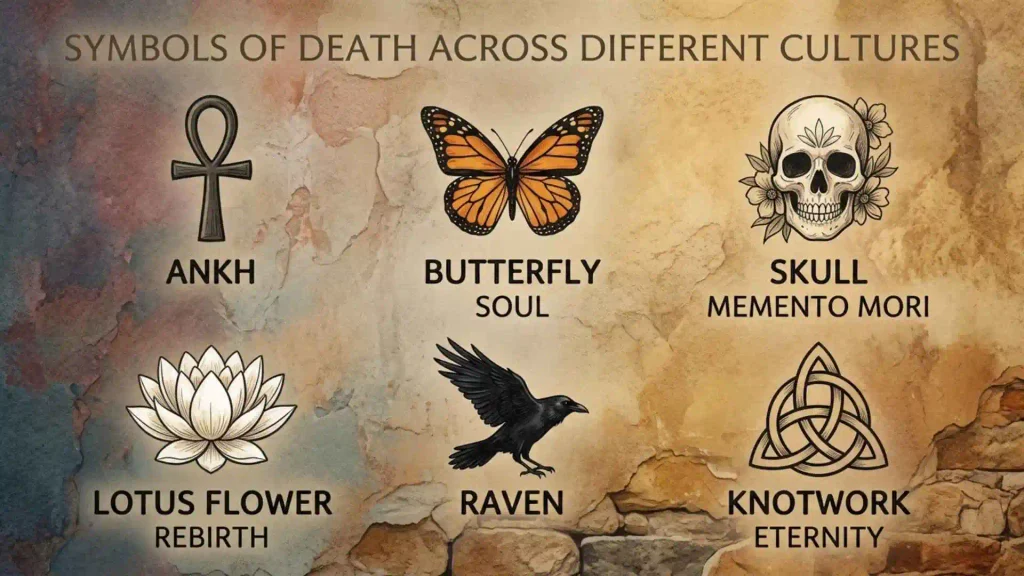
Ancient Egypt
Ancient Egyptians viewed death as a journey rather than an ending. Symbols such as the Ankh, scarabs, and burial masks represented protection, eternal life, and spiritual continuation.
The Egyptian Book of the Dead contained spells and guidance believed to help souls enter the afterlife safely.
Death symbols were closely connected with resurrection and immortality.
Ancient Greece
Greek mythology connected death with the underworld ruled by Hades. Symbols such as the river Styx, coins placed on the eyes of the dead, and underworld imagery represented the transition between life and death.
The Greeks believed proper burial rituals helped souls find peace.
Roman Culture
Romans adopted many Greek ideas about death but developed their own traditions. Tombstones, funeral masks, and memorial sculptures honored ancestors and preserved family history.
Roman death symbolism often focused on remembrance and legacy.
Eastern Traditions
In Hinduism, death is part of the cycle of life, death, and rebirth known as samsara. Symbols related to cremation, meditation, and spiritual transformation represent the continuation of consciousness.
Buddhist traditions emphasize impermanence and acceptance of change.
Indigenous Traditions
Many Indigenous cultures view death as a connection between physical life and the spiritual world.
Animals, natural elements, and ancestral symbols often represent guidance, transformation, and respect for those who have passed away.
Modern Interpretations
Today, death symbols appear in fashion, entertainment, tattoos, and personal artwork. Modern meanings often focus on strength, individuality, survival, and acceptance.
Similar Symbols and Their Meanings
| Symbol | Similar Meaning | Main Difference |
| Skull | Mortality and wisdom | Focuses on human existence |
| Skeleton | Death and physical remains | Represents the body after life |
| Butterfly | Transformation | Usually represents positive change |
| Phoenix | Rebirth | Focuses more on renewal than death |
| Hourglass | Time and mortality | Represents the passing of time |
| Black Rose | Loss and mystery | Represents emotional endings |
Many people confuse symbols of death with symbols of evil. However, death symbolism is often about transition rather than negativity.
Symbols of Death in Mythology and Folklore
Death appears in countless myths around the world.
In Greek mythology, Hades ruled the underworld and represented the realm where souls traveled after death. His story reflects humanity’s attempt to understand what happens beyond life.
Norse mythology includes Hel, a figure connected with the realm of the dead. Ravens, especially those associated with Odin, represented knowledge, mystery, and connections between worlds.
In Mexican folklore, La Catrina, the elegant skeleton figure, became a symbol of death’s equality. She reminds people that death comes to everyone regardless of social position.
These stories shaped modern interpretations of death symbols by combining fear, respect, humor, and acceptance.
Symbols of Death in Art, Literature, Movies and Pop Culture
Artists have used death symbols for centuries to explore human emotions.
Medieval European paintings often included skeletons and the “Dance of Death” theme to remind viewers that life is temporary.
Literature frequently uses death symbols to explore deeper ideas. Edgar Allan Poe’s works often included dark imagery connected with mortality and mystery.
Movies and television use symbols like skulls, ghosts, and the Grim Reaper to create suspense, fear, or philosophical reflection.
Modern tattoos commonly feature death symbols because people use them to represent:
- Survival after difficult experiences
- Personal transformation
- Memories of loved ones
- Strength and courage
- Acceptance of life’s journey
Spiritual and Dream Meaning of Symbols of Death
Dreams involving death symbols do not always predict actual death. Many psychologists interpret them as signs of change, emotional growth, or the ending of a life phase.
Common interpretations include:
- Seeing a skull: awareness of change or hidden wisdom
- Seeing a skeleton: discovering truth beneath appearances
- Seeing a dead person: memories, unresolved emotions, or connection
- Seeing a Grim Reaper: fear of change or major life transitions
Spiritually, death symbols in dreams may represent transformation and the beginning of a new chapter.
Positive and Negative Meanings of Symbols of Death
| Positive Meaning | Negative Meaning |
| Transformation | Fear |
| Wisdom | Anxiety |
| New beginnings | Loss |
| Acceptance | Grief |
| Spiritual growth | Uncertainty |
| Life appreciation | Emotional pain |
A symbol of death can represent both darkness and hope. Its meaning depends on personal experience and cultural interpretation.
Why Humans Are Attracted to Symbols of Death
Humans are naturally drawn to symbols that help explain life’s biggest mysteries. Death is one of the few experiences shared by every person, making its symbols deeply powerful.
These symbols attract people because they:
- Create emotional connections
- Help process grief
- Represent personal journeys
- Encourage reflection
- Connect generations through shared stories
Death symbols remind people to appreciate life because time is limited.
Modern Uses of Symbols of Death
Tattoos
Death symbols are popular tattoo choices because they often represent strength, survival, and transformation.
Jewelry
Skull rings, pendants, and symbolic accessories allow people to express individuality and personal beliefs.
Fashion
Gothic and alternative fashion frequently use death imagery to represent mystery, creativity, and rebellion.
Branding and Design
Some brands use skull imagery to communicate boldness, danger, adventure, or uniqueness.
Contemporary Spirituality
Modern spiritual practices may use death symbols for meditation, reflection, and personal transformation.
Home Decor
Artwork featuring skulls, ravens, or ancient symbols can represent history, curiosity, and artistic expression.
Interesting Facts About Symbols of Death
- The skull is one of the oldest symbols found in human history.
- Ancient Egyptians believed death was a transition to another form of existence.
- The Grim Reaper became especially popular in Europe during the Black Death pandemic.
- Mexican sugar skulls are colorful because they celebrate memories rather than only mourning.
- The hourglass became a popular symbol of mortality during medieval Europe.
- Ravens are connected with death symbolism in many cultures because of their intelligence and mysterious behavior.
- Death symbols often appear in art because they encourage people to think about the value of life.
Frequently Asked Questions
What are the most common symbols of death?
The most common symbols of death include skulls, skeletons, the Grim Reaper, hourglasses, ravens, black roses, and crosses.
Are symbols of death always negative?
No. Many symbols of death represent transformation, wisdom, rebirth, and acceptance rather than only sadness or fear.
What does a skull symbolize?
A skull can symbolize mortality, wisdom, equality, strength, and awareness that life is temporary.
Why are death symbols used in tattoos?
People often choose death symbols for tattoos to represent survival, personal change, memories, courage, or acceptance of life’s challenges.
What does seeing death symbols in dreams mean?
Death symbols in dreams often represent change, emotional transformation, endings, or the beginning of a new stage in life.
Conclusion
Symbols of death are powerful reminders of humanity’s shared journey through life, change, and uncertainty. Across cultures, these symbols represent far more than endings because they also express transformation, wisdom, and spiritual growth. From ancient civilizations to modern art, death symbols continue to help people understand the mystery of existence. They remind us that recognizing life’s limits can make every moment more meaningful.
 Sarah Thompson
 John Mercer