
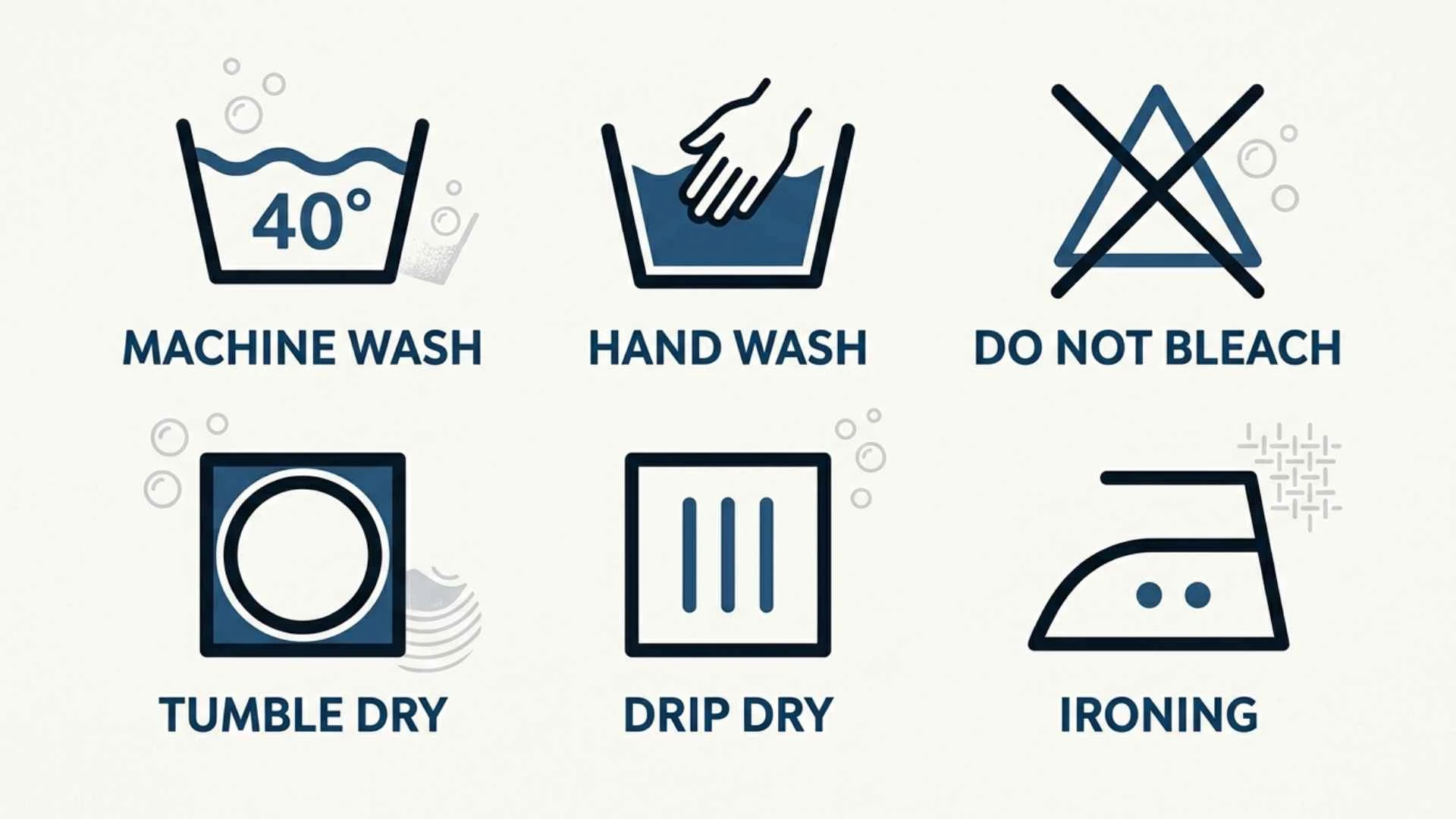
Laundry care symbols can look confusing at first, especially when a clothing label is filled with tiny icons for washing, drying, ironing, bleaching, and dry cleaning. These symbols are a simple visual language designed to tell you how to care for your clothes without relying on lengthy instructions. Understanding them can help you choose the right washing method and avoid common laundry mistakes.
From a washing tub symbol to a crossed-out dryer or an iron with dots, each symbol gives you specific information about what your clothing can safely handle. Some symbols indicate water temperature, while others explain whether an item should be hand washed, tumble dried, air dried, ironed, bleached, or professionally dry cleaned. Even one small line or dot can change the meaning of a care symbol.
In this complete guide, you’ll learn what the most common wash symbols and laundry care symbols mean in simple terms. We’ll explain washing, drying, ironing, bleaching, and dry-cleaning symbols, along with the markings that tell you what to avoid. By the end, you’ll be able to read clothing care labels with confidence and give your clothes the care they need to stay clean, comfortable, and in good condition.
Quick Answer
Wash symbols are small icons found on clothing care labels that explain how a garment should be washed, dried, bleached, ironed, or professionally cleaned. They provide instructions about water temperature, washing methods, and fabric care to prevent shrinking, fading, or damage.
Quick Facts About Wash Symbols
| Aspect | Information |
| Origin | Developed through international textile care standards |
| Historical Significance | Created to simplify garment care instructions worldwide |
| Main Meaning | Shows how clothing should be washed and maintained |
| Spiritual Meaning | Represents care, renewal, cleansing, and preservation |
| Cultural Importance | Creates a shared language across different countries |
| Modern Usage | Found on clothing labels, laundry products, and digital shopping platforms |
What Are Wash Symbols?
Definition of Wash Symbols
Wash symbols are pictorial instructions printed on clothing labels that explain the proper method for cleaning and maintaining garments. They use simple shapes such as tubs, circles, squares, and irons to communicate care instructions without relying on written language.
A person in any country can understand a wash symbol even without knowing the local language. This makes these symbols an important example of visual communication.
Origin and Historical Background
Before modern washing machines existed, people cleaned clothing using traditional methods such as hand washing, beating fabrics against stones, and drying garments under sunlight. Care instructions were passed through experience and family traditions.
As textile production expanded during the Industrial Revolution, clothing became more varied. Different fabrics required different cleaning methods, creating a need for standardized instructions.
International organizations later developed care labeling systems to help manufacturers and consumers understand fabric requirements. Organizations such as the International Organization for Standardization (ISO) helped establish common symbols used around the world.
Evolution of Laundry Care Symbols
Early clothing labels often contained written instructions. However, as international trade increased, symbols became more practical.
Today, wash symbols appear on:
- Everyday clothing
- Luxury fabrics
- Sportswear
- Bedding
- Towels
- Children’s clothing
- Technical outdoor gear
Modern technology has also changed how people interact with these symbols. Some brands now include QR codes on labels that provide detailed digital care instructions.
Deep Symbolic Meaning of Wash Symbols
Spiritual Level
Although wash symbols are practical signs, they also carry deeper symbolic meanings connected to cleansing and renewal.
Symbolism of Cleansing
Across many cultures, washing represents purification and transformation. Water has long been viewed as a powerful symbol of renewal.
Examples include:
- Religious cleansing rituals
- Sacred bathing traditions
- Water ceremonies in different cultures
In this sense, wash symbols represent the idea of protecting and restoring something valuable.
Connection With Renewal
Clothing is closely connected with human identity. The act of washing clothes can represent starting fresh, removing the past, and preparing for a new experience.
A simple laundry symbol can remind people that proper care preserves both physical objects and personal memories.
Psychological Level
Human Emotions and Attachment
People often develop emotional connections with clothing. A wedding dress, childhood sweater, or favorite jacket may hold memories beyond its material value.
Wash symbols help protect these emotional connections by guiding people to care for meaningful items properly.
Jungian Symbolism and Archetypes
From a Jungian psychological perspective, symbols communicate ideas beyond words. A wash symbol represents the archetype of renewal, maintenance, and transformation.
The image of water, cleansing, and restoration appears throughout human history because people naturally associate cleanliness with safety and improvement.
Cultural Level
Different societies have valued cleanliness in unique ways. Wash symbols connect these traditions by creating a common understanding of garment care.
They represent:
- Respect for possessions
- Responsibility
- Practical knowledge
- Preservation of cultural clothing traditions
Types and Variations of Wash Symbols
Washing Tub Symbol
Visual Description: A small container or tub filled with water.
Meaning: Indicates washing instructions.
Symbolism: Represents cleaning, renewal, and maintenance.
Cultural Connection: Water has been associated with purification in many civilizations.
Where It Appears:
- Clothing labels
- Bedding
- Towels
- Household textiles
Hand Wash Symbol
Visual Description: A hand placed inside a washing tub.
Meaning: The garment should be washed gently by hand rather than placed in a washing machine.
Symbolism: Represents careful attention and personal responsibility.
Where It Appears:
- Wool clothing
- Silk garments
- Delicate fabrics
Machine Wash Symbol
Visual Description: A washing tub without a hand symbol.
Meaning: The item can be washed using a washing machine.
Symbolism: Represents modern technology and convenience.
Where It Appears:
- Cotton clothing
- Everyday fabrics
- Casual wear
Temperature Symbols
Visual Description: Numbers or dots inside the washing tub.
Meaning: Shows the maximum recommended water temperature.
Examples:
- One dot means cold wash
- Two dots mean warm wash
- Three dots mean hot wash
Symbolism: Represents balance between cleaning power and fabric protection.
Bleaching Symbol
Visual Description: A triangle.
Meaning: Indicates whether bleach can be used.
Variations include:
- Empty triangle: Any bleach allowed
- Triangle with lines: Only non-chlorine bleach
- Crossed triangle: Do not bleach
Drying Symbol
Visual Description: A square containing different markings.
Meaning: Explains drying methods.
Examples:
- Circle inside square: Tumble dry allowed
- Lines inside square: Air drying instructions
- Crossed symbol: Do not tumble dry
Ironing Symbol

Visual Description: A small iron shape.
Meaning: Shows whether ironing is allowed and what temperature to use.
Dots indicate heat levels.
Dry Cleaning Symbol
Visual Description: A circle.
Meaning: Indicates professional cleaning requirements.
Different letters inside the circle provide instructions for professional cleaners.
Wash Symbols Across Different Cultures
Ancient Egypt
Ancient Egyptians placed great importance on cleanliness and clothing care. Linen garments, especially those worn by priests and royalty, required careful maintenance.
Clean clothing represented purity, status, and spiritual preparation.
Ancient Greece
The Greeks valued cleanliness as part of physical and social well-being. Public baths and textile care were important parts of daily life.
Clothing maintenance reflected discipline and personal responsibility.
Roman Culture
Romans developed advanced bathing systems and valued clean appearance. Garments were often carefully maintained because clothing reflected social identity.
The Roman approach to hygiene influenced later European traditions.
Eastern Traditions
Many Eastern cultures connected washing with harmony, purity, and balance.
Examples include:
- Japanese cleaning traditions
- Indian purification practices
- Chinese textile craftsmanship
Clothing care often carried both practical and symbolic meaning.
Indigenous Traditions
Many Indigenous communities developed unique methods for caring for natural fibers, animal hides, and handmade textiles.
Garment care represented respect for nature, resources, and cultural heritage.
Modern Interpretations
Today, wash symbols represent global cooperation. A simple icon can communicate important information across languages and borders.
Similar Symbols and Their Meanings
| Symbol | Meaning | Difference |
| Wash Symbol | Cleaning instructions | Focuses on garment washing |
| Recycling Symbol | Environmental responsibility | Focuses on material reuse |
| Water Symbol | Resource or purity | Represents water generally |
| Warning Symbol | Safety information | Indicates potential danger |
Many people confuse wash symbols with general household symbols, but their purpose is specifically related to textile care.
Wash Symbols in Mythology and Folklore
Water and cleansing symbols appear throughout mythology and folklore.
Flood Stories and Renewal
Many cultures have stories involving floods that represent destruction followed by renewal. Water often symbolizes a fresh beginning.
Purification Rituals
Ancient traditions frequently used water ceremonies to represent spiritual transformation.
These ideas influence modern interpretations of washing as a symbol of restoration.
Wash Symbols in Art, Literature, Movies and Pop Culture
Art
Artists often use washing and water imagery to represent:
- Change
- Healing
- New beginnings
- Emotional release
Literature
Writers frequently use cleaning imagery as a metaphor for personal growth.
A character washing clothes or bathing may symbolize leaving behind an old identity.
Movies and Television
Laundry scenes often represent everyday human experiences. They can show:
- Family relationships
- Personal struggles
- Life transitions
Tattoos and Fashion
While traditional wash symbols are rarely used as tattoos, related imagery such as water drops, waves, and cleansing symbols often represents renewal and transformation.
Spiritual and Dream Meaning of Wash Symbols
Dream Symbolism
Seeing wash symbols in dreams may represent:
- Desire for change
- Emotional cleansing
- Organization
- Personal improvement
The meaning depends on the dream context.
Positive Interpretations
A wash symbol may suggest:
- Fresh opportunities
- Healing
- Growth
- Protection
Cautionary Interpretations
It may also suggest:
- Fear of making mistakes
- Need for better care
- Feeling responsible for protecting something valuable
Positive and Negative Meanings of Wash Symbols
| Positive Meaning | Negative Meaning |
| Renewal | Fear of damage |
| Care | Overprotection |
| Cleanliness | Obsession with perfection |
| Preservation | Anxiety about mistakes |
| Responsibility | Feeling overwhelmed |
A symbol can represent both positive and negative ideas depending on personal experiences.
Why Humans Are Attracted to Wash Symbols
Humans naturally look for patterns and meanings in visual information. Symbols help the brain understand complex ideas quickly.
Wash symbols are powerful because they combine:
- Simple visual design
- Practical information
- Emotional connection
- Cultural understanding
People appreciate these symbols because they make everyday tasks easier and protect things they value.
Modern Uses of Wash Symbols
Clothing Industry
Manufacturers use wash symbols to help customers maintain products correctly.
Online Shopping
Many websites now display care information before customers purchase clothing.
Sustainable Fashion
Understanding wash symbols supports sustainability by helping people keep clothes longer and reduce waste.
Smart Clothing Technology
Future clothing labels may include digital systems that provide personalized care recommendations.
Home Organization
Many people use wash symbol knowledge to organize laundry routines and protect expensive fabrics.
Interesting Facts About Wash Symbols
- Wash symbols are designed to overcome language barriers.
- Many clothing labels follow international care standards.
- Temperature symbols help prevent fabric damage caused by excessive heat.
- The crossed symbol usually means an action is prohibited.
- Wash symbols are used on more than just clothing, including bedding and household fabrics.
- Understanding care labels can increase the lifespan of garments.
- Symbols are processed by the human brain faster than written instructions.
- Proper washing practices can reduce environmental impact.
Frequently Asked Questions
What do wash symbols mean?
Wash symbols are icons on clothing labels that explain how garments should be cleaned, dried, ironed, or professionally treated.
Why are wash symbols important?
They help prevent clothing damage, maintain fabric quality, and extend the life of garments.
What does a tub symbol mean on clothing?
A tub symbol means the garment can be washed. Additional markings show temperature and washing method.
What does a crossed wash symbol mean?
A crossed wash symbol means the garment should not be washed using that method.
Are wash symbols universal?
Many wash symbols are internationally recognized, although some regional differences exist.
Conclusion
Wash symbols are more than simple laundry instructions. They represent a global language built around care, preservation, and understanding. From ancient cleaning traditions to modern clothing technology, these symbols connect history, culture, and everyday life. Learning their meanings helps protect valuable garments while reminding us that even small symbols can carry powerful messages.
 Sarah Thompson
 Michael Rivera