
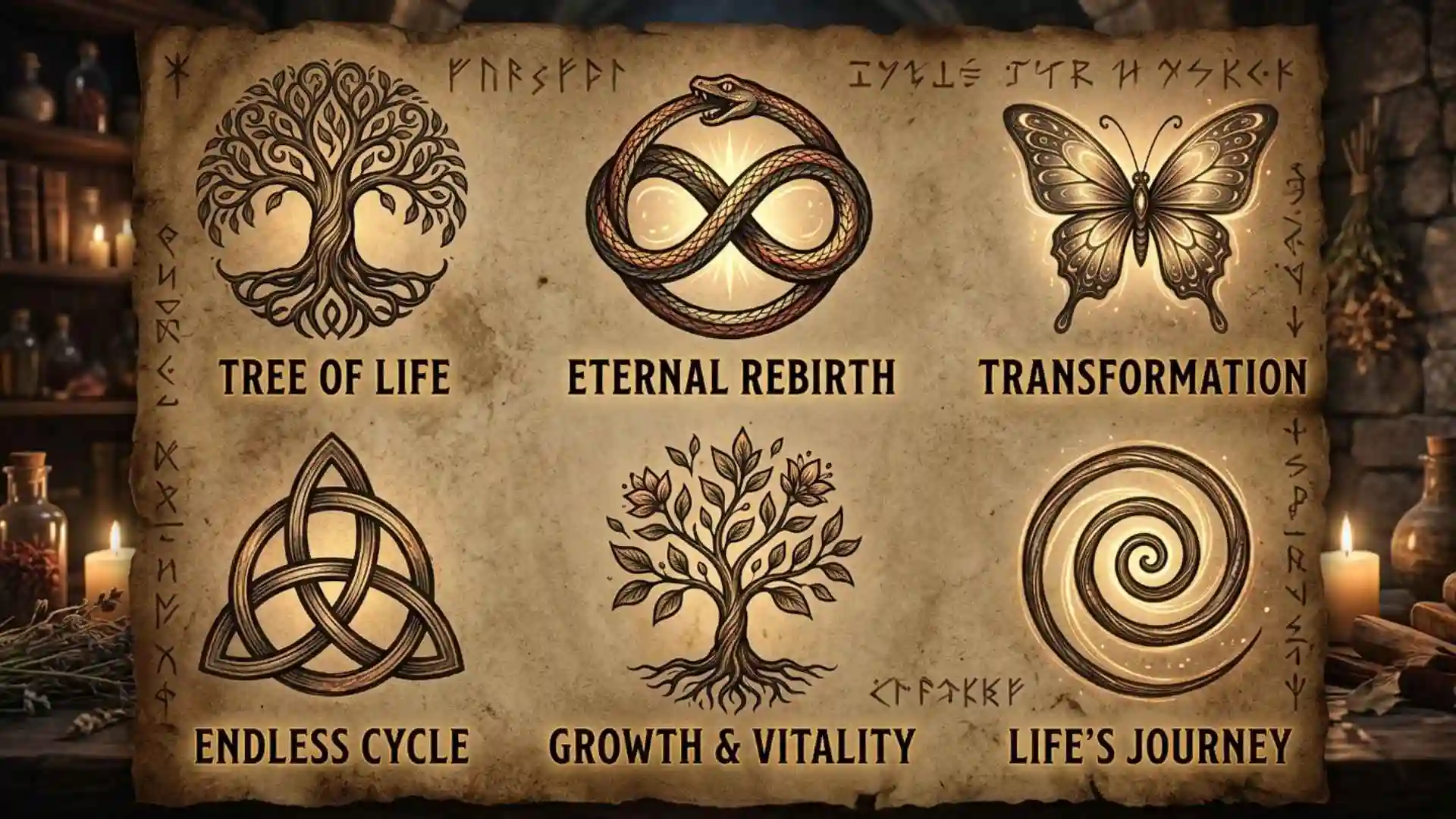
Witch symbols have fascinated people for centuries, appearing in folklore, ancient traditions, spiritual practices, art, literature, and modern popular culture. From the moon and pentagram to herbs, cauldrons, black cats, and magical circles, these symbols can represent ideas such as protection, transformation, intuition, nature, mystery, and spiritual power.
The meaning of a witch symbol often depends on its historical and cultural context. Some symbols are connected with pre-Christian traditions, while others became associated with witchcraft through European folklore, ceremonial magic, modern Paganism, Wicca, or popular culture. A symbol that represents protection in one tradition may have a very different meaning somewhere else.
In this guide, we’ll explore the most recognizable witch symbols and their meanings, along with their ancient origins, spiritual associations, and cultural significance. You’ll learn what symbols such as the pentagram, triple moon, crescent moon, broom, cauldron, crystal, black cat, and magical circle can represent—and how their meanings have changed over time.
Quick Answer
Witch symbols are meaningful signs connected with witchcraft, folklore, spirituality, and magical traditions. They often represent protection, nature, transformation, intuition, and spiritual connection. Common witch symbols include the pentagram, triple moon, crescent moon, cauldron, broom, crystals, herbs, and the ouroboros, each carrying historical and symbolic meanings.
Quick Facts About Witch Symbols
| Aspect | Information |
| Origin | Ancient civilizations, folk traditions, pagan beliefs, and spiritual practices |
| Historical Significance | Used for protection, rituals, healing, astrology, and connection with nature |
| Main Meaning | Magic, transformation, wisdom, intuition, and spiritual awareness |
| Spiritual Meaning | Represents energy, balance, personal growth, and connection with the universe |
| Cultural Importance | Appears in European folklore, pagan traditions, mythology, and modern spirituality |
| Modern Usage | Used in tattoos, jewelry, fashion, artwork, books, movies, and spiritual practices |
What Are Witch Symbols?
Witch symbols are visual signs, objects, or patterns associated with witchcraft, magical traditions, folklore, and spiritual practices. These symbols have been used to represent ideas such as protection, healing, transformation, feminine energy, nature, and communication with spiritual forces.
The history of witch symbols goes back thousands of years. Ancient cultures often used symbols to explain natural events, honor gods and goddesses, and create a connection between humans and the spiritual world.
Many symbols connected with witches today did not originally belong only to witchcraft. Some came from ancient Egyptian beliefs, Greek mythology, Celtic traditions, Norse mythology, and early European folk practices.
During the medieval period in Europe, symbols connected with magic became associated with witches because people feared practices they did not understand. Later, modern spiritual movements such as Wicca and contemporary paganism reclaimed many of these symbols as representations of wisdom, nature, and personal empowerment.
Today, witch symbols are used by people interested in spirituality, mythology, history, art, and self-expression.
Deep Symbolic Meaning of Witch Symbols
Spiritual Meaning of Witch Symbols
On a spiritual level, witch symbols often represent a connection between humans, nature, and unseen energies. Many traditions believe symbols can focus intention and help people connect with their inner selves.
The moon, for example, represents cycles, intuition, and feminine energy. Because the moon changes shape throughout the month, it became a powerful symbol of transformation and renewal.
The pentagram is another important symbol. In many modern spiritual traditions, it represents the five elements:
- Earth
- Air
- Fire
- Water
- Spirit
The symbol reminds practitioners of balance between physical life and spiritual awareness.
Witch symbols are often viewed as tools for meditation, reflection, and personal growth rather than simply magical objects.
Psychological Meaning of Witch Symbols
Psychologically, witch symbols represent powerful human ideas and emotions. They often connect with Carl Jung’s concept of archetypes, which suggests that certain images carry universal meanings within human consciousness.
The witch archetype itself can represent:
- Wisdom and independence
- Hidden knowledge
- Personal transformation
- The unknown parts of the human mind
- The balance between creation and destruction
Humans are naturally attracted to mysterious symbols because they help express emotions that words cannot always describe.
A person wearing a moon necklace or a witch symbol tattoo may not practice witchcraft. Instead, the symbol may represent creativity, strength, curiosity, or connection with nature.
Cultural Meaning of Witch Symbols
Across cultures, witch symbols reflect different beliefs about life, death, nature, and spirituality.
Some communities viewed magical symbols as protective signs. Others saw them as representations of knowledge passed through generations.
Symbols connected with witches often preserve stories about healers, herbalists, wise women, and spiritual leaders who worked closely with natural elements.
Types and Variations of Witch Symbols
Pentagram
Visual Description: A five-pointed star drawn with five straight lines.
Meaning: The pentagram is one of the most recognized witch symbols. It commonly represents balance, protection, and the connection between humans and the natural world.
Symbolism:
- Earth
- Air
- Fire
- Water
- Spirit
Cultural Connection: Ancient Greeks used the pentagram as a mathematical and philosophical symbol. Later, it became connected with pagan and Wiccan traditions.
Where It Appears:
- Ritual tools
- Jewelry
- Tattoos
- Books about witchcraft
- Modern spiritual artwork
A pentagram inside a circle is called a pentacle and is often used as a protective symbol.
Triple Moon Symbol
Visual Description: Three moon shapes showing the waxing moon, full moon, and waning moon.
Meaning: Represents the three stages of life and feminine energy.
Symbolism:
- Maiden
- Mother
- Crone
Cultural Connection: Often associated with the goddess archetype in modern pagan traditions.
Where It Appears:
- Wiccan jewelry
- Altars
- Tattoos
- Spiritual artwork
Crescent Moon
Visual Description: A curved shape representing part of the moon.
Meaning: The crescent moon symbolizes intuition, dreams, mystery, and transformation.
Cultural Connection: The moon has been important in many civilizations, including ancient Egypt, Greece, and Islamic cultures.
Where It Appears:
- Astrology
- Jewelry
- Religious art
- Fantasy designs
Cauldron
Visual Description: A deep cooking pot traditionally associated with witches.
Meaning: Represents transformation, creation, and the blending of different elements.
Symbolism:
- Change
- Rebirth
- Healing
- Knowledge
In folklore, witches were often shown preparing magical mixtures in cauldrons. Historically, however, large cooking vessels were common household tools.
Broom
Visual Description: A traditional sweeping tool.
Meaning: Represents cleansing, protection, and removing negative energy.
The image of witches flying on broomsticks comes mainly from European folklore and later storytelling.
Crystal Symbols
Visual Description: Natural stones with unique shapes and colors.
Meaning: Crystals are often associated with energy, healing, and spiritual focus.
Common examples include:
- Amethyst for intuition
- Quartz for clarity
- Obsidian for protection
Ouroboros
Visual Description: A serpent or dragon eating its own tail.
Meaning: Represents endless cycles, rebirth, and transformation.
Cultural Connection: Appears in ancient Egyptian symbolism and later became connected with alchemy and mystical traditions.
Witch Symbols Across Different Cultures
Ancient Egypt
Ancient Egyptian culture included many symbols connected with magic, protection, and spiritual power.
The Egyptian concept of “heka” referred to magical energy that could influence life and nature. Symbols such as the ankh represented life, while the Eye of Horus symbolized protection and healing.
Although ancient Egyptians did not have witches in the modern sense, their magical traditions influenced later ideas about mystical symbols.
Ancient Greece
Greek mythology included many figures connected with magic and wisdom.
The goddess Hecate became strongly associated with witchcraft, crossroads, night, and the moon. She was often considered a guardian of hidden knowledge.
Greek philosophers also used symbols like the pentagram to represent harmony and mathematical perfection.
Roman Culture
Roman society inherited many Greek magical traditions. Amulets, charms, and protective symbols were common in everyday life.
Romans used symbols to seek protection from illness, bad luck, and spiritual dangers.
Eastern Traditions
Many Eastern cultures developed symbols connected with energy, balance, and spiritual transformation.
Examples include:
- Mandalas in Hindu and Buddhist traditions
- Yin and yang in Chinese philosophy
- Sacred geometry patterns
These symbols share similarities with witch traditions because they focus on harmony between humans and the universe.
Indigenous Traditions
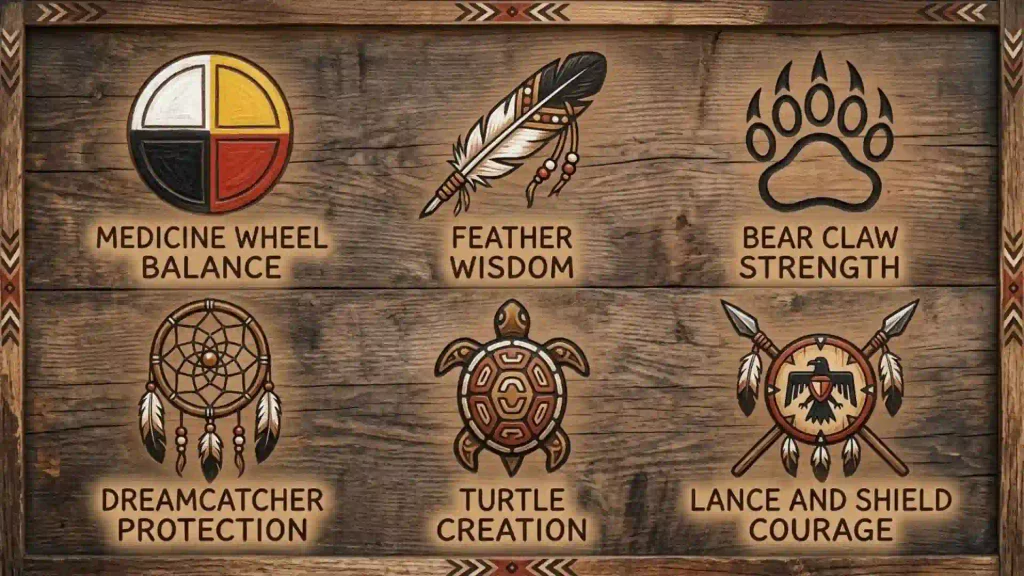
Indigenous cultures around the world have used symbols connected with nature, ancestors, animals, and spiritual worlds.
Examples include:
- Animal spirits
- Nature symbols
- Sacred patterns
- Healing symbols
These traditions often view symbols as living connections between people and the environment.
Modern Interpretations
Today, witch symbols appear in modern spirituality, fantasy culture, fashion, and personal expression.
Many people use these symbols to represent:
- Independence
- Creativity
- Feminine power
- Connection with nature
- Personal transformation
Similar Symbols and Their Meanings
| Symbol | Similar Meaning | Difference |
| Pentagram | Protection and balance | More connected with elemental symbolism |
| Mandala | Spiritual harmony | Focuses on meditation and cosmic order |
| Yin Yang | Balance | Represents opposing forces working together |
| Ankh | Life and energy | Rooted in ancient Egyptian culture |
| Moon Symbol | Cycles and intuition | Connected strongly with lunar energy |
Many symbols overlap in meaning because different cultures often explored similar human experiences.
Witch Symbols in Mythology and Folklore
Witch symbols appear throughout myths and legends from around the world.
In Greek mythology, Hecate represented magic, crossroads, and mystery. Stories about Circe described a powerful woman skilled in transformation and herbal knowledge.
European folklore often portrayed witches using symbols such as:
- Brooms
- Cauldrons
- Black cats
- Herbs
- Magical circles
In Celtic traditions, wise women and healers were often connected with nature and seasonal cycles.
These stories shaped the modern image of witches as mysterious figures with knowledge of hidden forces.
Witch Symbols in Art, Literature, Movies, and Pop Culture
Witch symbols have become powerful images in creative works.
Literature
Books such as Shakespeare’s Macbeth used witches and magical imagery to explore ambition, fate, and human weakness.
Fantasy novels often use witch symbols to represent hidden knowledge and supernatural power.
Movies and Television
Modern films and shows frequently use witch symbols through:
- Magical circles
- Ancient books
- Crystal objects
- Moon imagery
- Potion-making scenes
These symbols create an atmosphere of mystery and fantasy.
Tattoos and Fashion
Many people choose witch symbols as tattoos because they represent personal meanings such as:
- Strength
- Transformation
- Freedom
- Mystery
- Spiritual connection
Jewelry featuring moons, pentagrams, and crystals has also become popular.
Spiritual and Dream Meaning of Witch Symbols
Dreams involving witch symbols can have many interpretations depending on personal experiences.
Common meanings include:
| Symbol | Possible Dream Meaning |
| Moon | Intuition, emotions, personal cycles |
| Witch | Hidden knowledge or personal transformation |
| Cauldron | Creativity and change |
| Crystal | Healing and clarity |
| Pentagram | Protection and balance |
Spiritually, seeing witch symbols may encourage self-reflection and awareness.
However, dream meanings are personal. A symbol’s meaning depends on the dreamer’s emotions, culture, and life experiences.
Positive and Negative Meanings of Witch Symbols
| Positive Meaning | Negative Meaning |
| Wisdom | Fear of the unknown |
| Transformation | Mystery or uncertainty |
| Protection | Misunderstanding |
| Healing | Superstition |
| Independence | Social judgment |
A symbol does not have one fixed meaning. Its interpretation changes depending on culture, history, and personal belief.
Why Humans Are Attracted to Witch Symbols
Humans have always searched for meaning beyond the physical world.
Witch symbols attract people because they combine:
- Mystery
- History
- Beauty
- Personal identity
- Spiritual curiosity
Symbols allow people to express feelings and beliefs visually.
A person may feel connected to a witch symbol because it represents a journey of self-discovery or a desire to understand hidden parts of life.
These symbols also connect modern people with ancient traditions, creating a sense of belonging and continuity.
Modern Uses of Witch Symbols
Tattoos
Witch symbols are popular tattoo designs because they often represent personal transformation and inner strength.
Jewelry
Moon pendants, crystal necklaces, and pentagram rings are commonly worn as meaningful accessories.
Fashion
Witch-inspired fashion often uses dark colors, celestial patterns, and mystical designs.
Branding and Design
Some businesses use mystical symbols to create feelings of creativity, uniqueness, and imagination.
Social Media
Witch symbols are widely used in online communities focused on spirituality, astrology, fantasy, and alternative lifestyles.
Home Decor
Symbols such as moons, crystals, and magical patterns are used in decorative artwork and spiritual spaces.
Interesting Facts About Witch Symbols
- The pentagram was originally used as a symbol of harmony and mathematical perfection.
- The image of witches flying on broomsticks developed from European folklore.
- The moon is one of the oldest symbols connected with magic and transformation.
- Ancient Egyptians had magical traditions called heka.
- Hecate from Greek mythology became one of the strongest figures associated with witchcraft.
- Many symbols labeled as “witch symbols” originally belonged to broader cultural traditions.
- Modern Wiccan practices helped revive interest in ancient symbolic meanings.
- The black cat became associated with witches through European superstition.
Frequently Asked Questions
What is the most common witch symbol?
The pentagram is one of the most recognized witch symbols. It often represents protection, balance, and connection with natural elements.
Are witch symbols always evil?
No. Witch symbols are not automatically evil. Many represent wisdom, healing, protection, nature, and personal growth.
What does the triple moon symbol mean?
The triple moon symbolizes the stages of life, feminine energy, intuition, and transformation.
What is the spiritual meaning of witch symbols?
Spiritually, witch symbols often represent connection with nature, inner wisdom, transformation, and awareness.
Why do people use witch symbols today?
People use witch symbols for personal expression, spirituality, art, fashion, tattoos, and connection with history.
Conclusion
Witch symbols are powerful reminders of humanity’s relationship with mystery, nature, and spiritual exploration. Their meanings have changed across civilizations, but their connection to transformation, wisdom, and personal discovery remains strong. From ancient traditions to modern art, these symbols continue to inspire curiosity and reflection. Every symbol carries a story, and understanding that story reveals deeper parts of human imagination and culture.
 Sarah Thompson
 John Mercer