
Demonic symbols have appeared throughout history in religion, mythology, folklore, art, literature, and popular culture. From ancient protective marks and mythological creatures to symbols associated with evil, temptation, or the underworld, their meanings can change greatly depending on the culture and historical period. A symbol that represents danger or darkness in one tradition may have a completely different meaning in another.
The history behind these symbols is often more complicated than modern movies, games, and social media suggest. Some symbols commonly described as “demonic” were not originally created to represent demons at all. Their meanings may have developed through religious interpretations, medieval traditions, occult movements, folklore, or later popular culture. Understanding their origins helps separate historical symbolism from modern assumptions.
In this guide, we’ll explore demonic symbols, their hidden meanings, ancient origins, cultural history, and modern interpretations. You’ll learn what different symbols have represented, how their meanings changed over time, and why certain signs are still connected with demons, darkness, witchcraft, or the supernatural today.
Quick Answer
Demonic symbols are images, signs, or markings traditionally associated with demons, dark spiritual forces, forbidden knowledge, or supernatural beliefs. Their meanings vary across cultures and time periods, appearing in mythology, religion, art, literature, entertainment, and personal expression. Many symbols represent fear, temptation, power, mystery, or the human struggle between good and evil.
Quick Facts About Demonic Symbols
| Aspect | Information |
| Origin | Ancient religious beliefs, mythology, folklore, and spiritual traditions |
| Historical Significance | Used to represent supernatural forces, protection, fear, or forbidden powers |
| Main Meaning | Darkness, temptation, chaos, rebellion, mystery, or evil forces |
| Spiritual Meaning | Often connected with negative energies, spiritual battles, or hidden aspects of existence |
| Cultural Importance | Appears in religious texts, legends, artwork, rituals, and storytelling |
| Modern Usage | Used in movies, tattoos, fashion, music, gaming, and fictional storytelling |
What Are Demonic Symbols?
Demonic symbols are visual representations connected with demons, evil spirits, supernatural beings, or dark spiritual concepts. These symbols can appear as signs, geometric patterns, creatures, letters, numbers, or mysterious markings.
Throughout history, humans have used symbols to understand forces they could not explain. Before modern science, natural disasters, illness, dreams, and unusual events were often connected to supernatural beings. Demonic symbols developed from these beliefs and became part of religious traditions, folklore, and mythology.
Ancient cultures often created symbols to represent spiritual enemies or dangerous forces. In many cases, these symbols were not originally created to worship evil. Instead, they were used as warnings, protective signs, or ways to understand the unknown.
Over time, different religions and societies developed their own ideas about demons. In Christianity, demons became associated with fallen angels and spiritual corruption. In ancient Mesopotamia, spirits and supernatural beings were part of complex belief systems involving protection and danger. In folklore around the world, dark entities often represented chaos, temptation, or forces beyond human control.
Today, demonic symbols appear in fictional stories, horror films, fantasy worlds, and popular culture. Their meanings often depend on the context in which they are used.
Deep Symbolic Meaning of Demonic Symbols
Spiritual Level
On a spiritual level, demonic symbols are often connected with ideas of darkness, temptation, and spiritual conflict. Many traditions describe demons as forces that challenge human morality or lead people away from spiritual balance.
These symbols may represent:
- The struggle between good and evil
- Human weaknesses and temptations
- Hidden fears and spiritual challenges
- The unknown parts of existence
- Inner battles between desires and values
In some spiritual traditions, darkness is not always viewed as purely evil. It can also represent transformation, personal growth, and facing hidden parts of oneself.
Psychological Level
Psychologists often view demonic imagery as a reflection of the human mind. The famous psychologist Carl Jung explored the idea of the “shadow,” which represents the hidden and rejected parts of human personality.
From a Jungian perspective, demonic symbols may represent:
- Fear of unknown aspects of ourselves
- Suppressed emotions
- Inner conflicts
- Personal transformation
- The need to confront fears
People are naturally attracted to symbols that represent powerful emotions. Demonic imagery creates strong reactions because it connects with deep human experiences such as fear, curiosity, survival instincts, and the search for meaning.
Cultural Level
Culturally, demonic symbols represent how societies understand danger, morality, and supernatural forces.
Different cultures have used dark symbols to:
- Warn people about harmful behavior
- Explain mysterious events
- Tell moral stories
- Represent chaos or destruction
- Explore the relationship between humans and the spiritual world
A symbol considered evil in one culture may have a different meaning in another.
Types and Variations of Demonic Symbols
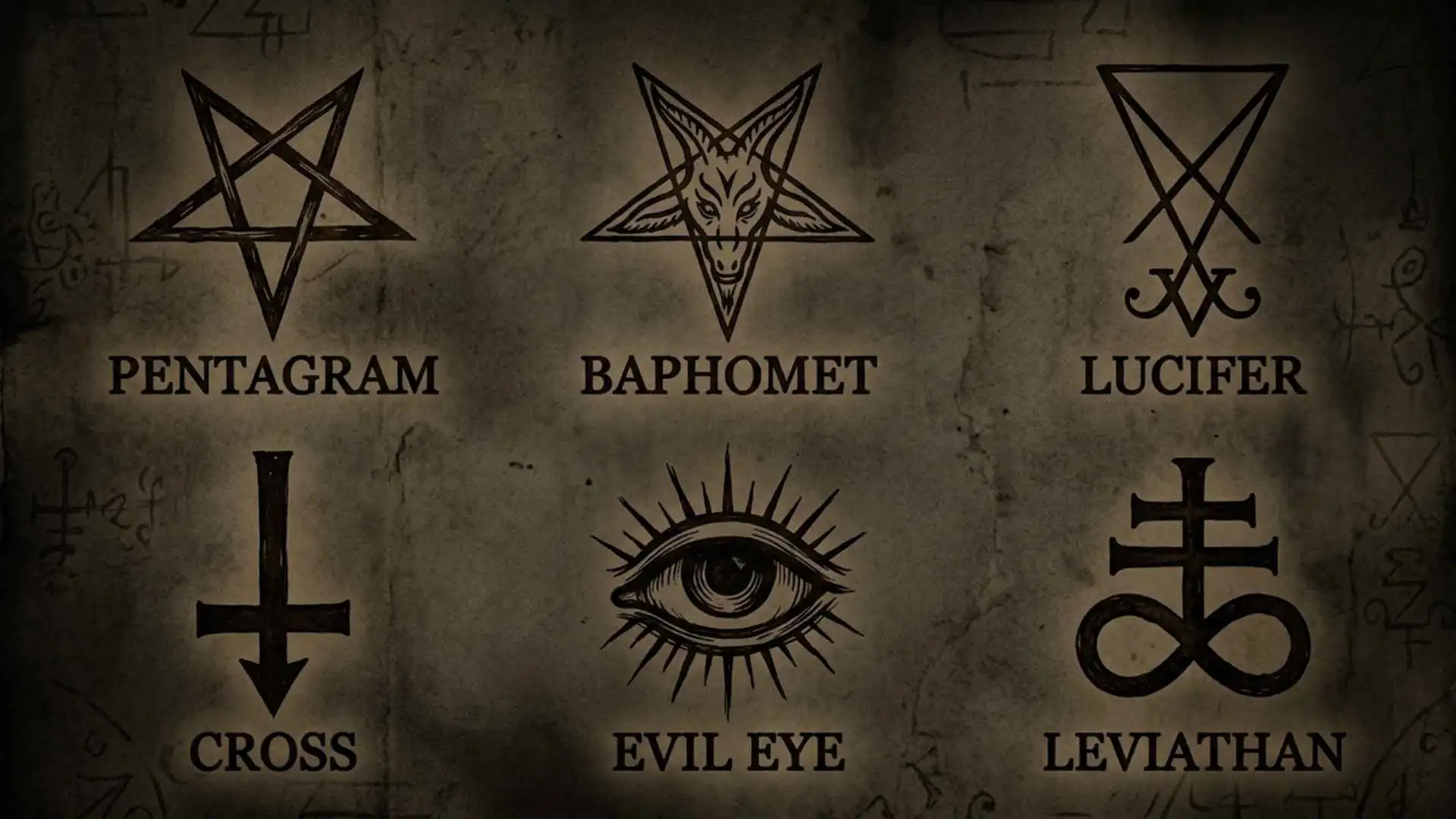
Baphomet Symbol
Visual Description
Baphomet is commonly represented as a goat-headed figure with human features, wings, and symbolic markings.
Meaning
Baphomet is often associated with mystery, duality, and hidden knowledge. Although frequently connected with Satanism in modern culture, its history is more complicated.
Symbolism
It can represent:
- Balance between opposites
- Human and animal nature
- Knowledge and enlightenment
- The union of physical and spiritual worlds
Cultural Connection
The image became widely known through occult traditions and later popular media.
Where It Appears
- Occult artwork
- Books about symbolism
- Movies
- Music imagery
- Tattoos
Pentagram and Inverted Pentagram
Visual Description
A pentagram is a five-pointed star. An inverted pentagram places one point downward.
Meaning
The pentagram has many meanings throughout history. It was not always considered a demonic symbol.
Symbolism
Depending on context, it may represent:
- Protection
- Elements of nature
- Spiritual balance
- Occult beliefs
- Rebellion
Cultural Connection
Ancient Greeks, Christians, and various spiritual groups used versions of the pentagram.
Where It Appears
- Ancient writings
- Religious artwork
- Modern occult practices
- Horror films
Sigils
Visual Description
Sigils are unique symbols created from letters, shapes, and designs.
Meaning
They are often associated with magical practices and spiritual intentions.
Symbolism
Sigils may represent:
- Personal power
- Hidden knowledge
- Intentions
- Spiritual forces
Cultural Connection
Sigils appear in ceremonial magic traditions and modern fantasy.
Where It Appears
- Occult literature
- Fiction
- Video games
- Art
Horned Figures
Visual Description
Figures with horns often appear as human-animal hybrids.
Meaning
Horned beings have different meanings across cultures. They may represent nature, power, fertility, or darkness.
Symbolism
They can represent:
- Wild instincts
- Strength
- Forbidden power
- Chaos
Cultural Connection
Horned figures appear in Greek mythology, European folklore, and modern horror.
Demonic Symbols Across Different Cultures
Ancient Egypt
Ancient Egyptians had complex beliefs about spirits, gods, and supernatural beings. Some creatures associated with chaos were viewed as dangerous forces.
The Egyptian concept of chaos was represented by beings such as Apep, a giant serpent that opposed the sun god Ra.
Symbolically, such figures represented:
- Darkness overcoming light
- Disorder versus harmony
- The eternal struggle between creation and destruction
Ancient Greece
Greek mythology included many creatures that modern audiences may consider demonic.
Examples include:
- The Erinyes, spirits of vengeance
- The Underworld beings connected with death
- Monsters such as Medusa and the Minotaur
These figures often represented punishment, fear, and forces beyond human control.
Roman Culture
Roman mythology adopted many Greek ideas while adding its own interpretations.
Dark supernatural beings were connected with:
- The underworld
- Death
- Fate
- Spiritual warnings
Roman writers often used these figures as symbols of human morality and consequences.
Eastern Traditions
Eastern cultures have diverse views of demons and spirits.
In Hindu and Buddhist traditions, beings such as asuras and wrathful spirits can symbolize:
- Desire
- Ignorance
- Inner obstacles
- Spiritual challenges
These figures are not always viewed as purely evil. They can represent struggles that lead to spiritual growth.
Indigenous Traditions
Many Indigenous cultures have stories about powerful spirits, trickster beings, and supernatural forces.
These beings often represent:
- Natural power
- Warnings
- Balance
- Respect for the spiritual world
Their meanings depend strongly on each individual tradition.
Modern Interpretations
Today, demonic symbols are often used symbolically rather than literally.
They may represent:
- Individual freedom
- Rebellion
- Dark aesthetics
- Horror themes
- Personal identity
Similar Symbols and Their Meanings
| Symbol | Similarity | Difference |
| Skull Symbol | Represents death and darkness | Usually focuses on mortality rather than demons |
| Dragon Symbol | Represents powerful creatures | Often symbolizes wisdom or strength |
| Serpent Symbol | Connected with temptation and transformation | Can represent healing as well as danger |
| Cross Symbol | Connected with spiritual conflict | Usually represents faith and salvation |
| Eye Symbol | Represents hidden knowledge | Not always connected with evil |
A common misconception is that every dark-looking symbol is automatically demonic. Context, culture, and intention are important when interpreting symbols.
Demonic Symbols in Mythology and Folklore
Ancient stories often used demonic figures to explain human fears and moral lessons.
In European folklore, demons were frequently described as tempters who tested human character.
In Middle Eastern traditions, supernatural beings such as jinn appeared in stories involving mystery, morality, and human choices.
In Japanese folklore, creatures like oni were powerful beings often associated with punishment, protection, or chaos.
These stories shaped modern ideas about demons and influenced books, films, and entertainment.
Demonic Symbols in Art, Literature, Movies, and Pop Culture
Demonic symbols have played a major role in creative expression.
Paintings
Artists throughout history used dark imagery to explore:
- Human suffering
- Religious fears
- The battle between good and evil
Literature
Writers have used demonic symbolism to discuss:
- Temptation
- Morality
- Human ambition
- Inner conflict
Examples include works inspired by figures such as demons, fallen angels, and supernatural beings.
Movies and Television
Modern horror and fantasy frequently use demonic symbols to create mystery and emotional impact.
They often represent:
- Fear of the unknown
- Hidden threats
- Psychological struggles
Tattoos and Fashion
Some people choose demonic imagery because they connect with:
- Dark aesthetics
- Personal transformation
- Rebellion
- Individual expression
A tattoo does not always represent belief in evil. Meaning depends on personal interpretation.
Spiritual and Dream Meaning of Demonic Symbols
Dreams involving demonic symbols can feel intense and emotional. Many psychologists believe such dreams often reflect personal fears, stress, or unresolved feelings.
Possible interpretations include:
- Facing personal fears
- Feeling threatened
- Experiencing inner conflict
- Entering a period of change
- Confronting hidden emotions
From a spiritual perspective, some people interpret these dreams as warnings or reminders to seek balance.
Dream symbolism is personal, and the meaning depends on the dreamer’s experiences.
Positive and Negative Meanings of Demonic Symbols
| Positive Meaning | Negative Meaning |
| Personal transformation | Fear |
| Facing hidden emotions | Evil intentions |
| Strength during challenges | Destruction |
| Rebellion against control | Chaos |
| Understanding the shadow self | Temptation |
A symbol can represent both light and darkness depending on the situation. Many powerful symbols contain multiple layers of meaning.
Why Humans Are Attracted to Demonic Symbols
Humans have always been fascinated by mysteries and forbidden ideas.
Demonic symbols attract attention because they represent powerful themes:
- Fear and curiosity
- The unknown
- Hidden knowledge
- Human struggles
- The difference between good and evil
People are naturally drawn to things that challenge ordinary understanding. Dark symbols often allow people to explore emotions they normally avoid.
They also connect with storytelling traditions that have existed for thousands of years.
Modern Uses of Demonic Symbols
Tattoos
Demonic symbols are popular in tattoo culture because they can represent personal stories, transformation, or unique identity.
Jewelry
Dark symbols appear in rings, necklaces, and accessories because many people appreciate their artistic style.
Fashion
Alternative fashion communities often use dark imagery to express individuality.
Branding and Media
Entertainment industries use demonic symbols to create memorable identities in:
- Music
- Video games
- Horror films
- Fantasy stories
Contemporary Spirituality
Some modern spiritual movements reinterpret old symbols in personal and philosophical ways.
Interesting Facts About Demonic Symbols
- Many symbols considered “demonic” today had neutral or positive meanings in ancient cultures.
- The pentagram existed long before modern associations with evil.
- Ancient civilizations used supernatural symbols to explain natural events.
- Demonic imagery often represents psychological fears rather than literal beliefs.
- Many horror symbols are inspired by ancient mythology.
- The meaning of a symbol can completely change over centuries.
- Dark symbols are commonly used in storytelling because they create emotional reactions.
- Some cultures view supernatural beings as teachers rather than enemies.
Frequently Asked Questions
What are demonic symbols?
Demonic symbols are images or signs associated with demons, dark spiritual forces, supernatural beliefs, or mysterious powers. Their meanings depend on culture and context.
Are all demonic symbols evil?
No. Many symbols have different meanings across history. Some represent protection, transformation, mystery, or personal expression.
What is the most famous demonic symbol?
The inverted pentagram, Baphomet image, and various occult sigils are among the most recognized symbols associated with demonic themes.
Why do people use demonic symbols?
People use them for artistic expression, storytelling, fashion, tattoos, symbolism, or interest in mythology and history.
Do demonic symbols have spiritual meanings?
Yes. Some traditions interpret them as symbols of spiritual conflict, temptation, transformation, or hidden aspects of human nature.
Conclusion
Demonic symbols are powerful examples of how humans use images to understand fear, mystery, and the unknown. Throughout history, these symbols have represented everything from spiritual warnings to personal transformation. Their meanings are shaped by culture, religion, psychology, and individual interpretation. Understanding demonic symbols allows us to explore the deeper stories behind human beliefs and imagination.
 Sarah Thompson
 John Mercer