
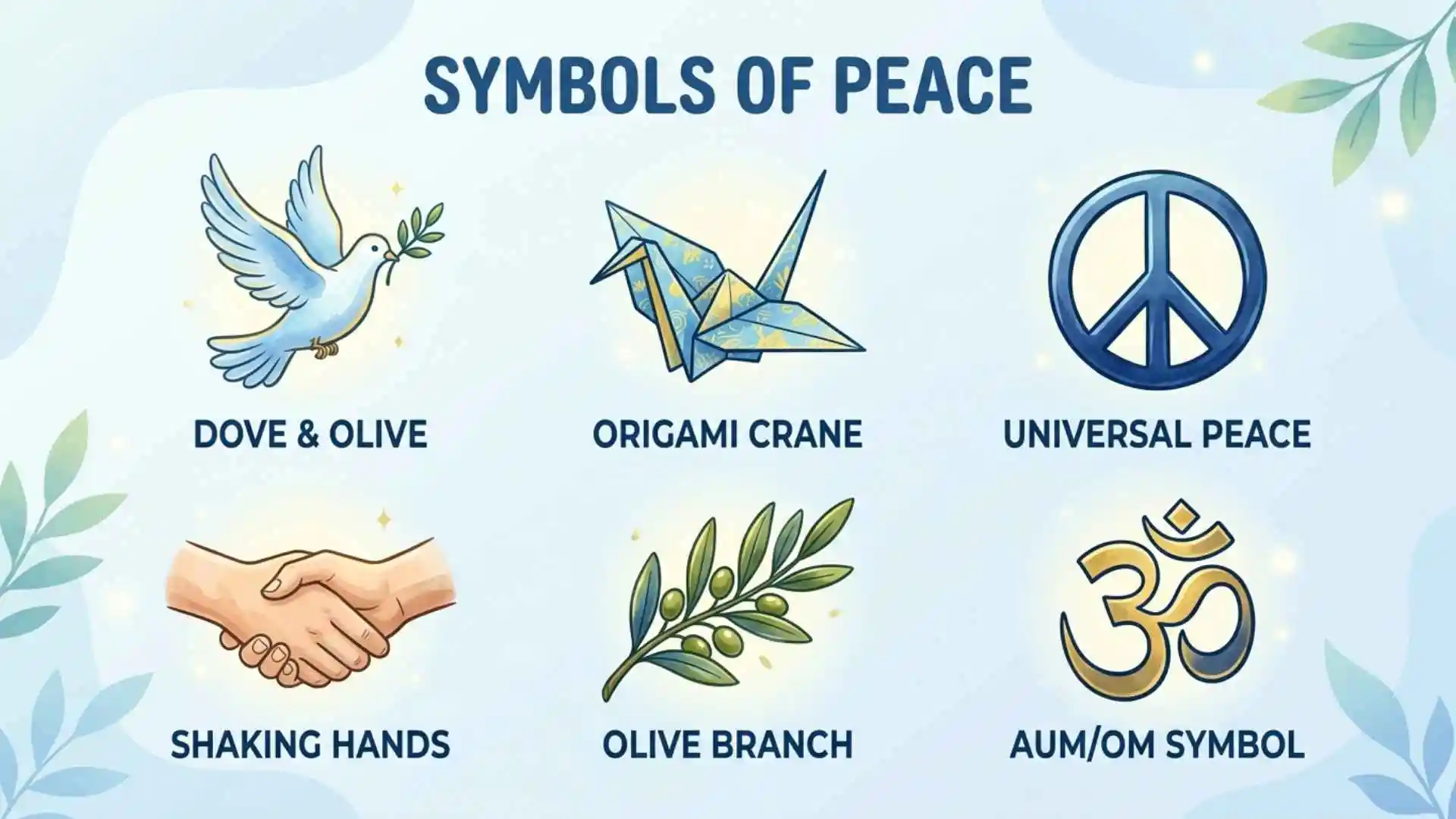
Peace has been represented through symbols, colors, animals, plants, and meaningful objects for thousands of years. From the familiar white dove and olive branch to ancient religious and cultural symbols, these signs express ideas such as harmony, reconciliation, hope, compassion, and the end of conflict. Many of them carry stories that connect people across different times and places.
Some symbols of peace have ancient roots, while others became popular through modern movements and global events. The dove, for example, has been associated with peace and hope in religious and cultural traditions, while the olive branch has long represented reconciliation. Other symbols, such as the peace sign, lotus flower, and white flag, have developed their own meanings through history, art, religion, and social movements.
In this guide, you will discover the meanings, origins, and cultural stories behind famous peace symbols from around the world. Whether you are researching symbolism, looking for a meaningful design, studying cultural traditions, or simply curious about what different signs represent, these examples can help you understand how humanity has expressed the desire for peace throughout history.
Quick Answer
Symbols of peace are visual signs that represent harmony, nonviolence, unity, forgiveness, and the hope for a better world. Famous examples include the dove, olive branch, peace sign, white flag, and lotus flower. These symbols appear in religions, cultures, art, politics, and modern movements promoting cooperation and understanding.
Quick Facts About Symbols of Peace
| Aspect | Information |
| Origin | Many peace symbols come from ancient civilizations, religions, mythology, and social movements |
| Historical Significance | Used to represent the end of conflicts, treaties, reconciliation, and peaceful cooperation |
| Main Meaning | Harmony, unity, safety, forgiveness, and nonviolence |
| Spiritual Meaning | Inner calm, compassion, balance, and connection with higher consciousness |
| Cultural Importance | Found in Christianity, Buddhism, Hindu traditions, Indigenous cultures, and global peace movements |
| Modern Usage | Used in activism, logos, jewelry, tattoos, artwork, fashion, and social campaigns |
What Are Symbols of Peace?
Symbols of peace are images, objects, gestures, or signs that communicate ideas of harmony, kindness, and freedom from violence. Throughout history, humans have used symbols because visual language can communicate emotions and beliefs beyond spoken words.
A peace symbol does more than represent the absence of war. It often reflects deeper human values such as compassion, respect, understanding, and cooperation.
Ancient societies used peaceful symbols in religious ceremonies, artwork, and diplomacy. For example, the olive branch became associated with peace in ancient Greece because olive trees were connected with prosperity, protection, and reconciliation.
Over time, symbols of peace evolved with changing societies. Some began as religious or cultural signs and later became global representations of hope. The dove, lotus flower, and white flag are examples of symbols that gained meanings across different civilizations.
Modern peace movements have also created new symbols. The famous peace sign created in 1958 became strongly associated with nuclear disarmament and later expanded into a universal symbol of peaceful activism.
Deep Symbolic Meaning of Symbols of Peace
Spiritual Meaning of Peace Symbols
On a spiritual level, symbols of peace represent inner harmony and the journey toward emotional balance. Many traditions believe that external peace begins with internal transformation.
The dove, for example, is often viewed as a messenger of divine peace. In Christianity, the dove represents the Holy Spirit and appears in the story of Noah’s Ark as a sign that the flood had ended and new life was beginning.
The lotus flower carries another spiritual meaning. In Buddhism and Hindu traditions, the lotus symbolizes purity, enlightenment, and spiritual growth because it rises from muddy water while remaining beautiful and clean.
These symbols remind people that peace is not only something created between nations. It is also something developed within the human heart through patience, forgiveness, and compassion.
Psychological Meaning of Peace Symbols
Psychologically, humans are naturally attracted to symbols because the brain uses images to create emotional connections. A symbol can instantly trigger memories, feelings, and beliefs.
Psychologist Carl Jung explained that certain images become universal symbols because they connect with shared human experiences. These symbols, known as archetypes, appear across cultures because they represent common emotional needs.
Peace symbols often connect with psychological desires for:
- Safety
- Belonging
- Emotional healing
- Stability
- Hope
- Connection
Seeing a dove, a calm ocean image, or a lotus flower may create feelings of relaxation because these images have been culturally linked with tranquility for generations.
Cultural Meaning of Peace Symbols
Across cultures, peace symbols represent collective dreams and shared values. Communities use them during ceremonies, protests, religious events, and moments of remembrance.
A white flag may symbolize surrender and the desire to stop fighting. An olive branch may represent negotiation and friendship. The peace sign may represent social change and resistance against violence.
Although different cultures use different symbols, the central message remains similar: humans seek ways to replace conflict with cooperation.
Types and Variations of Symbols of Peace
The Dove
Visual Description: A white bird, often shown flying with open wings.
Meaning: Peace, purity, hope, and reconciliation.
Symbolism: The dove represents a peaceful messenger carrying a message of renewal.
Cultural Connection: The dove appears in Christianity, Judaism, ancient mythology, and modern peace movements.
Where It Appears:
- Religious artwork
- Paintings
- Peace ceremonies
- Literature
- International organizations
The story of Noah’s Ark is one of the most famous examples. The dove returned carrying an olive leaf, showing that the waters had disappeared and peace had returned.
The Olive Branch
Visual Description: A branch with green olive leaves.
Meaning: Friendship, reconciliation, and the end of conflict.
Symbolism: The olive branch represents a willingness to create peace after disagreement.
Cultural Connection: Ancient Greeks and Romans associated olive branches with victory, diplomacy, and harmony.
Where It Appears:
- Ancient coins
- Government symbols
- Peace agreements
- Art and sculptures
The olive branch remains one of the oldest symbols of peace in human history.
The Peace Sign
Visual Description: A circle containing a vertical line with two downward branches.
Meaning: Nonviolence and opposition to war.
Symbolism: It originally represented nuclear disarmament.
Cultural Connection: Created in 1958 by British designer Gerald Holtom for the Campaign for Nuclear Disarmament.
Where It Appears:
- Activism
- Fashion
- Posters
- Social movements
Over time, it became a worldwide symbol of peaceful protest.
The White Flag
Visual Description: A plain white flag.
Meaning: Surrender, truce, and negotiation.
Symbolism: A request to stop fighting and seek peaceful communication.
Cultural Connection: Used internationally during warfare and diplomacy.
Where It Appears:
- Military history
- Peace negotiations
- Humanitarian situations
The Lotus Flower
Visual Description: A blooming flower rising from water.
Meaning: Enlightenment, purity, and spiritual peace.
Symbolism: Growth through challenges and transformation.
Cultural Connection: Important in Buddhism, Hinduism, and Asian spiritual traditions.
Where It Appears:
- Temples
- Meditation practices
- Religious artwork
- Jewelry
Symbols of Peace Across Different Cultures
Ancient Egypt
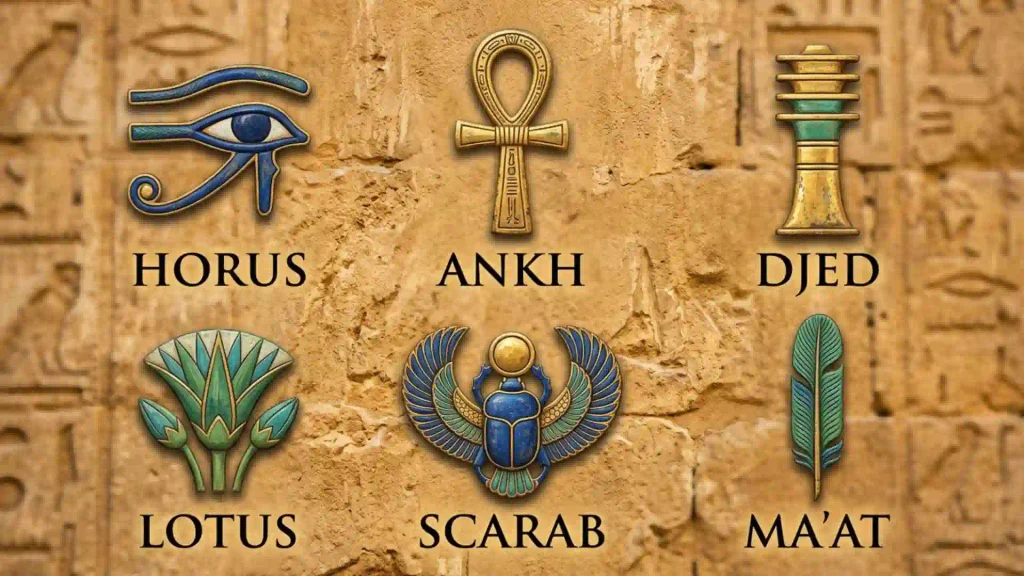
Ancient Egyptians valued balance, harmony, and cosmic order through the concept of Ma’at. Although Egypt did not have one single peace symbol like modern societies, several images represented stability and balance.
The ankh, lotus flower, and symbols connected with harmony reflected ideas of life, renewal, and spiritual balance.
Peace was viewed as maintaining order between humans, nature, and the divine world.
Ancient Greece
Ancient Greeks connected peace with the goddess Eirene, the personification of peace. She was often shown carrying a child named Plutus, representing prosperity that comes from peaceful societies.
The olive branch became one of Greece’s strongest peace symbols because olive trees represented abundance and cooperation.
Roman Culture
Romans adopted many Greek ideas about peace. The goddess Pax represented peace and stability throughout the Roman Empire.
The phrase “Pax Romana” described a long period of relative peace and prosperity under Roman rule. Roman art often showed peace through images of olive branches, cornucopias, and peaceful figures.
Eastern Traditions
Eastern religions developed powerful symbols connected with spiritual peace.
In Buddhism, the lotus flower represents enlightenment and freedom from suffering. The Dharma wheel represents balance, ethical living, and the path toward harmony.
In Hindu traditions, symbols such as Om represent spiritual unity and inner peace.
Indigenous Traditions
Many Indigenous cultures view peace as a relationship between humans, nature, and the spiritual world.
The peace pipe in some Native American traditions became associated with agreements, communication, and sacred gatherings.
Nature symbols such as feathers, circles, and animals may represent balance, respect, and connection.
Modern Interpretations
Today, peace symbols appear in global movements, humanitarian campaigns, and digital communication.
Organizations such as the United Nations use symbols of unity and cooperation to promote international peace.
Modern interpretations often combine traditional symbols with contemporary designs to communicate messages of tolerance and social harmony.
Similar Symbols and Their Meanings
| Symbol | Similar Meaning | Main Difference |
| Dove | Hope and reconciliation | Often connected with spiritual peace |
| Olive Branch | Friendship and agreement | Focuses on diplomacy and negotiation |
| Lotus Flower | Calm and transformation | Represents inner spiritual peace |
| Peace Sign | Nonviolence and activism | Connected with modern social movements |
| White Flag | Ending conflict | Represents surrender or a request for discussion |
A common misconception is that all peace symbols mean exactly the same thing. While they share similar themes, each symbol carries unique historical and cultural meanings.
Symbols of Peace in Mythology and Folklore
Peace symbols appear throughout myths and ancient stories because humans have always searched for ways to explain harmony.
The dove appears in biblical stories as a sign of renewal after destruction. Greek mythology connected peace with Eirene, who represented the calm that follows conflict.
The olive tree also appears in Greek mythology through Athena, who gifted the olive tree to Athens. The tree became a symbol of prosperity and peaceful civilization.
Many folklore traditions use birds, flowers, and natural elements as symbols because nature represents balance and renewal.
Symbols of Peace in Art, Literature, Movies and Pop Culture
Peace symbols have influenced artists, writers, and filmmakers for centuries.
In paintings, doves and olive branches often appear in scenes representing hope and reconciliation. Artists use these images to show humanity’s desire for healing after suffering.
Literature frequently uses peace symbols as metaphors. A flower blooming after hardship may represent personal growth, while a bird flying freely may symbolize liberation.
Movies and television often use peace symbols during stories about war, friendship, and social change. The peace sign has become especially common in documentaries, protest movements, and popular culture.
Tattoos and fashion also use peace symbols to express personal beliefs. A person may choose a lotus tattoo to represent growth, or a dove tattoo to represent freedom and hope.
Spiritual and Dream Meaning of Symbols of Peace
Dreams involving peace symbols are often interpreted as messages about emotional healing and balance.
Seeing a dove in a dream may represent hope, forgiveness, or a new beginning. Dreaming of a lotus flower may suggest personal growth and overcoming difficulties.
A white flag may symbolize the need to release stress, accept change, or stop fighting an internal struggle.
From a spiritual perspective, these symbols may encourage reflection, patience, and emotional awareness.
Positive and Negative Meanings of Symbols of Peace
| Positive Meaning | Negative Meaning |
| Harmony | False appearance of peace |
| Forgiveness | Avoiding necessary conflict |
| Healing | Giving up too easily |
| Unity | Forced agreement |
| Hope | Unrealistic expectations |
A symbol can have different meanings depending on the situation. Peace does not always mean avoiding problems. Sometimes true peace requires honesty, justice, and understanding.
Why Humans Are Attracted to Symbols of Peace
Humans are naturally drawn to symbols because they help organize complex emotions into simple images.
A person may see a dove and immediately think of hope. Someone else may see a lotus and remember personal growth.
Peace symbols connect with:
- Human survival instincts
- Emotional memories
- Cultural traditions
- Shared dreams
- Personal experiences
They remind people that cooperation is possible even after difficult times.
Modern Uses of Symbols of Peace
Tattoos and Jewelry
Peace symbols are popular choices for tattoos and jewelry because they allow people to express personal values. A peace sign necklace or dove tattoo can represent kindness, love, or a commitment to nonviolence.
Fashion and Design
Designers use peace symbols to communicate messages of unity and social awareness.
Branding and Social Media
Companies, charities, and online communities use peaceful imagery to create emotional connections with audiences.
Home Decor
Peace symbols in artwork and decorations create calming environments and represent emotional comfort.
Interesting Facts About Symbols of Peace
- The olive branch has represented peace for thousands of years.
- The modern peace sign was created for the nuclear disarmament movement.
- The dove became internationally recognized as a peace symbol after artworks by Pablo Picasso.
- Lotus flowers can grow in muddy water while remaining clean, making them powerful symbols of transformation.
- The white flag has been used in warfare as a request for communication and negotiation.
- Ancient Greek culture connected peace with prosperity because peaceful societies allowed agriculture and trade to grow.
- Peace symbols often use natural elements because humans associate nature with balance and renewal.
Frequently Asked Questions
What is the most famous symbol of peace?
The dove and olive branch are among the most recognized symbols of peace worldwide because they represent hope, reconciliation, and harmony.
What flower symbolizes peace?
The lotus flower is one of the strongest floral symbols of peace, especially in Buddhist and Hindu traditions.
What does the peace sign mean?
The peace sign represents nonviolence, nuclear disarmament, and social movements promoting harmony.
Why is a dove a symbol of peace?
The dove became a peace symbol because many cultures associate it with purity, hope, and new beginnings.
Are peace symbols the same in every culture?
No. Different cultures have unique peace symbols, but many share themes of harmony, healing, and unity.
Conclusion
Symbols of peace are powerful reminders of humanity’s shared desire for harmony and understanding. From ancient olive branches to modern peace signs, these images carry stories of hope, healing, and cooperation. They connect cultures, religions, and generations through a universal message. In a world where conflict continues to exist, symbols of peace remind us that compassion and unity remain possible.
 Sarah Thompson
 Michael Rivera