
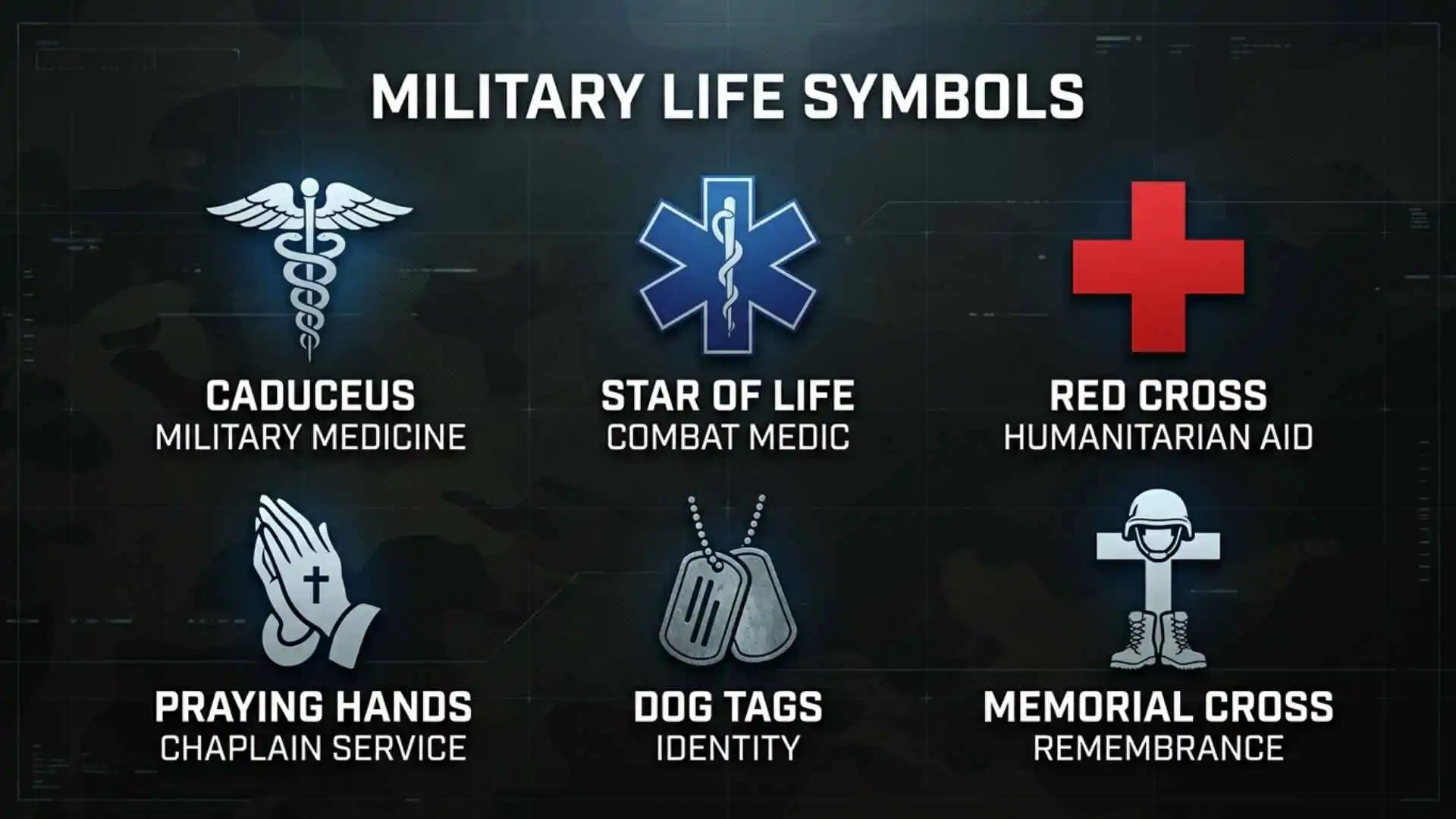
Military symbols have been used for centuries to represent service, courage, loyalty, leadership, and national identity. From flags and badges to medals, patches, emblems, and military insignia, these signs can communicate important information without using words. Each symbol may reflect a soldier’s unit, rank, achievements, mission, or connection to a particular military tradition.
The meaning behind military symbols often goes deeper than their appearance. Eagles can represent strength and freedom, stars may suggest rank or leadership, swords can symbolize courage and defense, while shields often represent protection and duty. Some symbols have ancient roots, while others were created for modern armed forces and specific branches or units. Their designs can also change over time as military traditions and national identities evolve.
In this guide, we’ll explore military symbols, their meanings, history, and cultural significance. You’ll learn how common military signs are used, what different colors and shapes can represent, and why certain emblems have remained powerful symbols of service. Whether you are researching military history, symbolism, insignia, or the meaning behind a particular emblem, this guide will help you understand the stories hidden behind these recognizable signs.
Quick Answer
Military symbols are visual signs used by armed forces to represent identity, rank, values, achievements, and national pride. They include flags, emblems, medals, badges, unit patches, and insignia. These symbols communicate history, honor, courage, loyalty, and the traditions of military organizations across different cultures and time periods.
Quick Facts About Military Symbols
| Aspect | Information |
| Origin | Ancient civilizations used banners, shields, animals, and emblems to identify armies during conflicts. |
| Historical Significance | Military symbols preserved the identity, achievements, and traditions of armies throughout history. |
| Main Meaning | They represent service, courage, unity, authority, and national loyalty. |
| Spiritual Meaning | Many symbolize protection, sacrifice, strength, and the connection between life and duty. |
| Cultural Importance | They reflect the values, history, and beliefs of societies and nations. |
| Modern Usage | Used on uniforms, flags, vehicles, monuments, medals, and official military communication. |
What Are Military Symbols?
Definition and Purpose of Military Symbols
Military symbols are visual representations connected with armed forces, soldiers, and military organizations. They help people recognize units, understand authority, and remember important events.
A military symbol can be a simple shape, animal, object, color combination, or design. A sword may represent strength, an eagle may represent power and freedom, and a shield may represent protection.
These symbols serve practical and emotional purposes. On the battlefield, symbols help identify allies and communicate information. Outside combat, they preserve traditions and honor those who served.
Historical Background of Military Symbols
The use of military symbols began thousands of years ago. Ancient armies needed ways to identify themselves during battles where communication was difficult.
The ancient Egyptians used decorated standards featuring gods, animals, and royal symbols. Roman legions carried the famous eagle standard called the Aquila, which represented the honor and strength of the empire.
Medieval knights displayed coats of arms on shields and banners to show family identity and battlefield recognition. Over time, these traditions developed into modern military insignia, patches, and badges.
Evolution Through Time
Military symbols have changed with technology and society. Ancient armies relied on visible banners and flags. Modern forces use digital symbols, tactical markings, and standardized military graphics.
Although their appearance changes, their purpose remains similar: creating unity, communicating meaning, and connecting individuals with a larger mission.
Deep Symbolic Meaning of Military Symbols
Spiritual Meaning of Military Symbols
Military symbols often carry spiritual meanings connected with sacrifice, protection, and courage.
Many cultures view soldiers as protectors who stand between danger and their communities. Symbols such as wings, stars, crosses, and shields often represent higher ideals, including hope, faith, guidance, and protection.
For many people, military memorial symbols create a spiritual connection with ancestors and fallen heroes. They remind communities that personal sacrifice can serve a greater purpose.
Psychological Meaning of Military Symbols
From a psychological perspective, military symbols create a strong sense of belonging.
Psychologist Carl Jung explained that humans naturally respond to powerful symbols and archetypes. Images such as warriors, shields, and animals connect with deep human ideas about strength, survival, and protection.
A soldier wearing a unit patch is not only displaying a design. The patch represents shared experiences, friendships, struggles, and identity.
Military symbols can also create emotional responses among civilians. A national flag, military monument, or veteran emblem may inspire pride, respect, gratitude, or remembrance.
Cultural Meaning of Military Symbols
Every society creates military symbols based on its history and values.
Some cultures emphasize bravery and victory. Others focus on sacrifice, defense, peace, or national unity. A symbol that represents power in one culture may represent protection or honor in another.
This cultural connection makes military symbols important parts of national storytelling.
Types and Variations of Military Symbols
Military Flags
Military flags are among the oldest forms of military symbolism.
Visual Description:
Usually colorful banners containing national colors, unit names, animals, weapons, stars, or historical designs.
Meaning:
They represent identity, loyalty, and collective purpose.
Symbolism:
A flag carried into battle represents the presence and honor of a military group.
Cultural Connection:
Ancient armies used standards, while modern forces use official flags during ceremonies and operations.
Where They Appear:
Military ceremonies, memorials, government buildings, museums, and battlefields.
Military Insignia and Badges
Insignia identify rank, specialization, and achievements.
Visual Description:
Metal pins, embroidered patches, symbols on uniforms, and official emblems.
Meaning:
They communicate a soldier’s role, experience, and position.
Symbolism:
Stars often represent authority, wings represent aviation, and crossed weapons represent military capability.
Where They Appear:
Uniforms, equipment, official documents, and military awards.
Animal Symbols
Animals have long been used in military symbolism.
Examples:
- Eagles symbolize vision, freedom, and power.
- Lions represent courage and leadership.
- Wolves symbolize loyalty and teamwork.
- Horses represent movement and warrior traditions.
Animal symbols appear in military coats of arms, unit emblems, and national military designs.
Weapons as Symbols
Weapons often represent readiness and defense.
Examples:
- Swords symbolize honor and authority.
- Spears represent strength and protection.
- Cannons represent military power.
- Arrows symbolize direction and purpose.
These symbols often appear in military seals and historical artwork.
Stars and Celestial Symbols
Stars have been used in military symbolism across many civilizations.
They can represent:
- Guidance
- Achievement
- Leadership
- Victory
- National identity
The star is especially common in military ranks and national flags.
Military Symbols Across Different Cultures
Ancient Egypt
Ancient Egyptian armies used symbols connected with gods, rulers, and protection.
Animals such as falcons and lions represented divine power and royal authority. Military standards often displayed sacred imagery to inspire soldiers and show the support of powerful spiritual forces.
Ancient Greece
Greek warriors used symbols connected with courage and mythology.
The owl of Athena represented wisdom and strategy. Shields often carried unique designs that identified warriors and city-states.
Greek mythology strongly influenced military symbolism by connecting warfare with heroes and gods.
Roman Culture
Roman military symbols were among the most influential in history.
The Aquila, or eagle standard, represented the Roman Legion’s honor. Losing an eagle standard was considered a serious disgrace because it represented the identity and spirit of the entire unit.
Roman symbols influenced later European military traditions, including the use of eagles, shields, and official emblems.
Eastern Traditions
Asian military traditions also developed powerful symbols.
Japanese samurai used family crests called mon, which identified clans and carried historical meaning. Chinese armies used dragons, banners, and imperial symbols connected with authority and power.
In many Eastern traditions, military symbols combined ideas of discipline, honor, and spiritual balance.
Indigenous Traditions
Many Indigenous cultures used symbolic designs connected with warriors, nature, and community protection.
Animals, feathers, colors, and natural elements often represented bravery, wisdom, ancestry, and connection with the land.
Modern Interpretations
Today, military symbols continue to represent national identity, service, and remembrance. They appear in official ceremonies, museums, memorials, and public spaces.
Similar Symbols and Their Meanings
| Symbol | Meaning | Common Military Use |
| Eagle | Power, freedom, vision | National emblems, unit badges |
| Shield | Protection and defense | Coats of arms, insignia |
| Sword | Honor and strength | Officer symbols, ceremonial designs |
| Star | Achievement and leadership | Rank markings and flags |
| Laurel | Victory and achievement | Medals and awards |
Although these symbols share common meanings, their interpretation depends on historical and cultural context.
Military Symbols in Mythology and Folklore
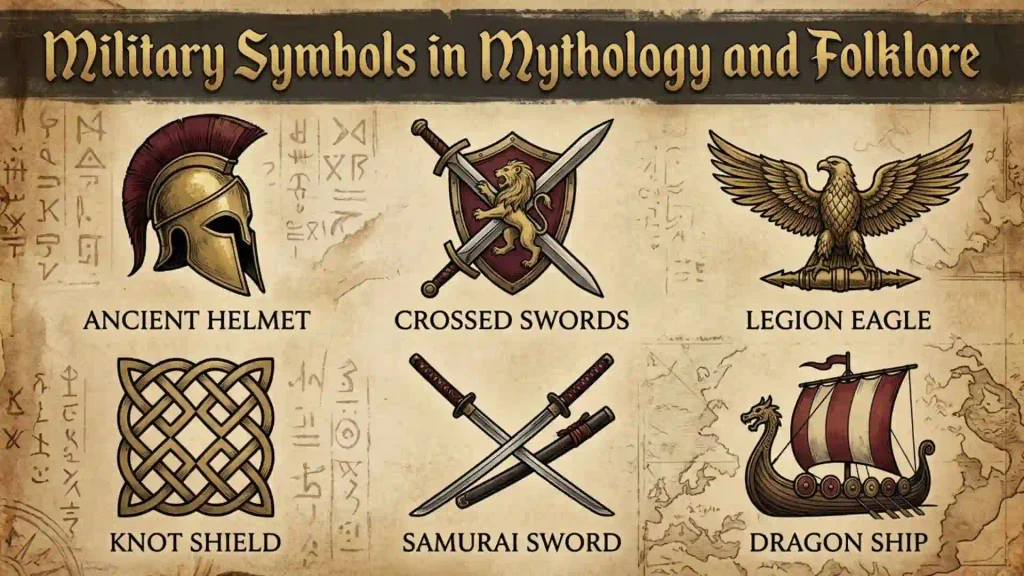
Military symbolism has always been connected with myths and legends.
Greek heroes such as Achilles were associated with weapons, armor, and warrior ideals. Norse mythology featured warriors connected with courage, fate, and honor. Roman legends celebrated military heroes who represented discipline and sacrifice.
These stories influenced how societies viewed soldiers and shaped modern ideas about bravery and heroism.
Military Symbols in Art, Literature, Movies, and Pop Culture
Military symbols appear throughout human creativity.
Art and Monuments
Paintings and statues often use military symbols to represent victory, sacrifice, and national memory.
War memorials frequently include swords, helmets, flags, and eternal flames to honor those who served.
Literature
Military symbols appear in famous works about war, leadership, and human courage. Authors use them to explore themes of loyalty, conflict, sacrifice, and morality.
Movies and Television
Films often use military symbols to quickly communicate character identity. Uniform patches, medals, flags, and unit signs help audiences understand a character’s background and values.
Tattoos and Fashion
Some people choose military-inspired designs because they represent discipline, strength, family history, or personal experiences.
Spiritual and Dream Meaning of Military Symbols
Dreams involving military symbols can have different interpretations depending on personal experiences.
Possible meanings include:
- A desire for protection
- A need for discipline
- Facing personal challenges
- Preparing for change
- Searching for inner strength
Seeing a flag may represent identity and belonging. Seeing armor may symbolize emotional protection. A warrior figure may represent courage during difficult situations.
Dream interpretations are personal and depend on individual emotions and life experiences.
Positive and Negative Meanings of Military Symbols
| Positive Meaning | Negative Meaning |
| Courage | Violence |
| Protection | Conflict |
| Loyalty | Aggression |
| Discipline | Control |
| Sacrifice | Loss |
A symbol itself is not always positive or negative. Its meaning depends on history, intention, and how people use it.
Why Humans Are Attracted to Military Symbols
Humans are naturally drawn to symbols because they communicate complex ideas quickly.
A small emblem can represent generations of history. A flag can represent millions of people. A medal can represent years of dedication.
Military symbols also connect with powerful human emotions:
- The desire for belonging
- Respect for sacrifice
- Attraction to heroic stories
- Need for identity
- Connection with tradition
They transform personal experiences into shared memories.
Modern Uses of Military Symbols
Tattoos
Military symbols are often chosen to honor family members, remember service, or express values like courage and loyalty.
Jewelry
Military-inspired jewelry allows people to carry meaningful symbols connected with strength and remembrance.
Branding and Design
Some organizations use military-style imagery to communicate reliability, discipline, and leadership.
Social Media
Military symbols are frequently used online to discuss history, honor veterans, and share cultural traditions.
Home Decor
Flags, medals, and historical military artwork are often displayed as reminders of heritage and respect.
Interesting Facts About Military Symbols
- The Roman eagle standard, Aquila, was one of the most respected symbols in ancient military history.
- Many modern military badges are influenced by medieval coats of arms.
- Military camouflage patterns themselves are symbolic designs created for protection and identity.
- The use of animals in military symbols comes from ancient beliefs about animal strength and spiritual qualities.
- Military medals often use specific shapes and colors to communicate achievements.
- Flags became powerful military symbols because they allowed soldiers to identify their group during chaotic battles.
- Many countries preserve historic military symbols in museums to protect cultural memory.
Frequently Asked Questions
What are the most common military symbols?
Common military symbols include flags, eagles, shields, swords, stars, medals, badges, and unit insignia.
Why are military symbols important?
Military symbols preserve history, create identity, honor service, and communicate values such as courage and loyalty.
What does an eagle symbolize in the military?
An eagle usually represents strength, freedom, leadership, vision, and power.
Are military symbols only used by soldiers?
No. Military symbols are also used in museums, memorials, family traditions, artwork, education, and cultural events.
Do military symbols have spiritual meanings?
Yes. Many military symbols represent protection, sacrifice, courage, and the connection between individuals and greater causes.
Conclusion
Military symbols are powerful reminders of human history, sacrifice, and shared identity. From ancient battle standards to modern insignia, they tell stories of courage, loyalty, and tradition. Their meanings go beyond designs because they connect people with emotions, memories, and cultural values. Every symbol carries a story, and understanding those stories helps us appreciate the deep role symbols play in human civilization.
 John Mercer
 Michael Rivera