
Hindu symbols carry deep meanings connected to spirituality, mythology, nature, worship, and everyday life. From the sacred Om (ॐ) to the lotus, trishula, swastika, and diya, these symbols have been used for centuries to express ideas such as divine presence, purity, protection, wisdom, and the cycle of life. Their meanings can vary depending on religious tradition, historical period, and cultural context.
Many Hindu symbols are more than decorative signs. They can represent important Hindu beliefs and spiritual concepts, including dharma, karma, consciousness, creation, destruction, rebirth, and the relationship between the individual and the divine. Some appear in temples and religious ceremonies, while others are found in artwork, jewelry, architecture, festivals, and household rituals.
Understanding Hindu symbols provides a window into the rich history and philosophy of Hindu traditions. In this guide, we’ll explore the ancient origins, meanings, spiritual significance, and cultural messages behind some of the most important Hindu symbols. We’ll also look at how these symbols are understood today and why they continue to hold significance for millions of people around the world.
Quick Answer
Hindu symbols are sacred signs, images, and patterns used in Hinduism to represent spiritual ideas, divine energies, cosmic principles, and cultural beliefs. They appear in temples, rituals, art, meditation practices, and daily life. Each symbol carries a unique meaning connected to faith, balance, protection, knowledge, and the relationship between humans and the universe.
Quick Facts About Hindu Symbols
| Aspect | Information |
| Origin | Developed over thousands of years through Vedic traditions, Hindu philosophy, mythology, and cultural practices |
| Historical Significance | Used in ancient scriptures, temples, rituals, and spiritual teachings |
| Main Meaning | Represents divine forces, universal balance, protection, wisdom, and spiritual growth |
| Spiritual Meaning | Connects human consciousness with higher awareness and cosmic energy |
| Cultural Importance | Preserves Hindu identity, traditions, festivals, and religious expressions |
| Modern Usage | Found in meditation, architecture, jewelry, art, tattoos, and cultural designs |
What Are Hindu Symbols?
Definition of Hindu Symbols
Hindu symbols are visual representations that communicate spiritual concepts, religious beliefs, and philosophical ideas. Unlike ordinary signs, these symbols often contain multiple layers of meaning. A single image can represent a deity, a universal truth, a spiritual practice, or a deeper understanding of life.
Hindu traditions use symbols because many spiritual ideas are difficult to explain with words alone. A symbol creates a bridge between the visible world and invisible concepts such as consciousness, karma, creation, and enlightenment.
Origin and Historical Background
The origins of Hindu symbols can be traced back to the ancient Vedic period, more than 3,000 years ago. The Vedas, Upanishads, and other Hindu scriptures describe ideas that later became represented through sacred images and patterns.
Ancient Indian civilizations used symbols in temples, sculptures, manuscripts, and household rituals. Over centuries, these symbols evolved while maintaining their original spiritual meanings.
For example, the Om symbol became associated with the sound of creation, while the lotus became connected with purity and spiritual awakening.
Why Hindu Symbols Became Important
Hindu symbols became important because they helped preserve spiritual knowledge across generations. Before widespread literacy, symbols allowed communities to communicate complex ideas through visual forms.
They also created a sense of connection between individuals, families, temples, and the larger Hindu community.
Deep Symbolic Meaning of Hindu Symbols
Spiritual Level
Hindu symbols often represent the journey of the soul toward higher consciousness. They remind believers about the connection between individual existence and universal energy.
The Om symbol, for example, represents the vibration of the universe and the ultimate reality known as Brahman in Hindu philosophy.
The lotus flower represents spiritual growth. Just as a lotus rises above muddy water while remaining beautiful, humans are encouraged to rise above difficulties and discover inner purity.
Sacred symbols are commonly used during meditation, prayers, and rituals to focus the mind and create a deeper spiritual experience.
Psychological Level
Hindu symbols also have strong psychological meanings. They work as visual reminders of values, emotions, and personal transformation.
Swiss psychiatrist Carl Jung studied symbols and believed that certain images connect with universal patterns of human experience called archetypes. Many Hindu symbols reflect these deep human themes, such as:
- The search for meaning
- The desire for balance
- The journey from darkness to awareness
- The connection between humans and nature
Symbols like the mandala are used in meditation because their balanced patterns can create a sense of harmony and mental focus.
Cultural Level
Hindu symbols are deeply connected with Indian culture, festivals, family traditions, and community identity.
For example, the Swastika is commonly drawn during Hindu ceremonies to represent good fortune and positive energy. During festivals such as Diwali, many Hindu families decorate their homes with sacred patterns and symbols to welcome prosperity.
These symbols are not only religious objects but also expressions of cultural memory and heritage.
Types and Variations of Hindu Symbols
Om Symbol (ॐ)
Visual Description
The Om symbol consists of curved lines and shapes representing the sacred sound “Om” or “Aum.”
Meaning and Symbolism
Om represents the sound of creation and the essence of the universe. It is considered one of the most important Hindu symbols.
It symbolizes:
- Universal consciousness
- Divine energy
- Peace and meditation
- The connection between body, mind, and spirit
Cultural Connection
Om appears in Hindu prayers, yoga practices, meditation spaces, temples, and spiritual artwork.
Swastika Symbol
Visual Description
The Hindu Swastika is a geometric symbol with four arms extending from a central point.
Meaning and Symbolism
In Hindu tradition, the Swastika represents:
- Good fortune
- Prosperity
- Protection
- Harmony
- The cycles of life
The word comes from Sanskrit and is connected with the idea of well-being and good existence.
Cultural Connection
It appears on doors, religious objects, wedding decorations, and festival designs.
It is important to understand that the ancient Hindu Swastika has a positive religious meaning and is separate from the distorted use of a similar symbol by Nazi Germany in the 20th century.
Lotus Flower Symbol
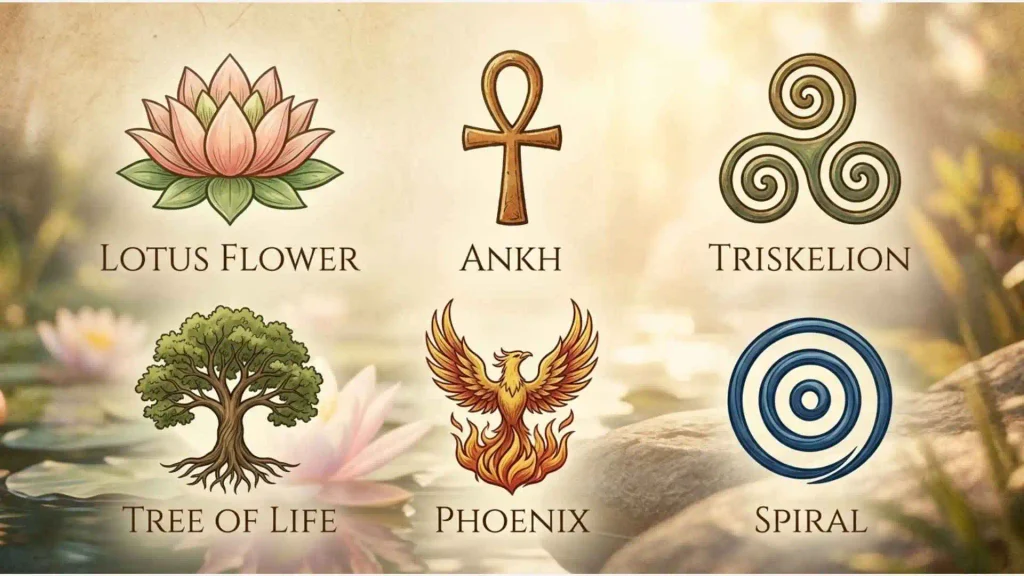
Visual Description
The lotus is a flower that grows in water while rising above muddy surroundings.
Meaning and Symbolism
The lotus represents:
- Purity
- Enlightenment
- Spiritual growth
- Divine beauty
Many Hindu deities, including Lakshmi and Saraswati, are shown with lotus flowers.
Where It Appears
The lotus appears in:
- Temple artwork
- Religious paintings
- Meditation practices
- Hindu mythology
Trishul Symbol
Visual Description
The Trishul is a three-pointed spear associated with Lord Shiva.
Meaning and Symbolism
The three points represent different spiritual concepts, including:
- Creation, preservation, and destruction
- Past, present, and future
- Body, mind, and soul
It symbolizes power, protection, and transformation.
Mandala Symbol
Visual Description
A mandala is a circular geometric design with balanced patterns.
Meaning and Symbolism
Mandalas represent:
- The universe
- Balance
- Inner harmony
- Spiritual concentration
They are used in meditation and sacred art.
Hindu Symbols Across Different Cultures
Ancient Egypt
Ancient Egyptian culture also used symbols to represent life, eternity, and divine power.
The Ankh symbol represented life, while Hindu symbols such as the lotus also appeared in Egyptian art with similar themes of rebirth and purity.
Ancient Greece
Ancient Greek culture valued symbols connected with gods, nature, and philosophy.
Similar to Hindu traditions, Greek mythology used symbolic images to explain ideas about creation, wisdom, and human existence.
Roman Culture
Romans adopted many symbolic traditions connected with religion and society.
Like Hindu symbols, Roman symbols represented authority, protection, prosperity, and divine connection.
Eastern Traditions
Buddhist, Jain, and Hindu traditions share several symbolic ideas because they developed in the same Indian cultural environment.
Symbols such as the lotus, wheel, and sacred geometric patterns appear across Eastern spiritual traditions.
Indigenous Traditions
Many Indigenous cultures around the world use symbols connected with nature, ancestors, and spiritual forces.
Although their meanings differ, they share a common human desire to understand life through visual storytelling.
Modern Interpretations
Today, Hindu symbols are appreciated worldwide through yoga, meditation, spirituality, art, and cultural studies.
Many people use these symbols as reminders of peace, mindfulness, and personal growth.
Similar Symbols and Their Meanings
| Symbol | Similarity | Difference |
| Om | Represents spirituality and consciousness | Specifically connected to Hindu sacred sound |
| Lotus | Represents purity and growth | Appears across several Asian religions |
| Mandala | Represents balance and harmony | Used mainly for meditation and cosmic representation |
| Swastika | Represents positive energy and prosperity | Has different meanings depending on cultural context |
Hindu Symbols in Mythology and Folklore
Hindu mythology is filled with symbolic stories where objects, animals, and images represent deeper truths.
The lotus appears in creation stories connected with Lord Brahma, who is often shown emerging from a lotus flower connected with Lord Vishnu.
The Trishul represents Lord Shiva’s cosmic power and his role as a force of transformation.
The Sudarshan Chakra of Lord Vishnu represents divine protection, righteousness, and the power to restore balance.
These stories helped preserve symbolic meanings through generations.
Hindu Symbols in Art, Literature, Movies, and Pop Culture
Hindu symbols have influenced Indian art, architecture, literature, and modern entertainment.
Paintings and Sculptures
Traditional Indian paintings often include symbols representing gods, cosmic order, and spiritual teachings.
Literature and Poetry
Ancient Hindu texts use symbolic language to explain philosophical ideas about life, death, and consciousness.
Movies and Television
Indian films and television shows frequently use Hindu symbols to represent characters, traditions, and spiritual themes.
Tattoos and Fashion
Some people choose Hindu symbols as tattoos or jewelry because they represent personal beliefs, strength, peace, or cultural appreciation.
However, respectful understanding of their origins is important.
Spiritual and Dream Meaning of Hindu Symbols
Dreams involving Hindu symbols are often interpreted as signs of personal reflection, spiritual curiosity, or emotional transformation.
Common Interpretations
Seeing Om may represent a desire for peace or inner balance.
Seeing a lotus may symbolize growth after challenges.
Seeing a temple or sacred symbol may represent a search for guidance or deeper meaning.
In meditation, Hindu symbols can help individuals focus their thoughts and develop mindfulness.
Positive and Negative Meanings of Hindu Symbols
| Positive Meaning | Negative Meaning |
| Spiritual awakening | Misinterpretation |
| Protection | Cultural misunderstanding |
| Wisdom | Commercial misuse |
| Balance | Loss of original meaning |
| Prosperity | Lack of historical awareness |
A symbol itself is not always positive or negative. Its meaning depends on cultural context, intention, and interpretation.
Why Humans Are Attracted to Hindu Symbols
Humans naturally connect with symbols because they communicate ideas faster than words.
Hindu symbols attract people because they combine:
- Ancient wisdom
- Beautiful designs
- Emotional meaning
- Spiritual mystery
- Personal connection
A person may see the Om symbol and feel calm because it represents peace and meditation. Another person may connect with the lotus because it represents overcoming difficulties.
Symbols become powerful because people give them personal meaning.
Modern Uses of Hindu Symbols
Tattoos
Many people use Hindu symbols as tattoos to represent spirituality, protection, or personal transformation.
Jewelry
Om pendants, lotus designs, and sacred symbols are commonly used in spiritual jewelry.
Fashion
Hindu-inspired patterns appear in clothing and artistic designs worldwide.
Branding and Design
Some businesses use spiritual-inspired imagery to communicate peace, wellness, and balance.
Home Decor
Hindu symbols are often placed in meditation rooms, yoga spaces, and homes as reminders of harmony.
Contemporary Spirituality
Modern yoga and mindfulness communities frequently use Hindu symbols to represent inner awareness.
Interesting Facts About Hindu Symbols
- The Om symbol is considered one of the most sacred sounds in Hindu philosophy.
- The lotus is associated with several Hindu deities, including Lakshmi and Saraswati.
- The Swastika is one of the world’s oldest symbols and existed thousands of years before its misuse in modern history.
- Hindu temples often use symbolic architecture to represent the universe.
- Mandalas are used as meditation tools to improve focus and awareness.
- Many Hindu symbols have meanings connected with nature and cosmic balance.
- Sacred geometry plays an important role in Hindu temple design.
Frequently Asked Questions
What is the most important Hindu symbol?
Om is considered one of the most important Hindu symbols because it represents the universe, divine consciousness, and spiritual connection.
What do Hindu symbols represent?
Hindu symbols represent spiritual ideas, gods, cosmic principles, protection, wisdom, and the relationship between humans and the universe.
Is the Swastika a Hindu symbol?
Yes, the Swastika is an ancient Hindu symbol representing prosperity, good fortune, and positive energy. Its traditional meaning is different from its later misuse by Nazi Germany.
Why are symbols important in Hinduism?
Symbols help explain complex spiritual ideas and connect people with religious traditions, meditation, and cultural identity.
What does the lotus symbolize in Hinduism?
The lotus symbolizes purity, enlightenment, spiritual growth, and the ability to rise above difficulties.
Conclusion
Hindu symbols are more than artistic designs. They are powerful expressions of spirituality, history, culture, and human imagination. Each symbol carries layers of meaning that connect ancient wisdom with modern life. By understanding these symbols, we discover deeper lessons about balance, consciousness, growth, and the timeless search for meaning.
 Sarah Thompson
 Michael Rivera