
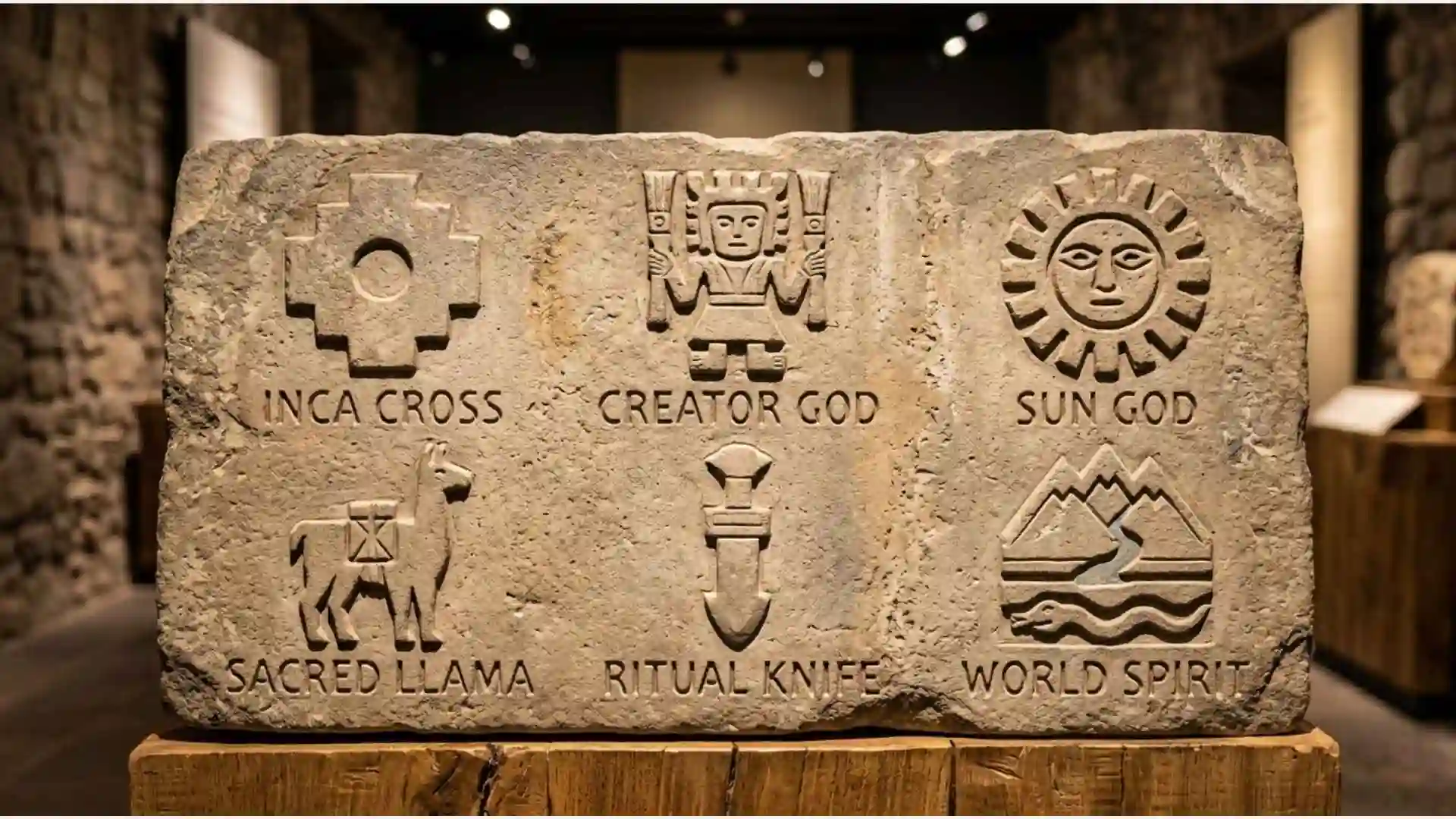
Inca symbols offer a fascinating look into the beliefs, traditions, and worldview of one of South America’s most influential ancient civilizations. The Inca people used symbols, sacred objects, animals, plants, patterns, and natural elements to express ideas about life, nature, spirituality, power, and the universe. Many of these symbols were closely connected to their understanding of the natural world.
Some Inca symbols represented important spiritual concepts, while others were linked to rulers, agriculture, protection, fertility, or the relationship between humans and the gods. Symbols such as the chakana (Andean cross), Inti (the Sun), puma, condor, and serpent are especially important when exploring Inca culture and Andean traditions. Their meanings can vary depending on historical and cultural context.
Today, Inca symbols continue to attract people interested in ancient history, spirituality, mythology, art, tattoos, and cultural symbolism. Understanding these symbols is more than learning a list of meanings—it helps reveal how the Inca viewed their connection with nature, the heavens, their ancestors, and the world around them.
Quick Answer
Inca symbols were sacred signs, patterns, and images used by the Inca civilization to represent spiritual beliefs, natural forces, social values, and cosmic ideas. They appeared in architecture, textiles, pottery, ceremonies, and artwork, connecting the Inca people with gods, ancestors, and the natural world.
Quick Facts About Inca Symbols
| Aspect | Information |
| Origin | Developed by the Inca civilization in the Andes region of South America, especially modern-day Peru |
| Historical Significance | Represented religion, government, astronomy, nature, and social identity |
| Main Meaning | Connection between humans, nature, ancestors, and the divine world |
| Spiritual Meaning | Balance, harmony, creation, protection, and respect for sacred forces |
| Cultural Importance | Preserved Inca beliefs, traditions, and knowledge through art and architecture |
| Modern Usage | Found in tattoos, jewelry, artwork, fashion, tourism, and cultural studies |
What Are Inca Symbols?
Definition and Meaning
Inca symbols were visual representations used by the Inca Empire to communicate important ideas about life, spirituality, and the universe. Unlike modern writing systems, many Inca messages were expressed through images, colors, shapes, and patterns.
The Inca civilization, which flourished between the 15th and early 16th centuries, created one of the largest empires in pre-Columbian America. Their territory stretched across parts of modern Peru, Ecuador, Bolivia, Chile, and Argentina.
For the Inca people, symbols were not simply decorations. They carried deep meanings connected to religion, nature, rulers, and cosmic order.
Historical Background of Inca Symbols
The Inca believed that the world was divided into connected spiritual and physical realms. Their symbols helped explain this relationship between humans, gods, animals, mountains, rivers, and celestial bodies.
Many symbols appeared in famous locations such as Machu Picchu, temples, royal clothing, ceramics, and stone carvings.
The most important spiritual force was Inti, the Sun God. The Inca rulers believed they were descendants of Inti, which gave their leadership a sacred foundation.
Evolution Over Time
After the Spanish conquest in the 16th century, many Inca traditions changed or disappeared. However, several symbols survived through Indigenous communities, artwork, weaving traditions, and cultural practices.
Today, Inca symbols continue to represent Andean identity, ancestral wisdom, and connection with nature.
Deep Symbolic Meaning of Inca Symbols
Spiritual Meaning of Inca Symbols
Inca symbols reflected the belief that everything in existence was connected. Mountains, animals, stars, and humans were considered parts of one sacred system.
The Inca viewed nature as alive and worthy of respect. Many symbols represented communication between the earthly world and the spiritual realm.
Connection With the Divine
The Sun symbol represented divine energy, creation, and life itself. Since the Sun provided warmth and helped crops grow, it became one of the most powerful sacred images in Inca culture.
Other symbols represented gods, ancestors, and spiritual protection.
Balance and Harmony
Many Inca designs focused on balance. The concept of harmony between opposing forces was important in Andean philosophy.
Day and night, life and death, humans and nature were viewed as connected parts of a larger cosmic balance.
Psychological Meaning of Inca Symbols
From a psychological perspective, Inca symbols show how humans use images to understand complex emotions and experiences.
Carl Jung’s ideas about archetypes suggest that certain symbols appear repeatedly across cultures because they represent universal human experiences.
Human Connection With Nature
Symbols such as animals, mountains, and celestial objects reflect humanity’s natural desire to find meaning in the world around us.
The Inca did not separate humans from nature. Their symbols remind modern people of a deeper emotional connection with the environment.
The Power of Sacred Images
People are naturally attracted to symbols because they communicate ideas quickly. A single image can represent protection, hope, strength, or identity.
Cultural Meaning of Inca Symbols
Inca symbols represented community beliefs and shared traditions. They helped preserve stories, religious practices, and social values.
For the Inca, symbols were a bridge between generations. They carried knowledge from ancestors to future communities.
Types and Variations of Inca Symbols
Inti Sun Symbol
Visual Description: A circular design representing the sun, often shown with rays extending outward.
Meaning: Life, energy, creation, and divine power.
Symbolism: The Sun was the source of warmth and agricultural success.
Cultural Connection: The Inca ruler was believed to be connected to Inti, making the symbol important in royal ceremonies.
Where It Appears: Temples, artwork, jewelry, and modern Andean designs.
Chakana or Andean Cross
Visual Description: A stepped cross shape with multiple levels.
Meaning: The connection between different worlds and stages of existence.
Symbolism: The Chakana often represents the three levels of the Andean universe:
- Hanan Pacha, the upper world of gods and stars
- Kay Pacha, the present human world
- Uku Pacha, the inner or underground world
Cultural Connection: It remains one of the most recognized Andean symbols today.
Where It Appears: Architecture, textiles, artwork, and spiritual designs.
Puma Symbol
Visual Description: A powerful feline figure.
Meaning: Strength, leadership, and earthly power.
Symbolism: The puma represented the physical world and qualities such as courage and intelligence.
Cultural Connection: The city of Cusco was traditionally believed to have been designed in the shape of a puma.
Where It Appears: Stone structures, mythology, and artwork.
Condor Symbol
Visual Description: A large bird representing the Andes mountains.
Meaning: Freedom, spiritual connection, and the heavens.
Symbolism: The condor was believed to connect humans with the upper spiritual world.
Where It Appears: Mythology, ceremonies, and modern Indigenous art.
Serpent Symbol
Visual Description: A snake-like figure.
Meaning: Transformation, wisdom, and the underground world.
Symbolism: The serpent represented Uku Pacha and hidden knowledge.
Where It Appears: Ceremonial objects, carvings, and traditional designs.
Inca Symbols Across Different Cultures
Ancient Egypt
Ancient Egypt and the Inca civilization developed separately, but both cultures used symbols to represent the connection between humans and divine forces.
The Egyptian sun symbol represented life and creation, similar to the Inca connection with Inti.
Ancient Greece
Greek culture used symbols such as the owl, laurel, and Greek key pattern to represent wisdom, victory, and eternity.
Like Inca symbols, Greek symbols connected physical objects with deeper philosophical meanings.
Roman Culture
Roman symbols represented authority, power, and social order. The eagle, for example, symbolized strength and empire.
The Inca also used powerful animal symbols to express leadership and sacred authority.
Eastern Traditions
Many Eastern cultures emphasize balance and harmony. Concepts found in Hindu and Buddhist traditions, such as cosmic balance and spiritual growth, share similarities with Andean ideas about universal connection.
Indigenous Traditions
Indigenous cultures around the world often use animals, nature, and celestial symbols to express spiritual beliefs.
Inca symbols share this deep respect for the natural world with many Native American and Indigenous traditions.
Modern Interpretations
Today, Inca symbols are used globally as representations of heritage, spirituality, creativity, and connection with ancient wisdom.
Similar Symbols and Their Meanings
| Symbol | Similarity With Inca Symbols | Main Difference |
| Egyptian Sun Symbol | Represents life and divine energy | Connected to Egyptian gods and pharaohs |
| Celtic Knot | Represents connection and eternity | Focuses more on endless cycles |
| Native American Animal Symbols | Uses nature-based meanings | Comes from different cultural traditions |
| Buddhist Mandala | Represents cosmic order | Focuses on meditation and enlightenment |
Inca Symbols in Mythology and Folklore
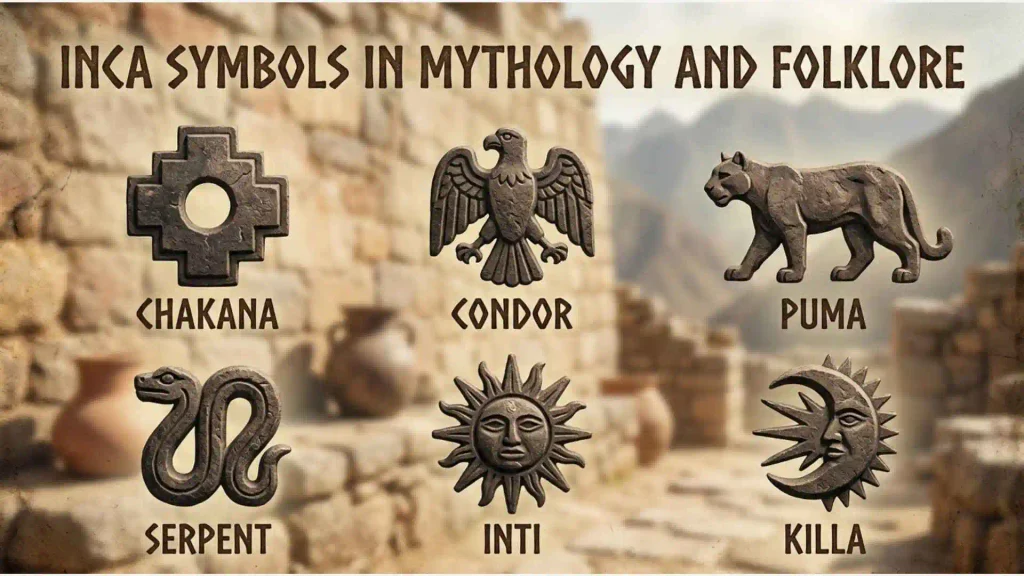
Inca mythology was filled with stories explaining the origins of the world and humanity.
According to Inca beliefs, the creator god Viracocha shaped the world and created humans. Many symbols connected people with these creation stories.
Animals played a major role in myths. The condor, puma, and serpent represented different parts of existence and were believed to have spiritual importance.
The Inca also honored sacred landscapes called huacas. These could include mountains, rivers, stones, or other natural locations believed to contain spiritual power.
Inca Symbols in Art, Literature, Movies, and Pop Culture
Art and Textiles
Inca symbols remain visible in traditional weaving. Colors, patterns, and geometric designs often communicate cultural identity and ancestral knowledge.
Literature
Books about the Inca civilization frequently explore these symbols to explain ancient beliefs and social structures.
Movies and Media
Films, documentaries, and video games featuring the Inca world often use symbols to create a sense of mystery, history, and ancient wisdom.
Tattoos and Fashion
Many people choose Inca symbols for tattoos because they represent strength, spirituality, ancestry, and personal transformation.
Jewelry featuring the Sun symbol, Chakana, or animal designs has also become popular worldwide.
Spiritual and Dream Meaning of Inca Symbols
Dream interpretations involving Inca symbols often focus on personal growth, connection, and discovering hidden wisdom.
Seeing a sun symbol in a dream may represent hope, energy, or a new beginning.
Animal symbols may represent personal qualities:
- Puma may symbolize courage and confidence.
- Condor may represent freedom and spiritual growth.
- Serpent may represent transformation and change.
These interpretations vary depending on personal beliefs and cultural background.
Positive and Negative Meanings of Inca Symbols
| Positive Meaning | Negative Meaning |
| Spiritual connection | Loss of cultural understanding |
| Strength and courage | Misuse as simple decoration |
| Wisdom and knowledge | Misinterpretation of ancient beliefs |
| Balance and harmony | Ignoring historical context |
| Protection and guidance | Commercial exploitation |
A symbol can have different meanings depending on how and where it is used. Understanding cultural background helps preserve its true value.
Why Humans Are Attracted to Inca Symbols
Humans have always searched for meaning through symbols. Ancient images provide emotional connections that words sometimes cannot express.
Inca symbols attract people because they combine mystery, history, spirituality, and natural beauty.
They remind us of important human questions:
- Where do we come from?
- How are we connected to nature?
- What gives life meaning?
The lasting appeal of these symbols comes from their ability to connect ancient wisdom with modern experiences.
Modern Uses of Inca Symbols
Tattoos
Many people choose Inca symbols to express identity, strength, transformation, or admiration for Andean culture.
Jewelry
Sun symbols and Chakana designs are commonly used in necklaces, bracelets, and handcrafted items.
Branding and Design
Modern designers sometimes use Inca-inspired patterns to create a connection with heritage and craftsmanship.
Home Decor
Artwork featuring Inca patterns is often used to create spaces inspired by history, nature, and spirituality.
Contemporary Spirituality
Some people use Inca symbols during meditation or personal reflection as reminders of balance and connection.
Interesting Facts About Inca Symbols
- The Inca civilization did not use a traditional alphabet like many ancient cultures.
- The Sun God Inti was one of the most important religious figures in Inca society.
- The Chakana remains one of the most recognizable Andean symbols today.
- Cusco was considered a sacred city and was closely connected with Inca symbolism.
- Animals such as the condor, puma, and serpent represented different levels of existence.
- Many Inca designs survived through Indigenous weaving traditions.
- Mountains were considered sacred beings rather than simple geographic features.
- Inca architecture often used shapes and patterns with symbolic meanings.
Frequently Asked Questions
What is the most famous Inca symbol?
The Sun symbol and the Chakana are among the most famous Inca symbols. They represent life, spirituality, balance, and connection with the universe.
What do Inca symbols represent?
Inca symbols represent nature, gods, ancestors, spiritual beliefs, social identity, and the relationship between humans and the cosmos.
What does the Inca cross mean?
The Inca cross, known as the Chakana, represents the structure of the Andean universe and the connection between different worlds.
Why are animals important in Inca symbols?
Animals represented powerful qualities and spiritual ideas. The condor symbolized the heavens, the puma represented strength, and the serpent represented transformation.
Are Inca symbols still used today?
Yes. Inca symbols are used in art, jewelry, tattoos, cultural celebrations, and modern designs around the world.
Conclusion
Inca symbols are more than ancient decorations. They are visual stories that reveal how the Inca people understood life, nature, spirituality, and the universe. These powerful symbols continue to inspire because they connect modern people with ancient wisdom. By learning their meanings, we preserve the memory of a remarkable civilization and the timeless human search for connection and purpose.
 Sarah Thompson
 John Mercer