
Medical symbols are more than simple signs used in hospitals, clinics, and healthcare organizations. From the Rod of Asclepius and the Caduceus to the familiar red cross and other healthcare emblems, these symbols carry centuries of history, cultural beliefs, and ideas about healing. Many of them developed from ancient traditions and continue to appear in modern medicine today.
The meaning behind a medical symbol can sometimes be surprising. Some symbols are connected to ancient Greek mythology, while others represent protection, healing, emergency care, or a commitment to helping people. Over time, their meanings have changed or become confused, especially when similar-looking symbols are used for different purposes.
Understanding medical symbols and their meanings provides a fascinating look at how healthcare has evolved across cultures and generations. In this guide, you’ll discover the history and symbolism behind common medical signs, what they represent today, and why certain symbols remain important in modern healthcare.
Quick Answer
Medical symbols are visual signs used to represent healthcare, medicine, healing, and medical professions. The most recognized examples include the Rod of Asclepius, Caduceus, Bowl of Hygieia, and Red Cross. These symbols reflect ancient traditions, scientific progress, compassion, and the universal human desire for healing.
Quick Facts About Medical Symbols
| Aspect | Information |
| Origin | Ancient civilizations, especially Greece, Egypt, and Mesopotamia |
| Historical Significance | Represented healing gods, physicians, protection, and medical knowledge |
| Main Meaning | Health, medicine, care, recovery, and scientific practice |
| Spiritual Meaning | Healing energy, renewal, balance, and transformation |
| Cultural Importance | Used worldwide by hospitals, doctors, pharmacies, and health organizations |
| Modern Usage | Medical logos, emergency services, healthcare branding, uniforms, and digital icons |
What Are Medical Symbols?
Definition and Meaning
Medical symbols are visual representations connected with healthcare, medicine, and healing practices. They help people quickly recognize medical services, professionals, and organizations. A simple image can communicate safety, trust, and assistance without using words.
For thousands of years, humans have used symbols to explain complex ideas. Medicine is one of the strongest examples because healing has always been connected with beliefs, spirituality, science, and human survival.
A snake, a staff, a cross, or a bowl may seem simple, but each carries deep historical meaning. These symbols represent humanity’s relationship with disease, healing, and the search for longer, healthier lives.
Historical Background of Medical Symbols
The history of medical symbols reaches back to ancient civilizations. Early societies connected healing with gods, nature, and supernatural forces. Physicians often used symbols that represented protection, wisdom, and restoration.
Ancient Greece played a major role in shaping modern medical symbolism. The Greek god Asclepius, associated with medicine and healing, was commonly represented with a staff and a single snake wrapped around it. This image became one of the most recognized medical symbols in history.
The snake was important because ancient Greeks saw it as a symbol of renewal. Since snakes shed their skin, they became associated with rebirth, transformation, and recovery.
Over time, medical symbols evolved from religious and mythological images into professional signs used by hospitals, doctors, pharmacies, and international health organizations.
Deep Symbolic Meaning of Medical Symbols
Spiritual Level
Medical symbols often represent more than physical treatment. They reflect ideas of restoration, balance, and the connection between body and spirit.
In many traditions, healing was viewed as a complete process involving emotions, thoughts, and spiritual well-being. Symbols helped people believe in recovery and reminded healers of their responsibility to protect life.
The snake in ancient medical imagery represents transformation. Just as a snake changes its outer layer, humans can experience renewal after illness, suffering, or personal challenges.
The staff represents support and guidance. It reflects the role of physicians as helpers who guide people through difficult health journeys.
Psychological Level
From a psychological perspective, medical symbols create feelings of safety and trust. When people see a healthcare symbol, their minds quickly connect it with help, knowledge, and protection.
Swiss psychologist Carl Jung explored how symbols influence the human unconscious. He believed certain images become powerful because they are connected with shared human experiences called archetypes.
Healing symbols often represent the caregiver archetype. They remind people of compassion, protection, and hope during moments of vulnerability.
Cultural Level
Medical symbols also reflect cultural beliefs about health and healing. Different societies created unique images based on their understanding of nature, religion, and human existence.
For example, ancient Greeks linked healing with divine wisdom, while Eastern traditions often connected health with harmony and balance between opposing forces.
Today, medical symbols unite people across cultures because illness and healing are universal human experiences.
Types and Variations of Medical Symbols
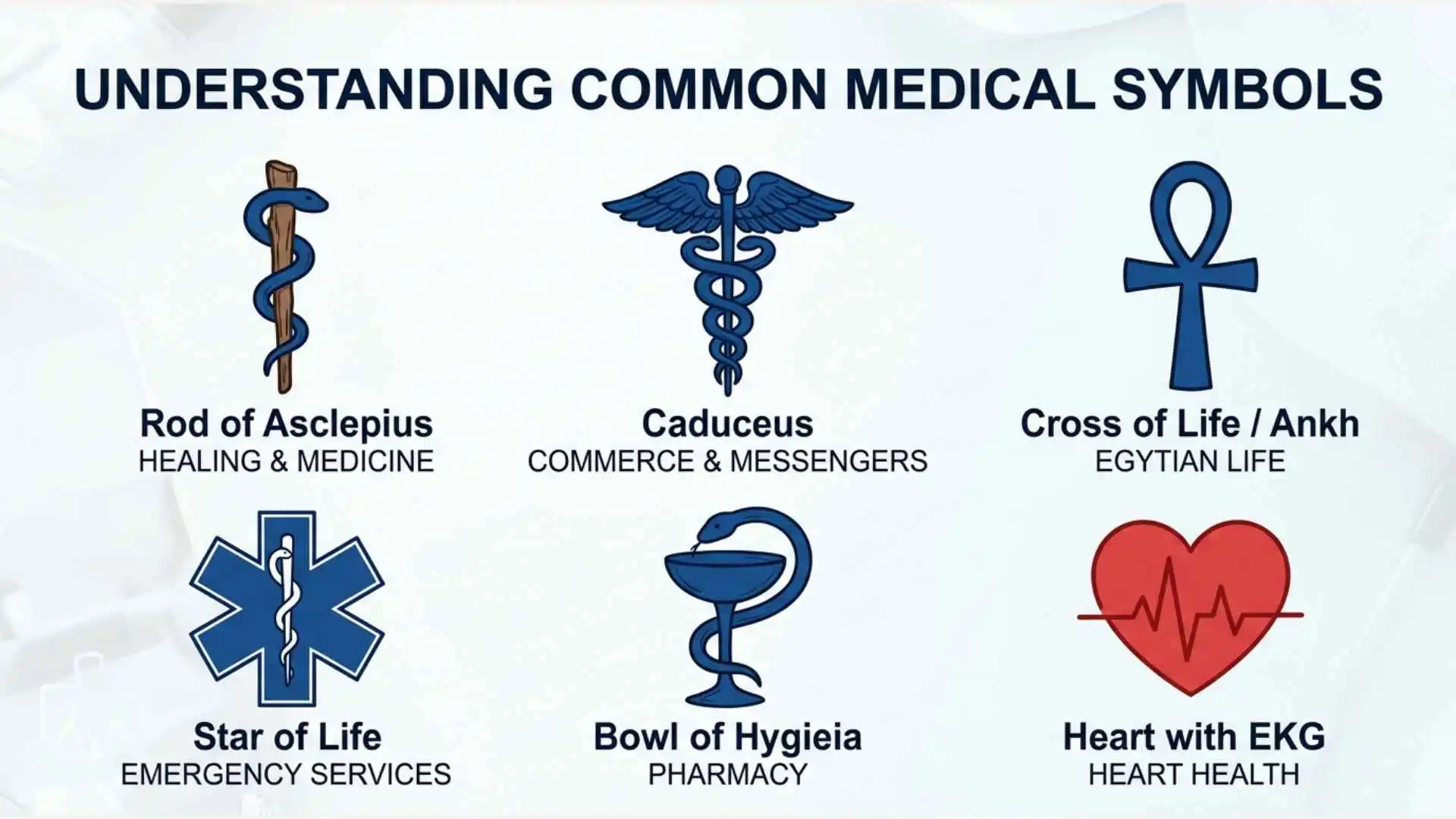
Rod of Asclepius
Visual Description: A single snake wrapped around a wooden staff.
Meaning: Healing, medicine, and the physician’s role.
Symbolism: The staff represents support and guidance, while the snake represents renewal and recovery.
Cultural Connection: It originated in ancient Greece and is associated with Asclepius, the Greek god of medicine.
Where It Appears:
- Medical organizations
- Physician associations
- Healthcare logos
- Hospitals and clinics
The Rod of Asclepius remains one of the most accurate symbols of medicine worldwide.
Caduceus
Visual Description: A winged staff with two snakes wrapped around it.
Meaning: Communication, trade, and sometimes medicine.
Symbolism: The two snakes represent balance and interaction, while wings represent movement.
Cultural Connection: The symbol belonged to Hermes, the messenger god in Greek mythology.
Where It Appears:
- Some medical organizations
- Military healthcare systems
- Healthcare branding
Although widely used in medicine, the Caduceus is historically linked more strongly with commerce and communication than healing.
Bowl of Hygieia
Visual Description: A bowl or cup with a snake drinking from it.
Meaning: Pharmacy, preparation of medicines, and health preservation.
Symbolism: The bowl represents healing remedies, while the snake represents wisdom and renewal.
Cultural Connection: Connected with Hygieia, the Greek goddess of health and cleanliness.
Where It Appears:
- Pharmacies
- Pharmaceutical organizations
- Medicine-related businesses
Red Cross
Visual Description: A red cross on a white background.
Meaning: Medical assistance, humanitarian care, and emergency relief.
Symbolism: Compassion, protection, and support during crises.
Cultural Connection: Created as a humanitarian symbol connected with the International Red Cross movement.
Where It Appears:
- Emergency services
- Disaster relief
- Humanitarian medical care
Star of Life
Visual Description: A blue six-pointed star containing the Rod of Asclepius.
Meaning: Emergency medical services.
Symbolism: The six points represent the stages of emergency care, including detection, reporting, response, treatment, and transport.
Where It Appears:
- Ambulances
- Emergency medical vehicles
- Paramedic services
Medical Symbols Across Different Cultures
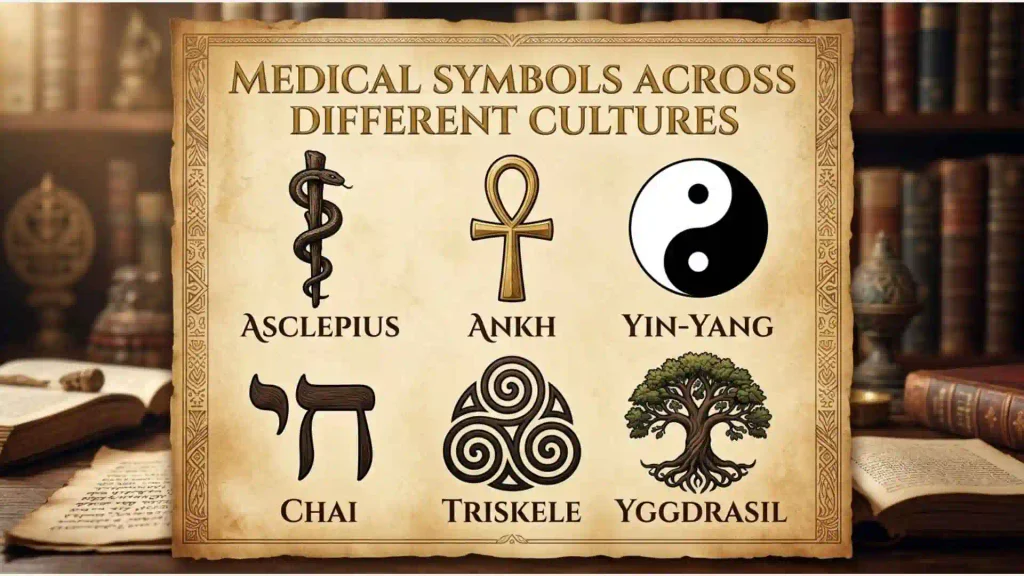
Ancient Egypt
Ancient Egyptians viewed healing as a connection between medicine, spirituality, and divine protection.
Symbols such as the Eye of Horus were associated with restoration, protection, and wellness. Egyptian physicians combined practical treatments with spiritual rituals.
The culture also honored healing figures such as Imhotep, who became associated with medicine and wisdom.
Ancient Greece
Ancient Greece created some of the most influential medical symbols.
The Rod of Asclepius became a lasting representation of physicians and healing. Greek medicine also introduced important ideas about observation, diagnosis, and scientific thinking through figures like Hippocrates.
Roman Culture
Romans adopted many Greek medical traditions and expanded their use throughout the empire.
Roman military medicine helped spread healthcare practices, and symbols connected with healing became associated with organized medical systems.
Eastern Traditions
Eastern cultures often view health as a balance between body, mind, and environment.
Traditional Chinese medicine uses concepts such as yin and yang to represent harmony. Ayurveda from India also emphasizes balance and natural healing.
Indigenous Traditions
Many Indigenous cultures use healing symbols connected with nature, animals, plants, and spiritual relationships.
Healing practices often recognize the connection between humans, the Earth, and community well-being.
Modern Interpretations
Today, medical symbols combine ancient meanings with modern science. They appear in digital healthcare apps, hospitals, medical education, and global health campaigns.
Similar Symbols and Their Meanings
| Symbol | Main Meaning | Main Difference |
| Rod of Asclepius | Medicine and physicians | Historically connected directly with healing |
| Caduceus | Communication and commerce | Often confused with medical symbolism |
| Bowl of Hygieia | Pharmacy and medicines | Focuses on health products and preparation |
| Red Cross | Humanitarian medical aid | Represents emergency support and relief |
| Star of Life | Emergency response | Represents modern ambulance services |
A common misconception is that every snake symbol represents medicine. However, the number of snakes, the presence of wings, and the historical background change the meaning.
Medical Symbols in Mythology and Folklore
Many medical symbols come from ancient stories about gods, heroes, and supernatural healing powers.
In Greek mythology, Asclepius was believed to have extraordinary healing abilities. Temples dedicated to him became places where people sought treatment and spiritual comfort.
Stories about snakes appearing in healing temples helped strengthen the connection between snakes and medicine.
Across different cultures, healers were often viewed as bridges between the physical and spiritual worlds. Symbols preserved these beliefs and passed them from one generation to another.
Medical Symbols in Art, Literature, Movies, and Pop Culture
Medical symbols appear throughout creative works because healing is a powerful human theme.
In paintings, the Rod of Asclepius often represents wisdom and the responsibility of healers. In literature, medical symbols can represent hope, sacrifice, and the struggle between life and death.
Movies and television frequently use medical symbols to quickly establish hospitals, doctors, and emergency situations.
Modern designs use medical symbols in:
- Healthcare logos
- Tattoos
- Jewelry
- Clothing
- Mobile health applications
- Educational materials
A person choosing a medical tattoo may use it to represent survival, recovery, caregiving, or respect for healthcare workers.
Spiritual and Dream Meaning of Medical Symbols
Dreams involving medical symbols may reflect healing, personal growth, or emotional recovery.
Seeing a healing symbol in a dream may suggest:
- A need for physical or emotional care
- A period of personal transformation
- Recovery from past struggles
- Desire to help others
From a spiritual perspective, medical symbols can represent inner healing. They may remind people that recovery is not only about the body but also about emotions, relationships, and personal growth.
Positive and Negative Meanings of Medical Symbols
| Positive Meaning | Negative Meaning |
| Healing | Fear of illness |
| Protection | Anxiety about health problems |
| Knowledge | Dependence on medical systems |
| Recovery | Memories of suffering |
| Compassion | Emotional stress connected with disease |
A symbol does not have only one meaning. Its interpretation depends on personal experiences, cultural background, and the situation where it appears.
Why Humans Are Attracted to Medical Symbols
Humans naturally search for meaning in images. A symbol can communicate emotions faster than words.
Medical symbols attract people because they represent some of the deepest human desires:
- The desire to survive
- The hope for recovery
- The trust placed in caregivers
- The search for balance and protection
These symbols become part of collective memory. Generations recognize them because everyone understands the importance of health and healing.
Modern Uses of Medical Symbols
Healthcare Branding
Hospitals and medical companies use symbols to create recognition and trust. A familiar medical image can make people feel they are entering a place of care and expertise.
Tattoos and Personal Expression
Many people choose medical symbols as tattoos after surviving illness, working in healthcare, or honoring someone who helped them heal.
Jewelry and Fashion
Medical symbols appear in necklaces, bracelets, and accessories as reminders of strength, compassion, and recovery.
Digital Healthcare
Modern apps and websites use medical icons to make healthcare information easier to understand.
Contemporary Spirituality
Some people use healing symbols during meditation or personal reflection as reminders of transformation and inner balance.
Interesting Facts About Medical Symbols
- The Rod of Asclepius is thousands of years old and remains one of the strongest symbols of medicine.
- The snake became linked with healing partly because ancient people associated snake shedding with renewal.
- The Caduceus is often used in healthcare despite its original connection with Hermes and commerce.
- The Bowl of Hygieia is one of the most recognized pharmacy symbols worldwide.
- The Star of Life was officially designed for emergency medical services in the 1970s.
- Ancient Greek healing temples used rituals, rest, and observation alongside early medical treatments.
- Many modern healthcare logos combine ancient symbols with clean digital designs.
Frequently Asked Questions
What is the most common medical symbol?
The Rod of Asclepius is one of the most recognized medical symbols because it has a direct historical connection with healing and physicians.
Why do medical symbols have snakes?
Snakes symbolize renewal and transformation because they shed their skin. Ancient cultures connected this process with healing and rebirth.
What is the difference between the Rod of Asclepius and Caduceus?
The Rod of Asclepius has one snake and represents medicine. The Caduceus has two snakes and is historically connected with Hermes, communication, and trade.
What does the Bowl of Hygieia represent?
The Bowl of Hygieia represents pharmacy, medicine preparation, health, and disease prevention.
Why are medical symbols important today?
Medical symbols help people quickly recognize healthcare services and represent trust, knowledge, compassion, and healing.
Conclusion
Medical symbols are more than simple images. They are visual stories that connect ancient wisdom, modern science, and the universal human hope for healing. From the Rod of Asclepius to emergency medical icons, these symbols remind us of compassion, knowledge, and the value of life. Their meanings continue to evolve while preserving the timeless message that healing is one of humanity’s greatest journeys.
 John Mercer
 Michael Rivera