
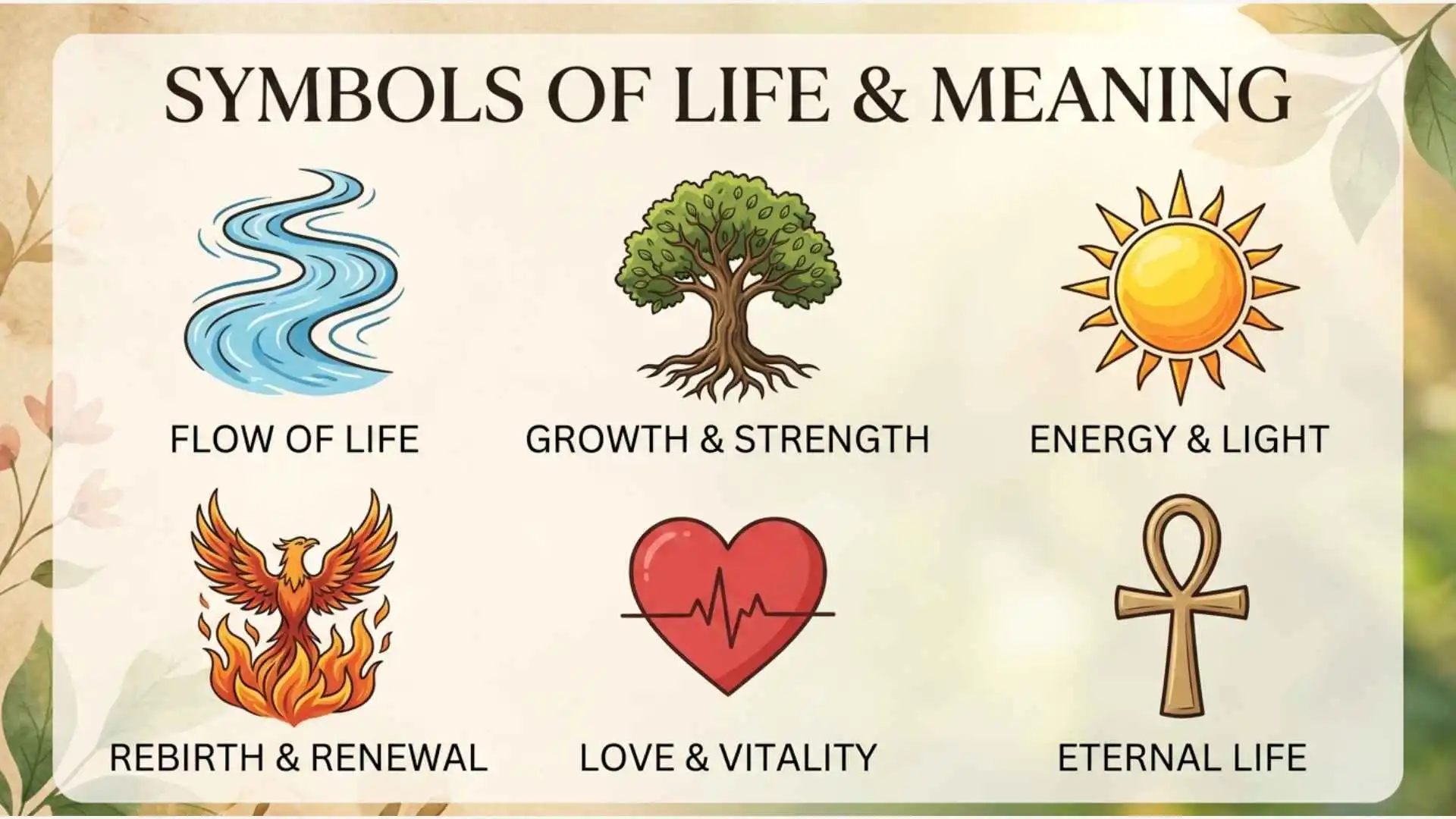
Symbols meaning has shaped human communication, culture, spirituality, and identity for thousands of years. From ancient carvings on temple walls to modern logos and tattoos, symbols help people express ideas that words cannot fully describe. Every symbol carries a story, emotion, and connection that reveals how humans understand life, nature, and the unknown.
Throughout history, symbols have represented beliefs, dreams, protection, wisdom, love, power, and transformation. By exploring symbols meaning, we uncover hidden messages from ancient civilizations, mythology, psychology, and modern society.
This journey reveals why humans are naturally drawn to symbols and how these powerful images continue to influence our thoughts, emotions, and everyday choices.
Quick Answer: What Does Symbols Meaning Mean?
Symbols meaning refers to the ideas, emotions, beliefs, and messages represented by images, objects, signs, or patterns. A symbol can communicate cultural values, spiritual concepts, historical events, or personal feelings. For example, a heart represents love, a dove represents peace, and a circle often represents unity and eternity.
Quick Facts About Symbols Meaning
| Aspect | Information |
| Origin | Symbols began in prehistoric human communication through cave paintings, markings, and sacred signs. |
| Historical Significance | Ancient civilizations used symbols to express religion, power, knowledge, and cultural identity. |
| Main Meaning | Symbols represent ideas, emotions, beliefs, and concepts beyond their physical appearance. |
| Spiritual Meaning | Many symbols represent spiritual growth, divine connection, protection, and inner transformation. |
| Cultural Importance | Symbols preserve traditions, stories, and shared beliefs across generations. |
| Modern Usage | Symbols appear in branding, art, technology, fashion, tattoos, and personal expression. |
What Are Symbols Meaning?
Definition of Symbols Meaning
Symbols meaning describes the deeper message or significance behind a symbol. A symbol is something visible that represents something invisible, such as an idea, emotion, belief, or value.
For example, a simple flame is not only a source of light. Across cultures, it can represent knowledge, hope, life energy, purification, or spiritual awakening.
Symbols work because humans naturally connect images with memories, emotions, and experiences. A single shape or object can communicate a complex idea instantly.
Origin and Historical Background
The history of symbols goes back to prehistoric times when early humans used drawings and markings to communicate. Cave paintings discovered in places such as Lascaux Cave in France show that humans used images to represent animals, hunting, and spiritual beliefs thousands of years ago.
Ancient civilizations developed complex symbolic systems. The Egyptians used hieroglyphs to record stories, religious beliefs, and royal messages. The Greeks and Romans used symbols connected to gods, heroes, and philosophical ideas.
Over time, symbols became an important part of religion, art, politics, science, and everyday communication.
Evolution of Symbols Over Time
Symbols change as societies evolve. A symbol that once represented one idea may gain new meanings in another culture or historical period.
For example, the lotus flower was associated with rebirth and purity in ancient Egypt and later became strongly connected with enlightenment in Buddhism and Hindu traditions.
Today, symbols appear everywhere, including emojis, company logos, traffic signs, digital icons, and social media platforms.
Deep Symbolic Meaning of Symbols
Spiritual Level of Symbols Meaning
Symbols have always played an important role in spiritual traditions. They help people express ideas about life, death, creation, consciousness, and the connection between humans and the universe.
Many spiritual symbols represent transformation and personal growth.
The lotus flower symbolizes rising above difficulties because it grows from muddy water while producing a beautiful blossom. The tree of life represents connection between earth, humanity, and the spiritual world.
Sacred symbols often serve as reminders of deeper truths and personal reflection.
Symbols and Inner Transformation
Many people use symbols during meditation, prayer, and spiritual practices. Looking at a meaningful symbol can create feelings of peace, focus, and connection.
A symbol becomes powerful because it carries personal and collective memories. It can remind someone of their values, goals, or spiritual journey.
Psychological Level of Symbols Meaning
Psychologist Carl Jung studied symbols deeply and believed that certain images appear across cultures because they connect with universal human experiences.
Jung called these shared patterns archetypes. Examples include the hero, the mother, the shadow, and the wise figure.
Symbols influence the human mind because they communicate through emotions rather than only logic.
Why Symbols Affect Human Emotions
A symbol can create strong feelings because the brain quickly connects images with memories and experiences.
For example:
- A national flag can create feelings of pride and belonging.
- A wedding ring can represent commitment and love.
- A skull can represent death, mystery, or transformation depending on context.
Symbols create emotional connections because they allow people to express complicated ideas in simple forms.
Cultural Level of Symbols Meaning
Symbols preserve the identity and history of communities. They carry traditions from one generation to another and help people understand their shared values.
Religious symbols, national symbols, and cultural patterns often tell stories about a group’s beliefs and experiences.
For example, the eagle represents strength and freedom in many cultures, while the dragon symbolizes power and protection in many Asian traditions.
Types and Variations of Symbols
Sacred Symbols
Visual Description: Religious signs, spiritual objects, or meaningful patterns.
Meaning: Connection with divine beliefs, faith, and spiritual understanding.
Symbolism: Protection, devotion, enlightenment, and higher consciousness.
Cultural Connection: Found in Christianity, Buddhism, Hinduism, Islam, Judaism, and many other traditions.
Where They Appear:
- Temples
- Churches
- Religious artwork
- Prayer objects
- Sacred texts
Examples include the cross, Om symbol, Star of David, and Dharma wheel.
Nature Symbols
Visual Description: Images inspired by plants, animals, weather, and natural elements.
Meaning: Connection between humans and the natural world.
Symbolism: Growth, strength, renewal, balance, and life cycles.
Cultural Connection: Ancient cultures often viewed nature as sacred.
Where They Appear:
- Mythology
- Artwork
- Jewelry
- Tattoos
- Traditional ceremonies
Examples include trees, flowers, animals, mountains, and rivers.
Geometric Symbols
Visual Description: Shapes such as circles, triangles, squares, and spirals.
Meaning: Order, balance, creation, and universal patterns.
Symbolism: Harmony, infinity, and structure.
Cultural Connection: Used in architecture, mathematics, spirituality, and sacred designs.
Where They Appear:
- Ancient temples
- Mandalas
- Modern designs
- Decorative art
Examples include the circle representing eternity and the triangle representing balance or change.
Mythological Symbols
Visual Description: Images connected to gods, legends, and ancient stories.
Meaning: Human struggles, power, wisdom, and supernatural forces.
Symbolism: Courage, protection, transformation, and mystery.
Cultural Connection: Found in Greek, Roman, Egyptian, Norse, and Indigenous traditions.
Where They Appear:
- Literature
- Movies
- Paintings
- Folklore
Examples include the phoenix, thunderbolt, and serpent.
Symbols Meaning Across Different Cultures
Ancient Egyptian Symbolism
Ancient Egypt developed one of the richest symbolic systems in history. Egyptians believed symbols connected humans with gods, nature, and the afterlife.
The ankh represented life and immortality. The scarab beetle represented rebirth and protection. The eye of Horus symbolized healing, safety, and royal power.
Symbols appeared in temples, tombs, jewelry, and religious texts.
Ancient Greek Symbolism
Greek culture used symbols to represent gods, virtues, and human experiences.
The owl represented wisdom because it was associated with Athena, the goddess of wisdom. The olive branch symbolized peace and victory.
Greek symbols influenced Western art, literature, philosophy, and politics.
Roman Culture
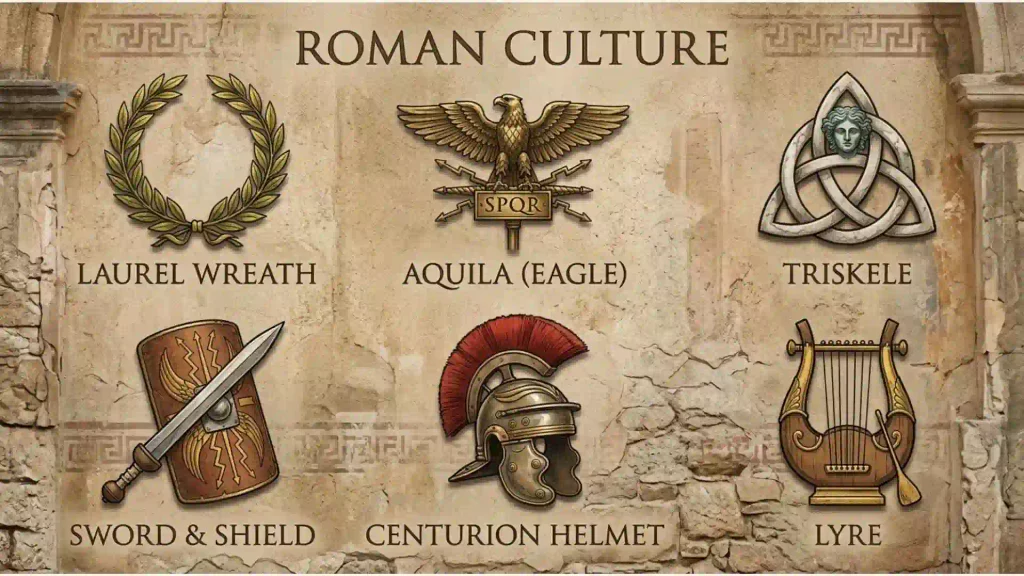
Romans adopted many Greek symbols but gave them their own meanings.
The eagle became a powerful symbol of the Roman Empire, representing strength, authority, and military power.
Laurel wreaths represented victory, honor, and achievement.
Eastern Traditions
Eastern cultures often connect symbols with spiritual balance and enlightenment.
In Buddhism, the Dharma wheel represents the teachings of Buddha and the path toward spiritual awakening.
In Hindu traditions, the Om symbol represents the sound of creation and universal consciousness.
Chinese culture uses symbols such as dragons and yin-yang to represent balance, power, and harmony.
Indigenous Traditions
Many Indigenous cultures view symbols as connections between humans, nature, ancestors, and spiritual forces.
Animal symbols often represent guidance, protection, and wisdom.
For example, the eagle is considered sacred in many Indigenous traditions because it represents vision, strength, and connection with the spiritual world.
Modern Interpretations
Today, symbols continue to evolve through technology, fashion, branding, and digital communication.
A simple icon can represent an entire company, movement, or idea.
Examples include:
- Logos representing brands
- Emojis expressing emotions
- Social media icons representing connection
- Tattoos representing personal stories
Similar Symbols and Their Meanings
| Symbol | Similar Meaning | Main Difference |
| Circle | Unity, eternity, completeness | Focuses on endless cycles and wholeness |
| Tree | Growth, connection, life | Represents development and roots |
| Lotus | Purity, transformation | Focuses on overcoming challenges |
| Phoenix | Rebirth, renewal | Represents transformation through destruction |
| Spiral | Growth, evolution, journey | Represents movement and progress |
Many symbols share similar themes, but their meanings depend on culture, history, and personal interpretation.
Symbols in Mythology and Folklore
Mythology is filled with powerful symbols that explain human fears, hopes, and dreams.
The phoenix appears in ancient legends as a bird that rises from its ashes, representing renewal and transformation.
The serpent appears in many cultures with different meanings. It can represent wisdom, healing, danger, or rebirth.
The world tree appears in Norse mythology as Yggdrasil, a cosmic tree connecting different worlds.
These stories helped shape how people understand symbols today.
Symbols in Art, Literature, Movies and Pop Culture
Artists have used symbols for centuries to communicate deeper messages.
In paintings, flowers, colors, animals, and objects often represent hidden ideas. Writers use symbols to create deeper meanings in stories.
For example, the green light in The Great Gatsby represents dreams, hope, and unreachable desires.
Movies often use symbols to communicate emotions without dialogue. A broken mirror may represent identity struggles, while a rising sun may represent hope.
Tattoos and fashion also use symbols as personal expressions of identity, memories, and beliefs.
Spiritual and Dream Meaning of Symbols
Dream symbols are often interpreted as messages from the subconscious mind.
A symbol appearing in dreams may reflect emotions, memories, fears, or desires.
Common interpretations include:
| Symbol | Possible Dream Meaning |
| Water | Emotions, change, subconscious thoughts |
| Bird | Freedom, hope, spiritual growth |
| Snake | Transformation, healing, hidden fears |
| Tree | Growth, stability, personal development |
| Light | Knowledge, guidance, awareness |
Dream meanings are personal and can change depending on individual experiences.
Positive and Negative Meanings of Symbols
| Positive Meaning | Negative Meaning |
| Hope | Fear |
| Protection | Control |
| Wisdom | Confusion |
| Transformation | Loss |
| Unity | Conflict |
A symbol does not always have one fixed meaning. Its interpretation depends on cultural background, personal experiences, and the situation where it appears.
Why Humans Are Attracted to Symbols
Humans are naturally attracted to symbols because they help us understand complex ideas quickly.
Symbols create emotional connections because they combine images with memories and beliefs.
They also help people feel connected to something larger than themselves. A symbol can represent family, culture, religion, dreams, or personal identity.
From ancient cave paintings to modern digital icons, symbols remain one of humanity’s strongest forms of communication.
Modern Uses of Symbols
Tattoos
Many people choose symbols for tattoos because they represent personal journeys, memories, beliefs, or important life moments.
Jewelry
Symbolic jewelry often represents love, protection, spirituality, or family connections.
Fashion
Designers use symbols to communicate identity, cultural influences, and artistic messages.
Branding
Companies use symbols and logos because people remember images faster than words.
Social Media
Icons, emojis, and digital symbols help people communicate emotions instantly.
Home Decor
Symbolic artwork and designs allow people to create spaces that reflect their values and personality.
Interesting Facts About Symbols Meaning
- The oldest known symbols are thousands of years older than written language.
- The circle is one of the most universal symbols because many cultures connect it with eternity and completeness.
- Ancient Egyptians used hundreds of symbolic signs in hieroglyphic writing.
- Many modern company logos are designed around psychological symbolism.
- Symbols can have completely different meanings in different cultures.
- Colors often work as symbols, with red commonly representing passion, danger, or power.
- Animals are among the most common symbolic images throughout human history.
- Symbols continue to evolve through internet culture and digital communication.
Frequently Asked Questions
What is the meaning of symbols?
Symbols meaning refers to the ideas, emotions, beliefs, or messages represented by images, objects, or signs.
Why are symbols important in human culture?
Symbols preserve history, communicate beliefs, and help communities express shared values.
Can symbols have different meanings?
Yes. A symbol’s meaning can change depending on culture, historical period, and personal interpretation.
What is the psychological importance of symbols?
Symbols influence emotions, memories, and thoughts by connecting visual images with deeper human experiences.
Why do people use symbols in tattoos?
People use symbolic tattoos to represent identity, personal stories, beliefs, memories, or important life events.
Conclusion
Symbols meaning reveals the hidden language humans have used throughout history to express ideas beyond words. From ancient civilizations to modern digital culture, symbols connect people with emotions, beliefs, and shared experiences. They represent both personal journeys and universal human stories. Every symbol carries a message, and understanding those messages helps us better understand ourselves and the world around us.
 Sarah Thompson
 Michael Rivera