
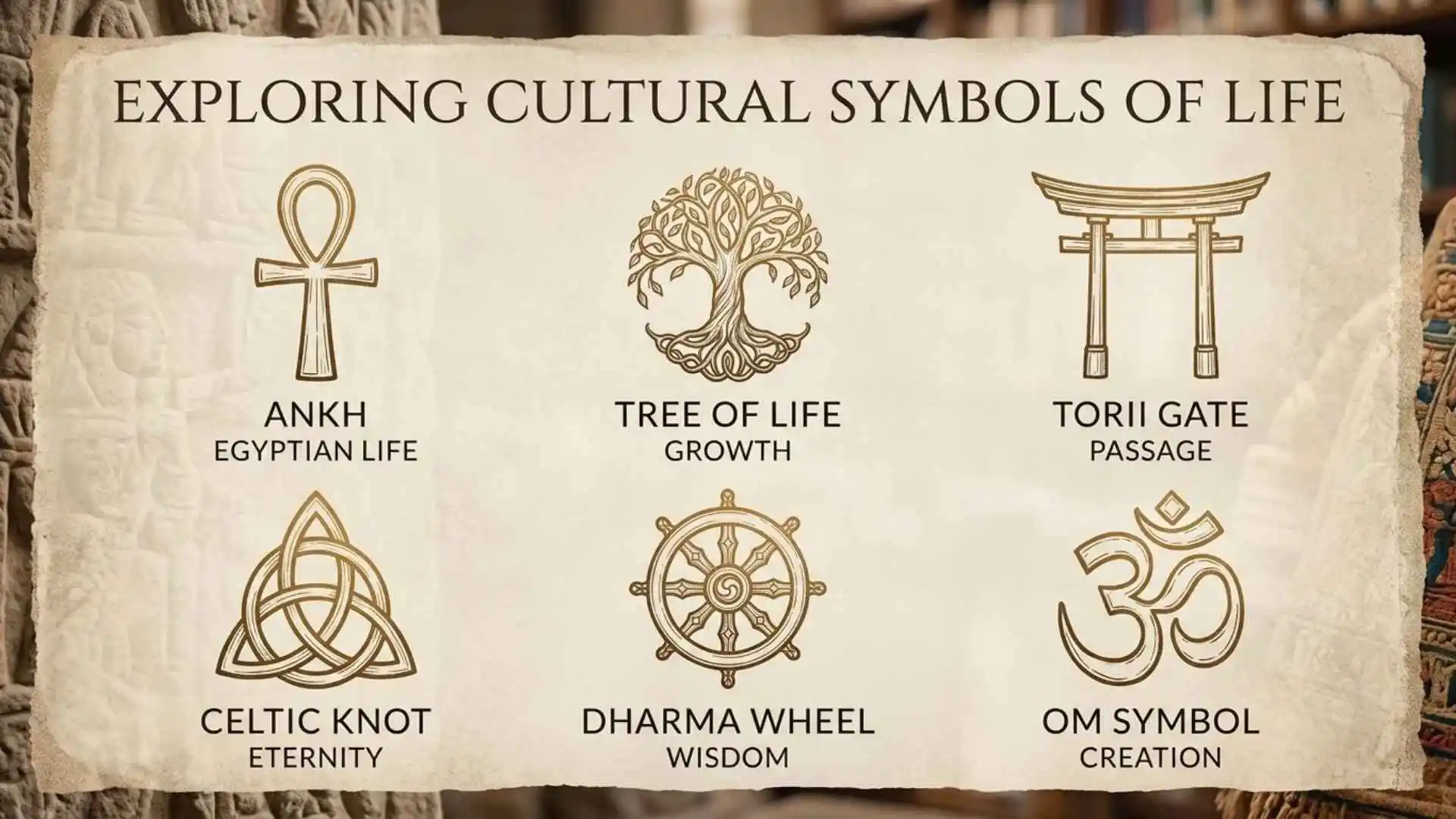
Cultural symbols are powerful signs, images, objects, colors, and traditions that express the beliefs, values, and identities of different communities around the world. From national flags and religious icons to traditional clothing, sacred animals, and ancient patterns, these symbols help people communicate ideas that words alone cannot always express. They connect generations, preserve history, and create a sense of belonging by reminding people of their shared roots, customs, and experiences.
Every culture has symbols with unique meanings shaped by history, religion, geography, and social traditions. For example, the lotus flower represents purity and spiritual growth in several Asian religious traditions, while the olive branch is widely recognized as a symbol of peace. Colors, gestures, animals, and everyday objects can also carry deep cultural significance. However, the meaning of a cultural symbol can change from one society to another, so understanding its original context is essential to appreciating what it truly represents.
In this complete guide to cultural symbols and their meanings, you will explore how symbols influence identity, spirituality, communication, celebrations, and everyday life. You will discover examples from different countries and traditions, learn about the significance of colors and animals, and understand how cultural symbols have evolved through time. Whether you are interested in world cultures, history, religion, or human behavior, this guide will help you uncover the hidden meanings behind the symbols that connect people and shape communities.
Quick Answer
Cultural symbols are objects, images, colors, gestures, animals, or traditions that carry shared meanings within a society. They represent beliefs, values, history, religion, identity, or social unity. Their meanings can change across cultures, so the same symbol may express peace in one community and danger, mourning, or power in another.
Quick Facts About Cultural Symbols
| Aspect | Information |
| Origin | Developed through religion, mythology, nature, rituals, political systems, and shared community experiences |
| Historical Significance | Preserved group identity, communicated beliefs, marked social status, and united communities |
| Main Meaning | Shared identity, values, memory, belonging, and communication |
| Spiritual Meaning | Connection with the divine, ancestors, nature, the soul, or inner transformation |
| Cultural Importance | Helps societies pass traditions, beliefs, and historical knowledge between generations |
| Modern Usage | Appears in flags, logos, tattoos, fashion, art, social media, ceremonies, and political movements |
What Are Cultural Symbols?
Cultural symbols are signs that have a recognized meaning within a particular group or society. They may be physical objects, visual images, sounds, colors, clothing, rituals, or gestures.
A national flag, for example, is more than fabric. It may represent independence, sacrifice, unity, or political authority. A wedding ring is not simply jewelry. In many societies, it symbolizes commitment, loyalty, and an unbroken bond.
Cultural symbols began long before written language. Early humans used cave paintings, carved animals, burial objects, and ceremonial markings to communicate ideas about life, death, hunting, fertility, and the unseen world.
As civilizations grew, symbols became more organized. Ancient rulers used crowns and staffs to display authority. Religious communities developed sacred shapes and objects. Armies carried emblems into battle. Families used crests, while nations later adopted flags, seals, and anthems.
Symbols became important because they could express complex ideas quickly. A single image could communicate membership, danger, faith, rank, or loyalty without a spoken explanation.
Over time, meanings changed. Some ancient religious symbols became national icons. Others moved into fashion, political protest, advertising, or popular culture. Their power remains strong because symbols connect emotion with shared memory.
Deep Symbolic Meaning of Cultural Symbols
Spiritual Level
On a spiritual level, cultural symbols often represent humanity’s relationship with the sacred.
Circles may suggest eternity because they have no visible beginning or end. Trees can symbolize life, growth, ancestry, and the connection between earth and sky. Water often represents cleansing, renewal, birth, or spiritual transformation.
Sacred symbols also help people focus during prayer and meditation. They provide a visible form for ideas that are difficult to describe, such as divine presence, enlightenment, protection, or the immortality of the soul.
In many traditions, symbols act as bridges. They connect the ordinary world with gods, ancestors, spirits, or higher consciousness.
Psychological Level
Psychologically, symbols speak to emotions before the logical mind fully explains them.
Carl Jung argued that certain symbolic patterns, called archetypes, appear across myths, dreams, and cultures. Images such as the hero, mother, shadow, wise elder, and journey reflect common human experiences.
A crown may trigger ideas of power. A dark forest may suggest mystery or fear. A rising sun often creates feelings of hope and renewal.
People are attracted to symbols because they help organize emotions. A person may wear a meaningful pendant during grief, not because the object changes reality, but because it offers comfort, memory, and emotional stability.
Cultural Level
At the cultural level, symbols create belonging.
They tell people, “This is who we are.” Traditional clothing, food, dances, religious objects, and national emblems can connect individuals to a larger story.
A symbol can also preserve memory after major events. Monuments, memorial ribbons, and public ceremonies often keep historical pain or achievement alive.
However, cultural meaning depends on context. A gesture that shows respect in one place may be rude elsewhere. A color associated with celebration in one culture may represent death in another.
Types and Variations of Cultural Symbols
National Symbols
National symbols include flags, coats of arms, monuments, animals, flowers, and anthems.
A flag usually uses colors and shapes to represent historical struggles, political ideals, religion, or geography. National animals often express qualities a country admires, such as courage, strength, freedom, or wisdom.
These symbols appear in government buildings, schools, passports, public ceremonies, and international events.
Religious Symbols
Religious symbols communicate beliefs about divine power, morality, salvation, creation, and spiritual identity.
Examples include the Christian cross, the Islamic crescent in cultural and political contexts, the Jewish Star of David, the Hindu Om, the Buddhist Dharma wheel, and the Sikh Khanda.
They appear in places of worship, jewelry, sacred texts, art, clothing, and religious ceremonies.
Natural Symbols
Animals, plants, mountains, rivers, stars, and weather patterns often become cultural symbols.
The lotus represents purity and spiritual awakening in several Asian traditions because it rises clean from muddy water. Eagles may symbolize freedom or imperial power. Snakes can represent healing, danger, rebirth, or hidden wisdom.
Natural symbols appear in mythology, medicine, national emblems, dreams, literature, and art.
Color Symbols
Colors carry powerful cultural meanings.
White may represent purity and marriage in many Western societies, but mourning in parts of East Asia. Red can symbolize love, danger, revolution, luck, or prosperity. Black may express grief, elegance, authority, or rebellion.
Color meanings often appear in clothing, ceremonies, flags, branding, festivals, and religious practices.
Gesture and Body Symbols
Hand signs, bows, greetings, hairstyles, and facial markings can communicate respect, identity, rank, or resistance.
A bow may show respect in Japan. Placing a hand over the heart can express sincerity or patriotism. Certain hand gestures can have completely different meanings across national borders.
These symbols appear in social customs, ceremonies, political movements, sports, and religious rituals.
Mythological Symbols
Mythological creatures and legendary objects often carry cultural lessons.
Dragons may symbolize imperial authority, wisdom, rain, or good fortune in Chinese traditions. In some European stories, dragons represent chaos, greed, or danger. The phoenix symbolizes death and rebirth because it rises from its ashes.
Such symbols appear in folklore, temples, literature, films, coats of arms, tattoos, and festivals.
Cultural Symbols Across Different Cultures
Ancient Egypt
Ancient Egyptian culture used symbols to explain life, death, divine order, and the afterlife.
The ankh represented life. The Eye of Horus symbolized protection, healing, and royal power. The scarab beetle represented renewal and the rising sun.
These symbols appeared in tombs, jewelry, temple walls, amulets, and funerary objects.
Ancient Greece
Greek symbols often reflected mythology, philosophy, civic identity, and heroic ideals.
The owl represented wisdom and was linked with Athena. Laurel wreaths symbolized victory and honor. The labyrinth became associated with challenge, confusion, and self-discovery through the myth of Theseus and the Minotaur.
Greek symbols continue to appear in education, medicine, sports, politics, and literature.
Roman Culture
Roman symbols emphasized authority, military strength, law, and public order.
The eagle represented imperial power and military pride. Fasces, a bundle of rods around an axe, symbolized authority and unity. Laurel crowns honored victorious generals and respected leaders.
Many Roman symbols later influenced European governments, architecture, military traditions, and legal institutions.
Eastern Traditions
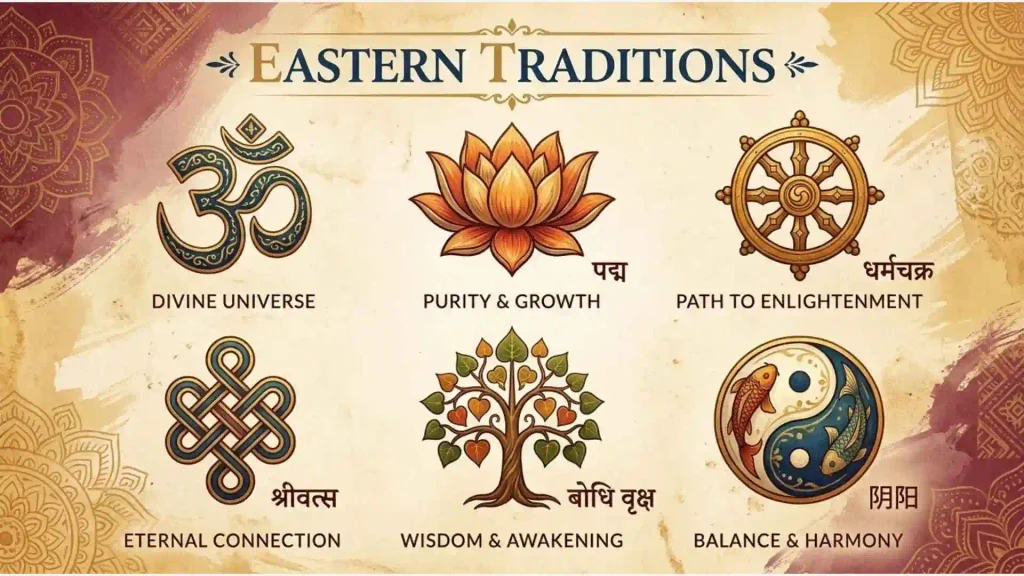
Eastern traditions include a wide range of cultures, but many use symbols connected with balance, nature, harmony, and spiritual growth.
The yin-yang symbol represents the interdependence of opposite forces. The lotus symbolizes enlightenment. Bamboo can represent flexibility and strength, while cranes often symbolize long life and peace.
These symbols appear in philosophy, painting, calligraphy, temples, gardens, clothing, and festivals.
Indigenous Traditions
Indigenous cultures often use symbols rooted in land, ancestors, animals, seasons, and community stories.
The meaning of a symbol may belong to a specific nation or tribal group and should not be treated as universal. Animals, patterns, masks, and ceremonial objects can carry sacred, historical, or family meanings.
In many Indigenous traditions, symbols are not merely decorative. They may hold responsibilities, spiritual relationships, and cultural knowledge.
Modern Interpretations
Modern culture constantly creates new symbols.
Peace signs, protest gestures, brand logos, emojis, colored ribbons, and social media hashtags can unite people around causes or identities.
Digital symbols spread quickly, but their meanings can also change quickly. A symbol may begin as a joke, become a political statement, and later enter mainstream advertising.
Similar Symbols and Their Meanings
| Symbol Type | Main Meaning | Common Confusion |
| Cultural symbol | Shared meaning within a community | Often mistaken for a universal symbol |
| Religious symbol | Faith, sacred beliefs, divine connection | May also have national or ethnic meaning |
| National symbol | Political identity, unity, history | Does not represent every citizen’s personal beliefs |
| Archetypal symbol | Broad human patterns found in myths and dreams | Meanings still depend on context |
| Personal symbol | Individual memory or emotional meaning | May not be understood by others |
| Logo | Brand identity and recognition | Can borrow older cultural meanings |
Cultural symbols are related to universal symbols, but they are not always the same.
A heart is widely linked with love, yet different communities may use it in unique religious, artistic, or social ways. A snake may symbolize medicine, wisdom, evil, fertility, or rebirth depending on the tradition.
The greatest mistake is assuming that one meaning applies everywhere.
Cultural Symbols in Mythology and Folklore
Myths gave many symbols their lasting power.
The phoenix became a symbol of rebirth through stories of a bird returning from its own ashes. The Greek olive branch became linked with peace and divine favor. Thor’s hammer represented protection and sacred strength in Norse tradition.
Folklore also turned ordinary objects into signs of luck or warning. Horseshoes, mirrors, ravens, keys, and crossroads gained symbolic meanings through repeated stories.
These tales shaped how later generations understood courage, danger, fate, love, and death. Even modern films and novels continue to reuse these ancient patterns.
Cultural Symbols in Art, Literature, Movies, and Pop Culture
Artists use cultural symbols to communicate hidden messages.
In paintings, flowers may represent innocence, death, wealth, or desire. In literature, changing seasons often reflect emotional change. Winter may suggest isolation, while spring suggests hope or renewal.
Movies use symbols visually. A broken mirror may show a damaged identity. A doorway may represent a new stage of life. Clothing colors can reveal innocence, danger, authority, or transformation.
Tattoos often combine cultural and personal meaning. Fashion designers use traditional patterns, religious images, and national colors. However, using sacred symbols without understanding their meaning can cause criticism or harm.
Pop culture keeps symbols alive, but it can also simplify or commercialize them.
Spiritual and Dream Meaning of Cultural Symbols
In dreams, cultural symbols often reflect personal memories mixed with shared meanings.
Dreaming of a flag may relate to identity, loyalty, conflict, or belonging. A temple may suggest spiritual searching. A mask may represent hidden feelings or social roles.
However, dream symbols do not have one fixed meaning. Personal experience matters. A snake may frighten one person but represent healing or transformation to another.
During meditation, symbols can help focus attention. Mandalas, candles, sacred words, and natural images may encourage calm, reflection, or spiritual connection.
Positive interpretations include guidance, renewal, courage, protection, and belonging. Cautionary meanings may include fear, social pressure, conflict, or loss of identity.
Positive and Negative Meanings of Cultural Symbols
| Positive Meaning | Negative Meaning |
| Unity | Exclusion |
| Identity | Tribal conflict |
| Pride | Nationalism taken to extremes |
| Spiritual connection | Religious intolerance |
| Historical memory | Historical manipulation |
| Protection | Fear or control |
| Resistance | Violence |
| Tradition | Resistance to necessary change |
A symbol can hold both light and shadow.
A national emblem may unite people during hardship, yet it may also be used to silence criticism. A religious symbol may offer peace and hope, but it can become a source of division when used without respect.
Context, intention, and history shape the final meaning.
Why Humans Are Attracted to Cultural Symbols
Humans naturally look for patterns and meaning.
Our minds process images quickly. Symbols help us remember complex ideas by attaching them to simple forms. A circle, animal, color, or object can hold an entire story.
Symbols also meet emotional needs. They give people a sense of belonging during uncertainty. They connect individuals with ancestors, faith, community, or personal values.
Cultural memory strengthens this attraction. When a symbol appears repeatedly in ceremonies, stories, and public spaces, it becomes emotionally familiar.
People also make symbols personal. A family heirloom may carry more meaning than an expensive object because it represents love, memory, and continuity.
Modern Uses of Cultural Symbols
Today, cultural symbols appear almost everywhere.
People choose tattoos to express heritage, grief, faith, or transformation. Jewelry may show religious belief, family identity, or protection. Fashion uses national patterns, traditional fabrics, and symbolic colors.
Brands use cultural imagery to build trust and recognition. Social media turns gestures, icons, emojis, and hashtags into fast-moving signs of identity.
Home decor may include mandalas, calligraphy, masks, dreamcatchers, or religious art. These objects should be used with cultural awareness, especially when they hold sacred meaning.
In contemporary spirituality, people often combine symbols from different traditions. This may encourage learning, but respectful understanding is essential.
Interesting Facts About Cultural Symbols
- The meaning of colors can change greatly across cultures.
- Some symbols existed thousands of years before modern religions adopted them.
- Flags often use simple shapes because they must be recognized from a distance.
- Animals become symbols because humans connect their behavior with admired or feared qualities.
- Many symbols have both protective and threatening meanings.
- Political movements often transform ordinary objects into signs of resistance.
- Emojis are becoming a new form of global symbolic language.
- Sacred symbols may have rules about who can display, wear, or reproduce them.
- A symbol can change meaning after a war, revolution, disaster, or social movement.
- Personal experience can be stronger than a symbol’s traditional interpretation.
Frequently Asked Questions
What is the main purpose of cultural symbols?
Their main purpose is to communicate shared beliefs, values, identity, history, and social meaning within a community.
Are cultural symbols universal?
Some symbols appear across many societies, but their meanings are rarely completely universal. Context and local history matter.
Why do cultural symbols change over time?
They change because societies experience migration, war, religion, technology, political movements, and new forms of communication.
Can the same symbol have opposite meanings?
Yes. A color, animal, gesture, or shape may represent good fortune in one culture and danger or mourning in another.
What is an example of a cultural symbol?
Examples include national flags, the lotus flower, the ankh, religious emblems, traditional clothing, peace signs, and symbolic animals.
Why is cultural respect important when using symbols?
Some symbols are sacred or connected with painful history. Learning their meaning helps prevent disrespect, misuse, and cultural appropriation.
Conclusion
Cultural symbols are more than images, objects, or traditions. They hold memories, beliefs, fears, and dreams passed from one generation to another. By studying them carefully, we learn not only about distant societies but also about our own need for identity and belonging. Every meaningful symbol is a doorway into the human story.
 Sarah Thompson
 John Mercer