
Symbols for “and” help us connect words, ideas, names, and expressions in a simple but powerful way. The word “and” may seem small, yet it plays an important role in writing, mathematics, programming, communication, and everyday life. From the familiar ampersand (&) to mathematical symbols and digital characters, different signs can express the idea of connection, addition, partnership, or combination. Understanding these symbols makes it easier to recognize how people communicate the same idea across different contexts.
The most recognizable symbol for “and” is the ampersand (&), which appears in business names, logos, book titles, invitations, and creative designs. Other symbols, such as the plus sign (+), can represent addition or combination, while logical operators like AND connect conditions in mathematics, computing, and formal reasoning. Although these symbols may share a similar purpose, they are not always interchangeable. Each has its own history, meaning, and rules for use.
In this complete guide to symbols for “and,” you will discover their meanings, historical origins, common uses, and differences across languages and fields. You will also learn when to use the ampersand instead of the written word “and,” explore mathematical and logical representations, and find copy-and-paste symbols for everyday communication. Whether you are writing an article, designing a logo, studying mathematics, or exploring the visual language of symbols, this guide will help you understand how a simple sign can bring ideas together.
Quick Answer
The main symbol for “and” is the ampersand (&). It developed from a handwritten combination of the Latin letters e and t, forming et, the Latin word for “and.” Other symbols for and include + in informal design, ∧ in logic, and && in many programming languages.
Quick Facts About Symbols for And
| Aspect | Information |
| Origin | The ampersand developed from the Latin word et, meaning “and” |
| Historical Significance | Roman and medieval scribes used joined letters to write more quickly |
| Main Meaning | Connection, combination, partnership, or addition |
| Spiritual Meaning | Unity, balance, cooperation, and the joining of separate paths |
| Cultural Importance | Common in names, publishing, business, art, logic, and technology |
| Modern Usage | Branding, tattoos, social media, programming, mathematics, and design |
What Are Symbols for And?
Symbols for and are written marks that connect two or more words, people, ideas, values, or conditions. The best-known example is the ampersand:
&
The ampersand is a logogram, meaning one written character represents an entire word. It stands for the conjunction “and,” which joins related parts of a sentence.
Its history reaches back to Latin writing. Ancient Roman scribes often wrote the word et, meaning “and,” by joining its two letters. Over time, the connected e and t became increasingly stylized until they formed the symbol recognized today.
The name “ampersand” developed much later. The symbol was once recited after the letter Z in alphabet lessons. Students reportedly said “and per se and,” meaning “and by itself means and.” Repeated speech gradually turned that phrase into “ampersand.”
Although the ampersand is the standard written sign, it is not the only symbol that can communicate “and.” Context determines which mark is correct.
Common Symbols for And and Their Uses
Ampersand: &
Visual description: A curved character that may resemble a looped figure eight, a ribbon, or joined handwritten letters.
Meaning: The word “and.”
Symbolism: Partnership, connection, continuity, and cooperation.
Cultural connection: It comes from Latin writing and became an important element of European typography.
Where it appears: Company names, titles, logos, invitations, citations, tattoos, and informal writing.
Examples include:
- Johnson & Johnson
- Research & Development
- Arts & Crafts
- Romeo & Juliet
In normal sentences, spelling out “and” is often clearer. The ampersand is especially useful in established names, headings, tables, and limited spaces.
Plus Sign: +
Visual description: One vertical line crossing one horizontal line.
Meaning: Addition, inclusion, or “together with.”
Symbolism: Growth, extra value, positivity, and combination.
Cultural connection: The sign is mainly mathematical, but advertising and digital branding have expanded its meaning.
Where it appears: Equations, brand names, streaming services, social posts, and visual design.
For example:
- Coffee + conversation
- Health + wellness
- Art + technology
The plus sign is not a direct grammatical replacement for “and” in formal prose. However, designers often use it to suggest a modern, energetic partnership. Its clean shape has become especially popular in branding.
Logical Conjunction: ∧
Visual description: An upward-pointing wedge.
Meaning: Logical “and.”
Symbolism: Two conditions must both be true.
Cultural connection: It belongs to formal logic, mathematics, philosophy, and computer science.
Where it appears: Logical statements, proofs, truth tables, and academic texts.
If P means “It is raining” and Q means “It is cold,” then:
P ∧ Q
means:
“It is raining and it is cold.”
Unlike the decorative ampersand, the conjunction sign has a precise technical meaning.
Double Ampersand: &&
Visual description: Two ampersands placed together.
Meaning: Logical AND in many programming languages.
Symbolism: Both conditions must be satisfied before an action occurs.
Where it appears: Programming languages such as JavaScript, Java, C, C++, and PHP.
A simple example is:
age >= 18 && hasID
This means the age condition and the identification condition must both be true.
Word Forms and Language Variations
Not every language uses a special symbol for “and.” Most have their own written conjunctions, such as:
- English: and
- Latin: et
- French: et
- Spanish: y
- German: und
- Arabic: و
- Chinese: 和
- Japanese: と
These are words or characters rather than universal replacements for the ampersand. Still, each performs the same basic human task of connecting one thing with another.
Deep Symbolic Meaning of Symbols for And
Spiritual Level
Symbols for and do not possess one universal spiritual meaning. However, many people interpret them as signs of unity and interconnectedness.
The ampersand is especially appealing because it does not erase either side of a relationship. It places two separate elements together while allowing each to keep its identity.
Spiritually, this can represent:
- Body and soul
- Past and future
- Earth and sky
- Love and trust
- Individuality and community
- Human life and the sacred
An ampersand tattoo may therefore mean, “My story continues,” or “I am connected to something beyond myself.” This is a modern personal interpretation rather than an ancient religious doctrine.
Psychological Level
The human mind naturally searches for patterns and relationships. We understand the world by linking causes with effects, people with emotions, and memories with meaning.
From a psychological viewpoint, the ampersand is attractive because it promises continuation. It suggests that the first subject is not alone. Something else follows.
In Jungian psychology, symbols can draw emotional power from shared patterns in human experience. The ampersand is not one of Carl Jung’s classic archetypal symbols, but it can reflect the archetype of union, where separate forces come together to create a more complete whole.
A person may see A & B and instinctively imagine cooperation, romance, friendship, or balance.
Cultural Level
Societies depend on connection. Families, cities, religions, businesses, and traditions survive because people link themselves to shared values.
The symbol & often appears between family names, business partners, artistic collaborators, and married couples. In each case, it quietly announces a relationship.
Consider a wedding invitation displaying:
Amelia & Noah
The mark does more than save space. It becomes a visual bridge between two lives.
Symbols for And Across Different Cultures
Ancient Egypt
Ancient Egyptian hieroglyphs did not use the modern ampersand. Connection was expressed through language, placement, and symbolic combinations.
Egyptian art frequently paired complementary forces, such as Upper and Lower Egypt or Isis and Osiris. These pairings reflected unity, balance, and cosmic order. While they are not historical origins of &, they reveal how deeply human cultures value the idea behind “and.”
Ancient Greece
Greek writers used conjunctions rather than the ampersand. However, Greek philosophy gave great attention to relationships between paired ideas, including form and matter, body and mind, order and chaos.
Later systems of logic, shaped partly by Greek philosophical traditions, created formal ways to show how statements connect. The modern ∧ sign belongs to that larger intellectual history.
Roman Culture
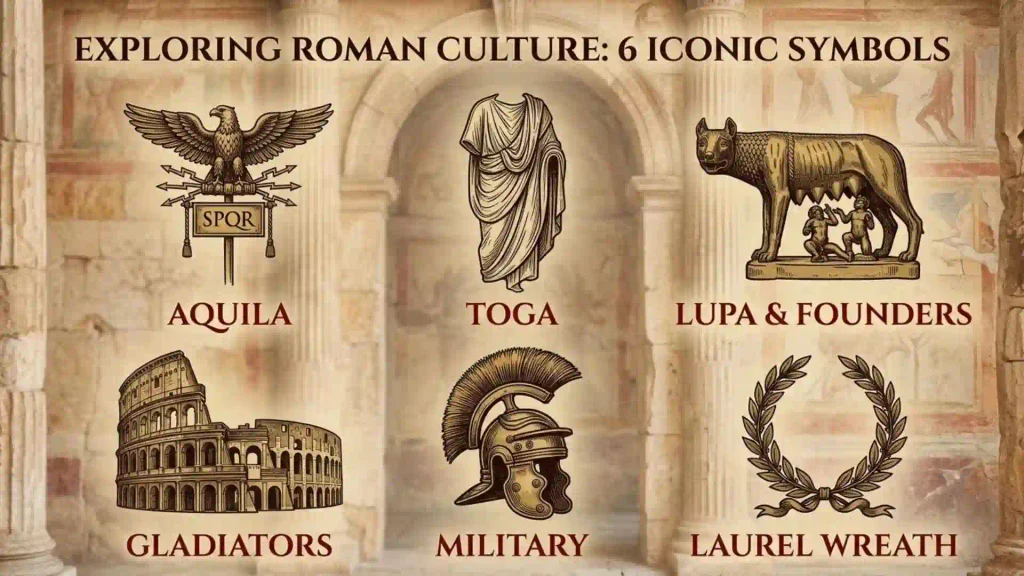
Roman writing provides the most direct historical foundation for the ampersand. Scribes joined the letters in et, the Latin conjunction meaning “and.”
As handwriting styles evolved, the two letters became a single flowing mark. The ampersand is therefore a surviving trace of Roman language hidden inside modern typography.
Eastern Traditions
Chinese, Japanese, Indian, and other Eastern writing traditions developed their own conjunctions and visual systems.
Even without the ampersand, the symbolic idea of connection remains central. Yin and yang, for example, communicate the relationship between complementary energies. The symbol does not literally mean “and,” but it expresses balance through union.
In Indian philosophy, paired concepts such as consciousness and matter also explore how distinct realities interact.
Indigenous Traditions
Indigenous cultures are highly diverse, so no single interpretation represents them all. Many Indigenous traditions emphasize kinship among people, animals, ancestors, land, and spirit.
Connection may be shown through circles, woven patterns, knots, shared lines, or interlocking forms. These are not alternative punctuation marks for “and,” but they express the deeper relational idea that nothing exists entirely alone.
Modern Interpretations
Today, the ampersand crosses language and cultural boundaries. It appears in international branding, digital interfaces, jewelry, tattoos, and graphic art.
Its meaning has expanded beyond grammar. It can now suggest:
- Partnership
- Inclusiveness
- Collaboration
- Continuation
- Dual identity
- Shared purpose
Similar Symbols and Their Meanings
| Symbol | Common Meaning | Relationship to “And” | Important Difference |
| & | And | Direct replacement in selected contexts | Standard prose often prefers the full word |
| + | Plus, addition | Suggests “and” or “with” | Primarily mathematical |
| ∧ | Logical conjunction | Means both statements are true | Used mainly in logic |
| && | Conditional AND | Connects programming conditions | Meaning depends on computer language |
| ∪ | Union | Combines mathematical sets | Does not function as a normal conjunction |
| ∩ | Intersection | Shows shared elements | Means overlap, not general connection |
| / | Or, and/or, separation | Sometimes loosely connects options | Can create ambiguity |
| ∞ | Infinity | May suggest an endless bond | Does not literally mean “and” |
A common mistake is treating these symbols as interchangeable. They are related through the idea of combination, but each belongs to a different system.
Symbols for And in Mythology and Folklore
The ampersand itself does not play a major role in ancient mythology because its familiar form developed through writing and typography.
However, the idea it represents appears in countless myths.
Mythological stories often depend on powerful pairings:
- Isis and Osiris in Egyptian tradition
- Zeus and Hera in Greek mythology
- Romulus and Remus in Roman legend
- Izanagi and Izanami in Japanese mythology
- Sun and moon figures in many Indigenous traditions
These pairings may express creation, conflict, balance, loyalty, rivalry, or transformation. The word “and” acts as a bridge, but the relationship may be harmonious or difficult.
Folklore reminds us that connection does not always mean agreement. Two forces can be joined by love, destiny, conflict, or shared history.
Symbols for And in Art, Literature, Movies, and Pop Culture
Artists and designers value the ampersand because it combines language with visual movement. Depending on the typeface, it can look elegant, playful, traditional, or bold.
In literature and publishing, it often appears in:
- Book and chapter titles
- Publishing company names
- Bibliographic references
- Poetry layouts
- Magazine headings
In film credits, “and” and “&” can sometimes carry specialized industry meanings. In certain screenwriting credit conventions, an ampersand may indicate writers who worked as a team, while “and” may separate writers who contributed at different stages.
Fashion designers use the ampersand to suggest collaboration or luxury. Tattoo artists turn it into a personal emblem. Home decor often features phrases such as “love & laughter” or “you & me.”
The ampersand has also become a favorite of typographers because its form allows unusual creativity. Some designs clearly reveal the original e and t, while others appear almost abstract.
Spiritual and Dream Meaning of Symbols for And
Dreaming of an ampersand may reflect a desire to connect two areas of life.
Possible interpretations include:
- Wanting a closer relationship
- Trying to balance work and family
- Joining creativity with practical action
- Accepting two sides of your personality
- Recognizing that your journey is continuing
A clear, attractive ampersand may suggest harmony or an approaching partnership. A broken or fading symbol could reflect fear of separation, unfinished communication, or conflict between priorities.
Dream meanings are personal rather than fixed predictions. The surrounding people, emotions, colors, and events matter more than the symbol alone.
Positive and Negative Meanings of Symbols for And
| Positive Meaning | Negative Meaning |
| Connection | Unwanted attachment |
| Partnership | Dependence |
| Cooperation | Loss of individuality |
| Continuation | Inability to let go |
| Balance | Inner conflict |
| Inclusion | Pressure to belong |
| Shared purpose | Confused boundaries |
A symbol can carry light and shadow at the same time. Connection may provide love and strength, but an unhealthy connection can also create dependence.
The deeper question is not simply what has been joined. It is whether the relationship allows both sides to grow.
Why Humans Are Attracted to Symbols for And
Humans are social beings. From childhood, we search for belonging and learn through relationships.
The ampersand visually satisfies this emotional need. Its curves seem to gather separate elements into one form. Even before we consciously read it, we may sense movement and connection.
It also leaves room for imagination. “You & me” feels more intimate than a plain list. “Tradition & innovation” creates a story of two forces meeting.
Cultural memory strengthens this response. We have seen the symbol on wedding stationery, family businesses, book covers, restaurants, and treasured objects. Each encounter adds another emotional layer.
Modern Uses of Symbols for And
Today, symbols for and appear across almost every part of visual culture.
Tattoos and Jewelry
Ampersand tattoos may honor a relationship, personal transformation, or the belief that life continues after hardship. Jewelry designs often use the mark to represent love and partnership.
Fashion and Branding
Brands use & or + to suggest collaboration, added value, and modern identity. The ampersand often feels classic or refined, while the plus sign appears clean and technological.
Social Media
People use symbols to shorten captions, create aesthetic usernames, and connect interests:
- Books & coffee
- Travel + food
- Mind ∧ body
Contemporary Spirituality
Modern spiritual communities may use the ampersand as a reminder that apparent opposites can coexist. Strength and softness, grief and gratitude, or independence and love do not always cancel each other out.
Home Decor
Wall art, cushions, signs, and wedding decorations frequently feature the ampersand. Its balanced shape works well as both language and ornament.
Interesting Facts About Symbols for And
- The ampersand grew from the Latin letters e and t.
- Its name developed from the spoken phrase “and per se and.”
- It was once taught after Z in some English alphabet traditions.
- Different typefaces can make ampersands look dramatically different.
- Italic ampersands often reveal the original et more clearly.
- The plus sign can suggest “and,” but it is not a standard substitute in formal sentences.
- The ∧ sign means logical conjunction in mathematics and philosophy.
- Many programming languages use && for conditional AND.
- Designers often choose ampersands to make partnerships appear established and elegant.
- The symbol has no single ancient spiritual meaning, despite its popular use in modern spiritual tattoos.
Frequently Asked Questions
What is the main symbol for and?
The main symbol for “and” is the ampersand, written as &. It is commonly used in names, titles, labels, references, and design.
Can the plus sign mean and?
The plus sign can informally suggest “and” or “together with,” especially in branding and visual design. It should not normally replace “and” in formal prose.
What does the ampersand symbolize spiritually?
In modern spiritual interpretation, it can symbolize unity, continuation, partnership, balance, and the connection between different parts of life.
What symbol means and in logic?
The symbol ∧ represents logical conjunction. A statement written as P ∧ Q is true only when both P and Q are true.
What does && mean?
In many programming languages, && is the logical AND operator. It checks whether two conditions are both true.
Is it correct to use & instead of and?
It is correct in established names, citations, headings, tables, and certain design contexts. In normal formal sentences, writing the complete word “and” is usually preferred.
Conclusion
Symbols for and reveal how much meaning can live inside a small mark.
From the Roman et to the modern ampersand, each form expresses connection, addition, or shared truth.
Its deeper appeal comes from a human desire to unite people, ideas, and different parts of ourselves.
The ampersand reminds us that life is rarely only one thing or another. Often, its richest meaning is found in what exists between them.
 Michael Rivera
 John Mercer