
Death symbols have appeared throughout human history, helping people express grief, remember loved ones, and explore the mysteries of mortality. From skulls and skeletons to ravens, hourglasses, wilting flowers, and fallen leaves, these powerful images represent the end of life, the passage of time, and the possibility of transformation. Some symbols inspire fear or caution, while others offer comfort, hope, and a reminder to appreciate the time we have.
Different cultures and religions interpret death symbols in unique ways. In Western traditions, the skull often represents mortality, while the hourglass reminds us that time is limited. In Mexican culture, calaveras, or decorative skulls, play an important role in Día de los Muertos, a celebration that honors deceased loved ones. Ancient Egyptian imagery connected death with the afterlife and spiritual rebirth, while other traditions use birds, flowers, candles, and natural cycles to express remembrance, mourning, and renewal.
In this guide to death symbols, you will discover their meanings, historical origins, cultural significance, and psychological interpretations. You will explore familiar symbols such as skulls, black roses, ravens, tombstones, and hourglasses, along with religious imagery and lesser-known signs associated with death and the afterlife. Whether you are researching cultural traditions, exploring spiritual beliefs, choosing a meaningful tattoo, or simply curious about symbolism, this guide will help you understand how people across the world give meaning to life’s final chapter.
Quick Answer
Death symbols are objects, animals, plants, colors, or images associated with mortality, grief, the afterlife, and the passage from one state of existence to another. Common examples include skulls, skeletons, ravens, hourglasses, black clothing, candles, and withered flowers. Their meanings vary by religion, culture, historical period, and personal experience.
Quick Facts About Death Symbols
| Aspect | Information |
| Origin | Prehistoric burial customs, ancient religions, and early beliefs about spirits |
| Historical Significance | Helped societies explain mortality, honor the dead, and imagine an afterlife |
| Main Meaning | Death, impermanence, grief, remembrance, or transition |
| Spiritual Meaning | Transformation, release, rebirth, judgment, or the soul’s journey |
| Cultural Importance | Used in funerals, religious rituals, art, mythology, and memorial traditions |
| Modern Usage | Tattoos, jewelry, films, fashion, social media, memorials, and personal expression |
What Are Death Symbols?
Death symbols are visual signs connected with mortality and the end of physical life. However, their meanings are rarely limited to fear or destruction. Many also represent remembrance, spiritual change, rebirth, protection, and the natural cycle of existence.
Their origins reach back to prehistoric burial practices. Early communities placed tools, food, ornaments, and flowers beside the dead. These objects suggest that people believed death involved a journey or continued existence rather than complete disappearance.
Ancient civilizations later created more detailed symbolic systems. Egyptians used tomb paintings, amulets, animals, and sacred texts to guide the deceased through the afterlife. Greeks imagined the River Styx and placed coins with the dead for Charon, the legendary ferryman. Romans built monuments and displayed portraits to preserve family memory.
During the European Middle Ages, war, famine, and plague made death a visible part of daily life. Artists created images of skeletons leading people from every social class in the “Dance of Death.” The message was simple: kings, workers, priests, and children all share the same fate.
Over time, death symbolism moved beyond tombs and religious spaces. It entered poetry, paintings, theater, films, fashion, and tattoo culture. Today, people may wear a skull not because they celebrate death, but because they value courage, survival, individuality, or the brief nature of life.
Deep Symbolic Meaning of Death Symbols
Spiritual Meaning
On a spiritual level, death symbols often represent transition rather than absolute ending. Many religions describe death as a doorway between physical life and another state of being.
A dying seed, for example, disappears into the soil before producing new growth. This natural process has inspired beliefs about resurrection and renewal. Likewise, the setting sun can suggest death, while sunrise represents return, hope, or rebirth.
Candles are commonly used in funerals and memorial ceremonies because light is associated with the soul, divine presence, and continuing memory. When a candle is extinguished, it may symbolize physical death. Its remaining warmth or rising smoke may suggest that something unseen continues.
Psychological Meaning
Psychologically, death symbols allow people to face a reality that is difficult to express directly. A skull, empty chair, or fading flower can communicate loss without requiring words.
Swiss psychiatrist Carl Jung wrote about archetypes, which are recurring symbolic patterns found across dreams, myths, and cultures. Images of death can belong to the archetype of transformation. Symbolic death may describe the end of an identity, relationship, habit, or stage of life.
This is why people sometimes dream of funerals during major changes. The dream may not predict physical death. Instead, it may reflect anxiety about leaving the past behind.
Cultural Meaning
At the cultural level, death symbols help communities remember ancestors and share grief. Funeral clothing, burial flowers, monuments, and mourning rituals tell people how to express loss together.
A symbol can also preserve collective memory. War memorials, eternal flames, poppies, and engraved names connect private grief with national history. Through these images, the dead remain part of the community’s story.
Types and Variations of Death Symbols
The Skull
A skull is one of the most recognizable death symbols. Its hollow eyes and exposed bone show what remains after the body decays.
In medieval art, skulls reminded viewers that beauty, wealth, and power do not last. Pirates used skull imagery to create fear, while modern tattoo wearers may use it to symbolize courage, equality, rebellion, or survival.
The Skeleton
A full skeleton represents mortality, decay, and the physical structure shared by all people. It appears in the medieval Dance of Death, modern horror stories, medical art, and Mexico’s Day of the Dead traditions.
Unlike a corpse, a skeleton can appear almost playful. This allows artists to discuss death while reducing some of its emotional weight.
The Grim Reaper
The Grim Reaper is usually shown as a hooded skeleton carrying a scythe. The scythe originally belonged to agriculture, where it was used to cut crops. Symbolically, human lives became the harvest.
This figure became especially common in Europe after devastating plague outbreaks. It represents the certainty of death and the idea that no person can escape time.
The Hourglass
An hourglass symbolizes time running out. Sand falls steadily from the upper chamber to the lower one, making it a clear image of life passing moment by moment.
It often appears beside skulls in vanitas paintings, which warned viewers against pride and excessive attachment to material possessions.
Ravens and Crows
Ravens and crows are linked with death because they are intelligent scavengers that may appear near battlefields or dead animals.
In Norse mythology, Odin’s ravens, Huginn and Muninn, represented thought and memory rather than death alone. In other traditions, black birds can serve as messengers between worlds, guardians of secrets, or warnings of change.
Withered Flowers
A fading flower represents beauty, youth, and life disappearing with time. Roses, lilies, chrysanthemums, and poppies often appear in mourning customs.
A fresh flower may symbolize life and love, while the same flower with bent petals can represent grief, separation, or the end of innocence.
The Extinguished Candle
A burning candle suggests life, spirit, or consciousness. An extinguished candle represents death or sudden loss.
Candles also carry hope. Lighting one for a deceased person can express remembrance and the belief that love continues after physical absence.
The Color Black
Black is strongly associated with mourning in many Western cultures. It can represent darkness, seriousness, mystery, and the absence of light.
However, black is not universally the color of grief. Some cultures use white, showing that death symbolism depends heavily on tradition.
Death Symbols Across Different Cultures
Ancient Egypt
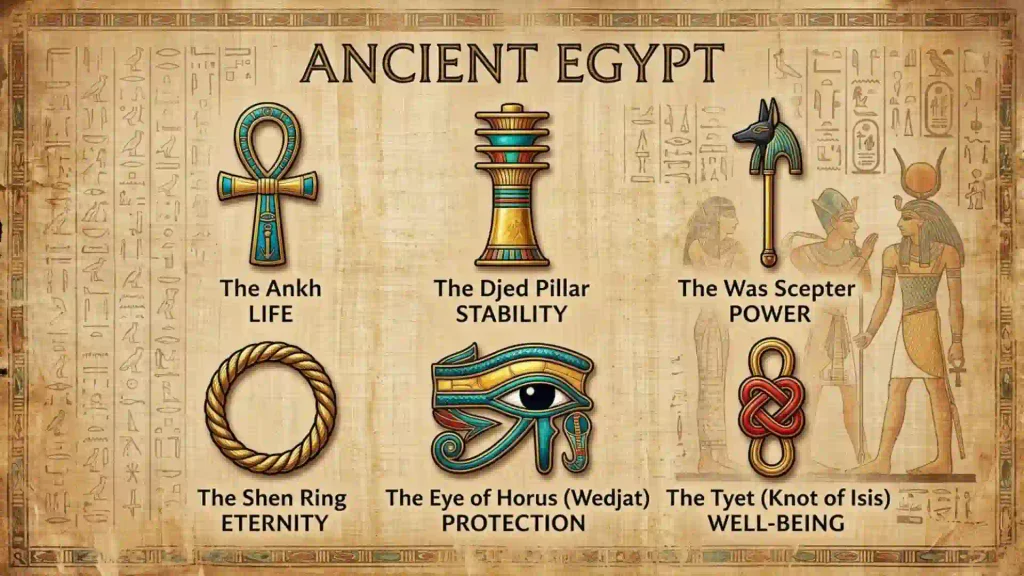
Ancient Egyptian culture viewed death as a passage into another existence. The ankh symbolized life, while the scarab represented renewal and rebirth. The god Anubis, often shown with a jackal’s head, guided and protected the dead.
Mummification preserved the body because Egyptians believed it remained important to the person’s identity in the afterlife.
Ancient Greece
The Greeks connected death with Hades, the underworld, and its ruler of the same name. Thanatos represented peaceful death, while the Fates controlled the length of human life.
The pomegranate became associated with death and seasonal return through the myth of Persephone, who spent part of each year in the underworld.
Roman Culture
Romans honored the dead through tombs, inscriptions, funeral masks, and household traditions. Families remembered ancestors as part of their identity and social standing.
Cypress trees became linked with mourning because their dark evergreen form was planted near burial grounds. They remain common in cemeteries in Mediterranean regions.
Eastern Traditions
In several East Asian cultures, white is traditionally connected with death and mourning. It can represent emptiness, purity, and separation from ordinary life.
Buddhist teachings often use death as a reminder of impermanence. Images such as falling leaves, fading blossoms, and changing seasons encourage people to release attachment and appreciate the present.
Indigenous Traditions
Indigenous beliefs differ greatly across nations and communities, so they should not be treated as one system. Many traditions understand death through relationships among ancestors, land, animals, and the spirit world.
Certain animals, natural places, ceremonial objects, or directions may carry meanings connected with transition and ancestry. These symbols belong to specific living cultures and should be approached respectfully rather than copied without context.
Modern Interpretations
Modern death symbols combine older traditions with personal meaning. A skull tattoo may honor a loved one, celebrate survival, or remind the wearer to live honestly.
In digital culture, candles, black hearts, flowers, and memorial images are used to express grief online. Although the form has changed, the human need to remember remains the same.
Similar Symbols and Their Meanings
| Symbol | Main Meaning | Relationship to Death | Important Difference |
| Skull | Mortality and human equality | Shows the remains of the physical body | Can also represent courage or rebellion |
| Hourglass | Passing time | Suggests that life is limited | Focuses more on time than death itself |
| Phoenix | Rebirth | Rises after destruction | Represents renewal rather than final loss |
| Butterfly | Transformation | Suggests the soul leaving the body | Usually carries a gentler, hopeful meaning |
| Black rose | Farewell or tragic love | Connected with endings and grief | Often symbolic rather than part of traditional funeral practice |
| Candle | Spirit and remembrance | Extinguishing may represent death | A burning candle symbolizes continued hope |
| Coffin | Burial and finality | Holds the physical remains | More literal than most symbolic images |
A common misconception is that every dark image has a negative meaning. In reality, many death symbols combine fear with wisdom. A skull can warn of danger, but it can also teach humility. A coffin can represent finality, yet in dreams it may symbolize closing an old chapter.
Death Symbols in Mythology and Folklore
Myths often turn death into a character, place, or journey. This makes the unknown easier to imagine.
In Greek mythology, souls traveled to the underworld and crossed the River Styx. In Norse stories, some warriors entered Valhalla, while others traveled to different realms. Egyptian mythology described judgment before Osiris, where the heart was weighed against the feather of Ma’at.
Folklore also created figures that warned people of approaching death. The Irish banshee was said to announce a family death through her cry. European traditions included phantom riders, black dogs, and mysterious birds.
These stories should not be treated as scientific predictions. Their value lies in what they reveal about human fears, moral beliefs, and hopes for continuity beyond death.
Death Symbols in Art, Literature, Movies, and Pop Culture
Artists have long used death symbols to ask viewers how they are spending their lives. Renaissance and Baroque vanitas paintings included skulls, clocks, rotten fruit, extinguished candles, and broken instruments. Each object showed that pleasure and status eventually fade.
In Shakespeare’s Hamlet, the title character holds the skull of Yorick and reflects on mortality. The scene remains powerful because the skull belonged to someone Hamlet once knew as a living, laughing person.
Poets use autumn leaves, winter landscapes, fading light, and silent rooms to suggest death without naming it directly. Filmmakers often use ravens, clocks, mirrors, shadows, or empty chairs to prepare audiences for loss.
In modern fashion, skulls may communicate rebellion or strength. In tattoos, death imagery can mark grief, recovery, military service, spiritual change, or freedom from fear. Meaning depends on the wearer’s story, not simply the image.
Spiritual and Dream Meaning of Death Symbols
Seeing a death symbol in a dream does not usually mean that someone will die. Dreams often communicate through emotional metaphors.
A coffin may represent a buried feeling or a part of life that needs closure. A skeleton may reveal a truth stripped of appearances. A dead tree may suggest exhaustion, while new growth around it can point toward healing.
From a spiritual perspective, death symbols may encourage reflection on impermanence. They can invite a person to release resentment, end harmful habits, or accept a major transition.
However, dream meanings are personal. Stress, grief, films, memories, and recent conversations can all shape dream imagery. The most useful question is often not “What does this predict?” but “What emotion or change does this image reflect?”
Positive and Negative Meanings of Death Symbols
| Positive Meaning | Negative Meaning |
| Transformation | Fear |
| Rebirth | Destruction |
| Acceptance | Grief |
| Spiritual release | Hopelessness |
| Remembrance | Trauma |
| Respect for time | Anxiety about mortality |
| Courage | Danger |
| Ending harmful patterns | Unwanted loss |
The same symbol can hold both light and shadow. A skull may frighten one person but comfort another who survived illness or danger. Context, culture, and personal experience shape its meaning.
Why Humans Are Attracted to Death Symbols
Human beings know that life will end, yet the mind struggles to imagine nonexistence. Symbols give this abstract fear a visible form.
They also create emotional distance. Looking at a painted skull can feel safer than speaking directly about personal loss. Through art and ritual, people approach death gradually and with greater control.
Pattern recognition also plays a role. Repeated exposure to black clothing, cemeteries, ravens, and funeral flowers teaches the mind to connect these images with mourning.
Most importantly, death symbols remind people that time matters. They can push us to repair relationships, express love, and choose a life that feels meaningful.
Modern Uses of Death Symbols
Today, death symbols appear in tattoos, rings, necklaces, clothing, album covers, video games, films, and home decor.
Some people use them to honor deceased relatives. Others choose them as reminders of survival or personal transformation. The phrase memento mori, meaning “remember that you must die,” has become especially popular in jewelry and tattoo design.
Brands may use skulls to communicate danger, toughness, speed, or rebellion. Social media users share candles, flowers, black ribbons, and memorial portraits after public tragedies.
These symbols can be meaningful, but cultural and religious designs should be used respectfully. Understanding a symbol’s origin helps prevent sacred traditions from becoming empty decoration.
Interesting Facts About Death Symbols
- The skull and crossbones once appeared on gravestones before becoming widely associated with piracy and poison.
- Medieval Dance of Death art showed skeletons leading people from every social class, emphasizing that death treats everyone equally.
- White, not black, is the traditional mourning color in several Asian cultures.
- The hourglass often appears with wings to symbolize how quickly time escapes.
- Victorian mourning jewelry sometimes included the hair of a deceased loved one.
- Ancient Egyptians connected scarab beetles with rebirth because the beetle’s behavior reminded them of the sun’s daily movement.
- The poppy became a major symbol of war remembrance because it grew across disturbed battlefields in Europe.
- Butterflies are sometimes used as symbols of the soul because their transformation from caterpillar to winged form resembles spiritual release.
- Cemetery cypress trees symbolize mourning, endurance, and the connection between earth and sky.
- Modern skull imagery can represent equality because every human face eventually shares the same basic form.
Frequently Asked Questions
What is the most common symbol of death?
The skull is probably the most widely recognized death symbol because it directly represents human mortality and the remains of the physical body.
Which animals symbolize death?
Ravens, crows, vultures, owls, moths, and black dogs have been connected with death in various traditions. Their meanings differ, and some also represent wisdom, protection, or transformation.
Do death symbols always have negative meanings?
No. They may symbolize rebirth, courage, spiritual transition, remembrance, acceptance, or the importance of living fully.
What flower symbolizes death?
Lilies, chrysanthemums, poppies, and black roses are often associated with death or mourning. Their meanings depend on culture and context.
What do death symbols mean in dreams?
They usually represent change, closure, fear, grief, or personal transformation rather than predicting an actual death.
Why do people get death symbol tattoos?
People may choose them to honor someone, remember life’s brevity, express courage, mark survival, or represent the end of a difficult period.
Conclusion
Death symbols reveal how human beings turn fear, grief, and mystery into meaningful images.
Although they may represent endings, many also speak of transformation, memory, courage, and renewal.
Their meanings change across cultures, but their emotional power remains universal.
Ultimately, they remind us that recognizing death can deepen our respect for life.
 Sarah Thompson
 John Mercer