
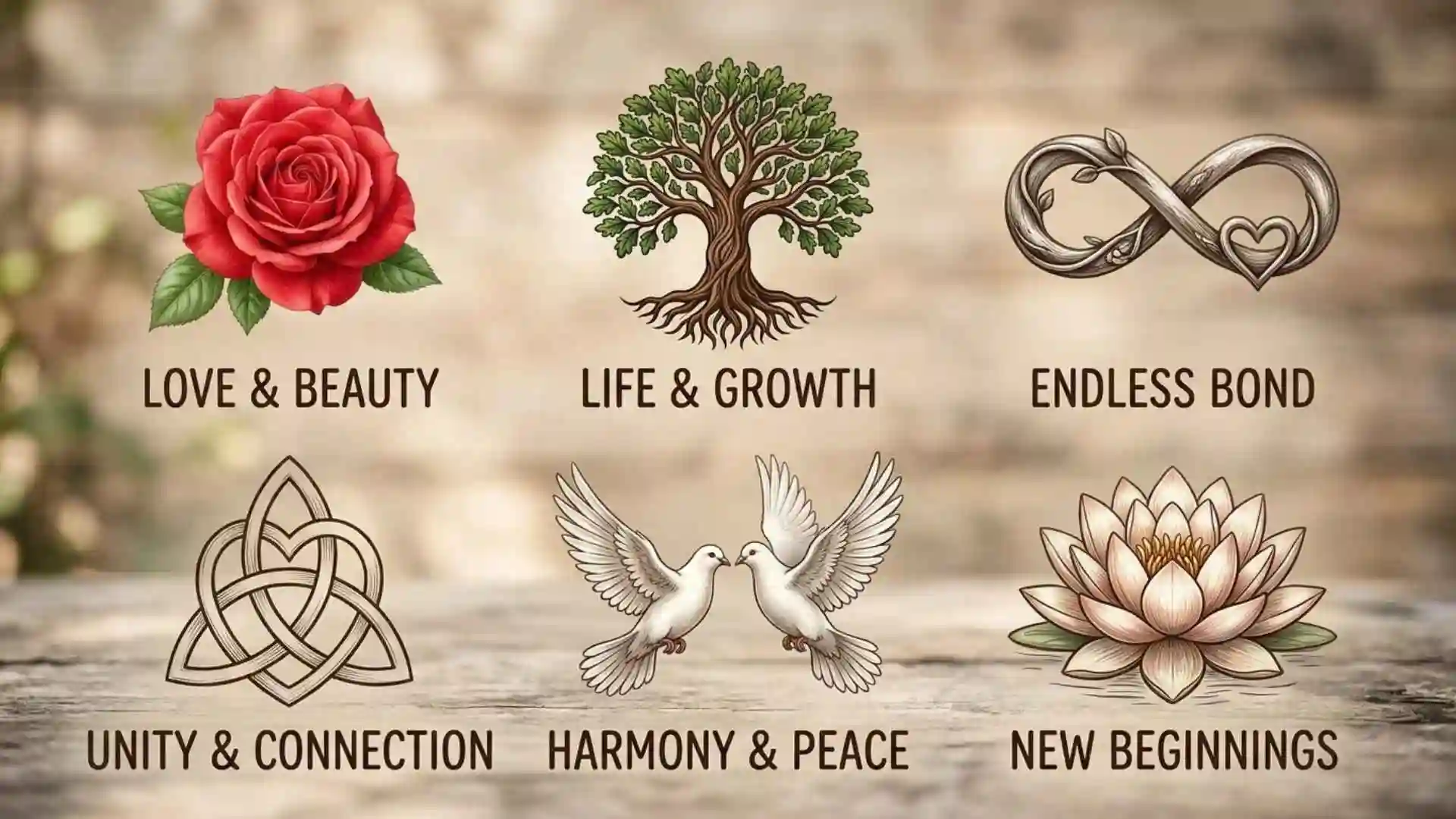
Love is one of the most powerful human emotions, and throughout history, people have found beautiful ways to express it through symbols. From the classic red rose and intertwined hearts to ancient knots, sacred flowers, and mythical figures, symbols for love represent affection, passion, devotion, loyalty, and emotional connection. These meaningful designs appear in art, jewelry, literature, tattoos, religious traditions, and everyday gifts, helping people express feelings that words sometimes cannot capture.
Different cultures have developed their own symbols to represent romantic love, unconditional affection, spiritual devotion, and lasting relationships. The heart is widely recognized as a sign of love, while the rose often represents romance and beauty. Ancient symbols such as the Celtic love knot express eternal connection, and the Chinese double happiness symbol celebrates marriage and shared joy. Understanding these symbols reveals how people across different societies have celebrated love, commitment, and meaningful human relationships.
In this complete guide to symbols for love, you will discover their meanings, historical origins, cultural significance, and modern uses. From popular romantic symbols to ancient spiritual signs and lesser-known emblems of devotion, each symbol offers a unique way to understand and express love. Whether you are searching for a meaningful tattoo, a romantic gift, a wedding design, or a symbol that reflects your personal relationship, this guide will help you find a design that speaks to your heart.
Quick Answer
Symbols for love are visual objects, signs, animals, plants, or patterns that represent romantic affection, devotion, unity, friendship, family bonds, or spiritual connection. Common examples include the heart, red rose, wedding ring, dove, swan, infinity sign, love knot, and Cupid. Their meanings often depend on culture, history, color, and personal experience.
Quick Facts About Symbols for Love
| Aspect | Information |
| Origin | Ancient religious beliefs, nature worship, mythology, marriage customs, and artistic traditions |
| Historical Significance | Used to communicate devotion, fertility, marriage, loyalty, passion, and sacred union |
| Main Meaning | Affection, emotional connection, romance, commitment, and care |
| Spiritual Meaning | Soul connection, divine love, compassion, unity, and inner harmony |
| Cultural Importance | Helps communities express relationships, marriage values, family bonds, and social identity |
| Modern Usage | Jewelry, tattoos, wedding decor, greeting cards, fashion, branding, emojis, and social media |
What Are Symbols for Love?
Symbols for love are images or objects that communicate emotional attachment without requiring a spoken explanation. A red rose may suggest romantic desire. A ring can represent lasting commitment. Two birds sitting together may symbolize partnership and loyalty.
These symbols developed because love is both powerful and difficult to describe. Ancient people often connected love with fertility, nature, gods, marriage, and the survival of the community. As civilizations created myths and rituals, certain objects became closely linked with affection and partnership.
For example, the ancient Greeks told stories about Aphrodite, the goddess of love and beauty. The Romans later associated similar qualities with Venus. Roses, doves, seashells, and sacred birds became connected with these goddesses and eventually entered Western art and romantic traditions.
Over time, symbols for love changed with society. Medieval poets used flowers and secret signs to describe courtly love. Christian art emphasized divine compassion and the Sacred Heart. Modern culture added heart-shaped jewelry, love letters, romantic films, and digital heart emojis.
Although styles change, the need remains the same. People want visible ways to say, “You matter to me.”
Deep Symbolic Meaning of Symbols for Love
Spiritual Level
On a spiritual level, love symbols often represent unity between the human soul and something greater. A circle has no beginning or end, so it can suggest eternal love, divine wholeness, and an unbroken spiritual bond.
The lotus flower represents purity and awakening in several Eastern traditions. When used as a love symbol, it may suggest a relationship that grows through difficulty while remaining spiritually meaningful.
Interlocking shapes can represent two souls connected without losing their individual identities. This idea appears in wedding rings, Celtic knots, and modern infinity jewelry.
Psychological Level
Psychologically, symbols give form to invisible emotions. Love cannot be touched, but a photograph, ring, letter, or flower can make the feeling seem real and present.
Carl Jung’s ideas about archetypes help explain why certain images appear across unrelated cultures. The circle, paired figures, protective embrace, and joining of opposites often represent wholeness and emotional integration.
People also attach personal memories to symbols. A certain flower may remind someone of a first date. A song lyric may represent a long marriage. The emotional meaning becomes stronger because the symbol holds part of the relationship’s story.
Cultural Level
Cultures use love symbols to teach social values. Wedding rings may represent fidelity. Red clothing may symbolize passion, luck, or marriage. Shared food can express family love and hospitality.
Symbols also allow communities to celebrate love publicly. Wedding ceremonies, anniversary gifts, friendship bracelets, and family heirlooms turn private affection into a recognized social bond.
Types and Variations of Symbols for Love
The Heart
The heart symbol is usually drawn as two rounded curves meeting at a point. It represents affection, emotional warmth, romance, and compassion.
Although it does not look like an anatomical heart, it became widely associated with human emotion in medieval and Renaissance Europe. Today, it appears in art, greeting cards, tattoos, jewelry, emojis, and charity campaigns.
The Red Rose
A red rose has layered petals, a rich color, and often a thorny stem. It symbolizes romantic passion, beauty, sacrifice, and desire.
Roses were associated with Aphrodite and Venus in classical mythology. In later European traditions, the red rose also became linked with secrecy, martyrdom, and deep devotion. It appears in poetry, weddings, paintings, literature, and Valentine’s Day gifts.
Wedding Rings
Wedding rings are circular bands worn to represent marriage or commitment. Their unbroken shape symbolizes continuity, loyalty, and enduring partnership.
Ancient Egyptian and Roman customs contributed to the development of ring traditions, although practices varied greatly. Today, rings appear in engagements, marriages, commitment ceremonies, family heirlooms, and romantic proposals.
The Infinity Symbol
The infinity symbol looks like a sideways figure eight. It represents endless love, continuity, and a bond that survives change.
It became popular in modern jewelry, tattoos, graphic design, and wedding decor. Couples sometimes combine it with names, dates, feathers, or hearts.
Love Knots
A love knot is formed from looping or interwoven lines with no obvious beginning or end. It symbolizes loyalty, connection, and two lives joined together.
Celtic-inspired designs are especially popular, although knot symbolism also appears in other traditions. Love knots can be found in jewelry, manuscripts, tattoos, wedding invitations, and decorative art.
Doves
Doves are gentle birds commonly shown in pairs. They represent peace, purity, devotion, and spiritual love.
In classical mythology, doves were associated with goddesses of love. In Christianity, the dove became an important symbol of the Holy Spirit and divine peace. Paired doves often appear in wedding decorations and romantic artwork.
Swans
Swans are graceful water birds often pictured with their necks forming a heart-like shape. They symbolize beauty, loyalty, partnership, and emotional transformation.
Their romantic meaning comes partly from the belief that swans form lasting pair bonds. They appear in myths, ballets, fairy tales, wedding imagery, and luxury design.
Cupid’s Bow and Arrow
Cupid is usually shown as a winged child carrying a bow and arrows. His arrows represent the sudden and sometimes uncontrollable power of attraction.
Cupid developed from the Roman god of desire, who was related to the Greek figure Eros. Today, he appears on Valentine cards, in cartoons, advertising, films, and romantic decorations.
The Claddagh
The Claddagh design shows two hands holding a crowned heart. The heart represents love, the hands represent friendship, and the crown represents loyalty.
This Irish symbol is commonly used in rings and jewelry. The way a Claddagh ring is worn may traditionally communicate whether the wearer is single, engaged, or married.
The Lotus Flower
The lotus grows from muddy water but opens into a clean, beautiful flower. It symbolizes purity, spiritual growth, resilience, and enlightened love.
It appears in Hinduism, Buddhism, meditation practices, sacred art, tattoos, and contemporary wellness culture.
Symbols for Love Across Different Cultures
Ancient Egypt
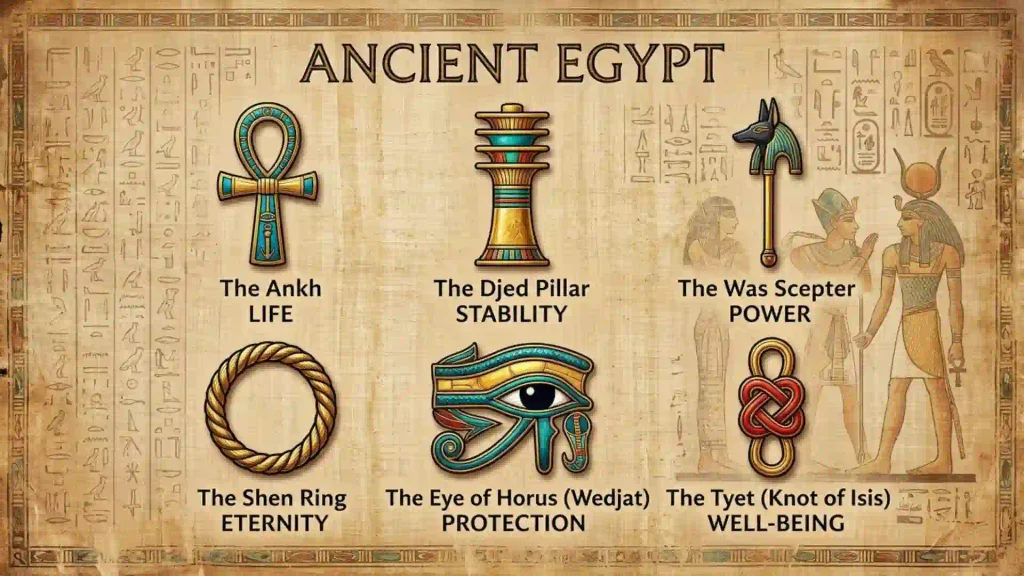
Ancient Egyptians associated love with fertility, family, beauty, music, and divine protection. The goddess Hathor represented love, motherhood, joy, and feminine power. Images of cattle horns, mirrors, music, and the sistrum were connected with her worship.
The ankh, a sign of life, can also represent lasting union when used in modern romantic designs.
Ancient Greece
The Greeks explored several forms of love, including romantic desire, friendship, family affection, and selfless care. Aphrodite represented beauty and erotic love, while Eros represented desire.
Roses, doves, myrtle, apples, and seashells became connected with love through mythology and artistic tradition.
Roman Culture
Roman culture adapted many Greek love traditions. Venus became the goddess of love, beauty, fertility, and prosperity. Cupid represented desire and attraction.
Marriage customs, rings, garlands, and shared rituals helped make commitment visible within Roman society.
Eastern Traditions
In Chinese culture, mandarin ducks are widely recognized as symbols of marital harmony and devoted partnership. The double happiness character is commonly used in weddings to represent shared joy.
In Hindu traditions, Radha and Krishna are often understood as symbols of divine love and spiritual longing. The lotus can represent purity, beauty, and the unfolding of consciousness.
Indigenous Traditions
Indigenous cultures are highly diverse, so no single symbol represents love across all communities. However, many traditions use natural imagery, woven patterns, animals, shared ceremonies, and handcrafted gifts to express kinship, respect, marriage, and community responsibility.
Meaning should always be understood within the specific nation or cultural tradition rather than treated as universal.
Modern Interpretations
Modern love symbols combine ancient ideas with personal creativity. Couples may use fingerprints shaped like hearts, matching tattoos, coordinates, sound waves, birth flowers, or shared constellations.
Digital communication has also created a new symbolic language. Different colored heart emojis may express romance, friendship, sympathy, support, or playful affection.
Similar Symbols and Their Meanings
| Symbol | Main Meaning | How It Differs |
| Heart | Affection and emotion | Broad symbol for romantic, family, and compassionate love |
| Red rose | Passion and desire | Strongly connected with romance and physical attraction |
| Ring | Commitment and continuity | Focuses on promises, marriage, and long-term partnership |
| Infinity sign | Endless connection | Emphasizes eternity rather than ceremony |
| Dove | Peaceful and spiritual love | Often represents purity, harmony, and divine blessing |
| Swan | Partnership and grace | Connected with loyalty, beauty, and transformation |
| Love knot | Interwoven lives | Highlights connection, balance, and inseparability |
| Lotus | Pure and awakened love | Focuses on spiritual growth and resilience |
A common misconception is that every love symbol has one fixed meaning. In reality, context changes interpretation. A black rose may represent tragic love rather than romance. A broken heart may express grief, betrayal, or emotional healing.
Symbols for Love in Mythology and Folklore
Mythology often presents love as both beautiful and dangerous. In the Greek story of Eros and Psyche, love survives secrecy, separation, difficult trials, and personal transformation. Their story helped shape the idea that true love requires trust and spiritual growth.
The myth of Orpheus and Eurydice portrays devotion so strong that Orpheus enters the underworld to recover his lost wife. Yet the story also warns about doubt and the limits of human control.
In Hindu tradition, Radha and Krishna symbolize profound spiritual devotion. Their bond is often interpreted as the soul longing for union with the divine.
European folklore frequently uses rings, flowers, ribbons, locks of hair, and enchanted objects as signs of loyalty. These stories influenced modern romance by linking love with promises, quests, sacrifice, and destiny.
Symbols for Love in Art, Literature, Movies, and Pop Culture
Artists have long used color, gesture, flowers, and physical distance to communicate love. A hand placed gently over another can suggest trust. Two figures separated by space may represent longing or forbidden love.
In literature and poetry, roses often symbolize beauty that fades, while seasons represent the changing stages of relationships. Spring may suggest new love, and winter may represent loss or emotional distance.
Movies use visual symbols such as shared umbrellas, exchanged rings, old photographs, letters, and meaningful locations. These objects help audiences understand relationships without lengthy dialogue.
Tattoos often combine hearts with names, dates, infinity signs, flowers, anchors, or wings. Fashion uses romantic symbols through lockets, heart-shaped patterns, floral prints, and matching accessories.
In social media, hearts have become a quick language of emotional support. A single icon can mean love, agreement, sympathy, gratitude, or admiration depending on the conversation.
Spiritual and Dream Meaning of Symbols for Love
Dreams about love symbols often reflect emotional needs rather than predict future events. A heart may point to vulnerability, healing, affection, or a desire to feel understood.
Receiving a ring in a dream can represent commitment, responsibility, or fear of losing independence. A broken ring may suggest insecurity or an unfinished emotional issue.
Red roses may represent desire, confidence, or intense attraction. Wilted flowers can suggest disappointment, grief, or a relationship that needs care.
Paired birds may symbolize harmony and emotional partnership. A bird flying away could reflect fear of separation or the need to release an attachment.
Dream meaning is deeply personal. Your emotions during the dream, current relationships, cultural background, and memories are usually more important than any fixed dream dictionary interpretation.
Positive and Negative Meanings of Symbols for Love
| Positive Meaning | Negative Meaning |
| Affection | Obsession |
| Loyalty | Possessiveness |
| Commitment | Fear of freedom |
| Passion | Jealousy |
| Unity | Loss of individuality |
| Compassion | Emotional dependence |
| Spiritual connection | Idealization |
| Lasting memory | Inability to let go |
The same symbol can represent light or shadow. A lock may symbolize trust and commitment, but it can also suggest control. A flame may represent passion, yet it may warn of love that burns too intensely.
Context, intention, and personal experience determine which meaning feels most accurate.
Why Humans Are Attracted to Symbols for Love
Humans naturally search for patterns and meaning. A simple image can carry a large emotional message because the brain connects symbols with memories, stories, and social experiences.
Love symbols also reduce emotional risk. Saying “I love you” may feel frightening, while offering a flower or wearing a meaningful necklace can communicate affection more gently.
Collective symbolism makes connection easier. Most people recognize that a red heart suggests love, even if they speak different languages. This shared understanding creates emotional familiarity.
At the same time, personal symbols make relationships unique. A seashell collected during a first holiday may mean more to a couple than an expensive diamond. Its power comes from memory rather than price.
Modern Uses of Symbols for Love
Today, symbols for love appear in nearly every form of personal expression.
In tattoos, they preserve memories, relationships, and promises. In jewelry, they mark engagements, anniversaries, family bonds, or self-love. Fashion brands use hearts, roses, lips, and paired figures to create emotional appeal.
Businesses also use love symbols in branding to suggest care, trust, warmth, and belonging. Charities may use hearts to represent compassion or health-related causes.
Home decor includes framed wedding vows, family trees, initials, floral designs, and symbolic wall art. Contemporary spiritual practices may use rose quartz, lotus imagery, candles, or sacred geometry to encourage compassion and emotional healing.
On social media, heart reactions and emojis have made symbols for love part of everyday language.
Interesting Facts About Symbols for Love
- The familiar heart symbol does not closely match the shape of the physical human heart.
- Different rose colors carry different meanings. Red suggests passion, pink often represents admiration, and white may symbolize purity or remembrance.
- Circular wedding rings symbolize continuity because a circle has no visible beginning or end.
- The Claddagh combines three ideas in one design: love, friendship, and loyalty.
- Mandarin ducks are traditional symbols of marital harmony in Chinese art and wedding culture.
- Cupid comes from Roman mythology, while his Greek counterpart is Eros.
- The infinity symbol was originally used as a mathematical sign before becoming popular in romantic jewelry.
- A broken heart can symbolize grief, but it can also represent survival and emotional recovery.
- Love knots appear in several artistic traditions, although their exact meanings differ by culture and historical period.
- Personal objects often become stronger love symbols than universal images because they carry private memories.
Frequently Asked Questions
What is the most common symbol for love?
The heart is the most widely recognized symbol for love because it represents emotion, affection, compassion, and romantic attachment across modern cultures.
Which flower symbolizes true love?
The red rose is strongly associated with romantic love, passion, and devotion. However, cultural meaning and flower color can change its interpretation.
What symbol represents eternal love?
The infinity sign, circular ring, and endless love knot commonly represent eternal love because their shapes suggest continuity without a clear ending.
Which animals symbolize love and loyalty?
Swans, doves, mandarin ducks, wolves, and some paired birds can symbolize partnership, devotion, loyalty, or emotional harmony.
What symbol represents spiritual love?
The lotus, dove, sacred heart, circle, and intertwined knot may represent compassion, divine connection, inner harmony, or the union of souls.
Can a love symbol have a negative meaning?
Yes. Depending on context, a love symbol may represent obsession, jealousy, grief, control, emotional dependence, or a painful attachment.
Conclusion
Symbols for love reveal how deeply humans need connection, memory, and emotional expression.
From ancient roses and sacred birds to wedding rings and digital hearts, each symbol carries a story shaped by culture and personal experience.
Their true power does not come only from appearance, but from the feelings and promises people place within them.
A simple symbol becomes meaningful when it reminds us that love can be seen, shared, remembered, and renewed.
 Sarah Thompson
 Michael Rivera