
Hera, the queen of the ancient Greek gods, is one of the most powerful and recognizable figures in Greek mythology. Known as the goddess of marriage, women, family, and childbirth, she represents royal authority, loyalty, protection, and divine power. Her identity is closely connected to several meaningful symbols, including the majestic peacock, royal crown, sacred cow, and pomegranate. Each symbol reveals a different aspect of her personality, mythology, and role among the Olympian gods.
The symbols of Hera carry fascinating stories rooted in ancient Greek religion, art, and mythology. The peacock represents beauty, pride, immortality, and her connection to the giant Argus. The crown reflects her position as queen of the gods, while the cow symbolizes motherhood, fertility, and protection. The pomegranate is associated with marriage, fertility, and the mysteries of life. Together, these symbols help explain Hera’s divine responsibilities and the qualities ancient Greeks associated with her worship.
In this guide to Hera’s symbols and their meanings, you will discover the mythology, history, and cultural significance behind her most recognizable emblems. You will also explore her sacred animals, plants, objects, and connections to other Greek deities. Whether you are studying Greek mythology, researching ancient religious symbols, or simply curious about Hera’s divine identity, understanding these symbols offers a deeper look into the queen of Olympus.
Quick Answer
Hera’s symbols include the peacock, cow, cuckoo, pomegranate, crown, scepter, lotus staff, and wedding veil. Together, they represent queenship, marriage, fertility, feminine authority, loyalty, watchfulness, beauty, and emotional power. Hera was the Greek queen of the gods and the divine protector of lawful marriage and married women.
Quick Facts About Hera’s Symbols
| Aspect | Information |
| Origin | Ancient Greek religion and mythology |
| Historical Significance | Connected with Hera’s worship at Argos, Samos, Olympia, and other Greek religious centers |
| Main Meaning | Marriage, queenship, loyalty, feminine power, and royal authority |
| Spiritual Meaning | Sacred commitment, self-respect, protection, transformation, and inner sovereignty |
| Cultural Importance | Expressed Greek beliefs about marriage, social order, women, and divine leadership |
| Modern Usage | Tattoos, jewelry, fashion, spiritual art, literature, films, and feminine empowerment imagery |
What Are Hera’s Symbols?
Hera’s symbols are the animals, plants, objects, and royal images traditionally associated with Hera, the queen of the Olympian gods. She was the daughter of Cronus and Rhea, the sister and wife of Zeus, and the goddess of marriage, women, lawful unions, and childbirth.
Ancient artists usually presented Hera as a mature and dignified queen. She could appear seated on a throne, wearing a crown or diadem, holding a scepter, pomegranate, or staff. Her sacred animals included the cow, cuckoo, peacock, and, in some traditions, the lion.
Hera’s name appears in Mycenaean Greek records written in Linear B, showing that her worship existed long before many surviving Greek myths were recorded. Her major cult centers included the Heraion of Argos, the island of Samos, and Olympia.
Over time, her symbols evolved. The cow and cuckoo belong to older layers of Greek tradition, while the peacock became especially important in later Greek, Roman, and Renaissance art.
Deep Symbolic Meaning of Hera’s Symbols
Spiritual Meaning
On a spiritual level, Hera’s symbols represent sacred commitment and inner sovereignty.
The crown teaches that personal dignity does not depend entirely on how others treat you. The scepter represents the ability to govern your life with wisdom and firm boundaries. The pomegranate reflects fertility, renewal, abundance, and the hidden richness of the soul.
Hera’s marriage to Zeus was powerful but troubled. Because of this, her symbolism is not simply romantic. It also speaks to the difficult work of maintaining identity, honor, and emotional strength inside relationships.
Psychological Meaning
Psychologically, Hera can be understood as an archetype of the queen, wife, guardian, and wounded partner.
In Jungian terms, an archetype is a recurring pattern that appears across myths, dreams, and human behavior. Hera reflects the part of the mind that desires commitment, recognition, loyalty, and social respect.
Her darker myths reveal what can happen when betrayal turns into anger, suspicion, or misplaced revenge. Her symbols therefore express both emotional maturity and emotional shadow.
The peacock’s many eye-like markings suggest alertness and watchfulness. The crown represents self-worth. The cow reflects nurturing strength, while the cuckoo recalls courtship, persuasion, and the complicated beginnings of love.
Cultural Meaning
In ancient Greek society, marriage was not only personal. It joined households, protected inheritance, created alliances, and supported social order.
As the goddess of lawful marriage, Hera represented the sacred and public importance of these unions. Her symbols reminded worshippers that relationships carried duties, promises, and consequences.
To the community, Hera was more than Zeus’s wife. She was a divine queen whose authority supported family structure, women’s roles, childbirth, and the legitimacy of marriage.
Types and Variations of Hera’s Symbols
The Peacock
Visual description: A large bird with a shimmering blue body and a tail covered in eye-like patterns.
Meaning: Royal beauty, pride, immortality, watchfulness, and majesty.
Symbolism: The peacock reflects Hera’s queenly appearance and vigilant personality. In a later myth associated with Argus Panoptes, the eyes of the hundred-eyed guardian were placed upon the peacock’s feathers.
Cultural connection: The peacock became especially prominent in Hellenistic and Roman-era images of Hera and Juno. It was not among the earliest Greek symbols associated with her.
Where it appears: Paintings, mosaics, sculptures, tattoos, jewelry, fashion, and modern goddess imagery.
The Cow or Heifer
Visual description: A gentle female cow, often young, white, or linked with large expressive eyes.
Meaning: Motherhood, fertility, nourishment, patience, earth, and feminine abundance.
Symbolism: Hera was famously called “cow-eyed” in Homeric poetry. The phrase probably praised her large, beautiful, majestic eyes rather than insulting her.
Cultural connection: Hera’s association with cattle appears to be extremely old. It may reflect early agricultural religion and the value of cattle as sources of food, wealth, and social status.
Where it appears: Homeric poetry, the myth of Io, agricultural symbolism, ancient cult traditions, and comparative goddess studies.
The Pomegranate
Visual description: A round red fruit filled with hundreds of seeds.
Meaning: Fertility, marriage, abundance, life, death, renewal, and hidden potential.
Symbolism: Its many seeds make it a natural image of fruitfulness and family continuity. Its hard outer skin and rich interior also suggest dignity hiding emotional depth.
Cultural connection: A famous cult image of Hera at Argos showed her holding a pomegranate in one hand and a scepter in the other.
Where it appears: Ancient statues, wedding symbolism, goddess altars, spiritual artwork, jewelry, and tattoos.
The Crown or Diadem
Visual description: A royal headpiece, sometimes shown as a simple diadem or a tall cylindrical crown called a polos.
Meaning: Queenship, legitimacy, authority, honor, and elevated status.
Symbolism: The crown identifies Hera as queen of Mount Olympus. It expresses command rather than decoration alone.
Cultural connection: Ancient statues often showed Hera enthroned and crowned, presenting her as a lawful ruler and protector of social order.
Where it appears: Greek and Roman sculpture, Renaissance painting, theater, cinema, fashion, and modern feminine leadership imagery.
The Scepter and Lotus Staff
Visual description: A long ceremonial staff, sometimes topped with a cuckoo or decorated with lotus-like forms.
Meaning: Divine rule, judgment, order, and political power.
Symbolism: A scepter shows that Hera possessed authority in her own right. She did not merely stand beside Zeus.
Cultural connection: Ancient descriptions of her Argive statue mention a scepter topped by a cuckoo. The lotus staff also appears among her traditional attributes.
Where it appears: Temple statues, vase painting, religious art, royal iconography, and symbolic illustrations.
The Cuckoo
Visual description: A modest gray or brown bird with a slender body and recognizable call.
Meaning: Courtship, marriage, seasonal renewal, deception, and transformation.
Symbolism: According to one myth, Zeus transformed himself into a cold and helpless cuckoo during a storm. When Hera held the bird against her body to protect it, Zeus revealed himself and promised marriage.
Cultural connection: The cuckoo links Hera’s symbolism directly to her courtship and sacred marriage with Zeus.
Where it appears: Mythological accounts, ancient art, scepter decorations, folklore, and seasonal symbolism.
The Wedding Veil
Visual description: A cloth covering the head or partially hiding the face.
Meaning: Marriage, modesty, transition, sacred union, and social identity.
Symbolism: The veil marks the movement from unmarried life into marriage. In Hera’s imagery, it emphasizes her position as divine bride and guardian of weddings.
Where it appears: Sculptures, wedding ceremonies, bridal fashion, classical art, and modern interpretations of Hera.
The Lion
Visual description: A powerful large cat with a muscular body and commanding presence.
Meaning: Courage, royal protection, strength, and controlled force.
Symbolism: Although less common than the cow or peacock, the lion supports Hera’s role as an imposing queen.
Where it appears: Selected ancient traditions, goddess symbolism, royal art, and modern fantasy imagery.
Hera’s Symbols Across Different Cultures
Ancient Greece
In Greece, Hera’s symbols represented lawful marriage, queenship, women, childbirth, and civic stability. The cow and cuckoo appear to belong to her older traditions, while the crown and scepter emphasized her divine authority.
Her worship was especially important at Argos, Samos, and Olympia. At Olympia, girls participated in footraces held in her honor during the Heraia festival.
Roman Culture
The Romans identified Hera with Juno, queen of the Roman gods and wife of Jupiter.
Juno retained the peacock, crown, and scepter. However, she also became strongly connected with the Roman state, women’s lives, marriage, childbirth, and civic protection.
The month of June is traditionally associated with Juno, which helps explain its continuing popularity for weddings.
Ancient Egypt
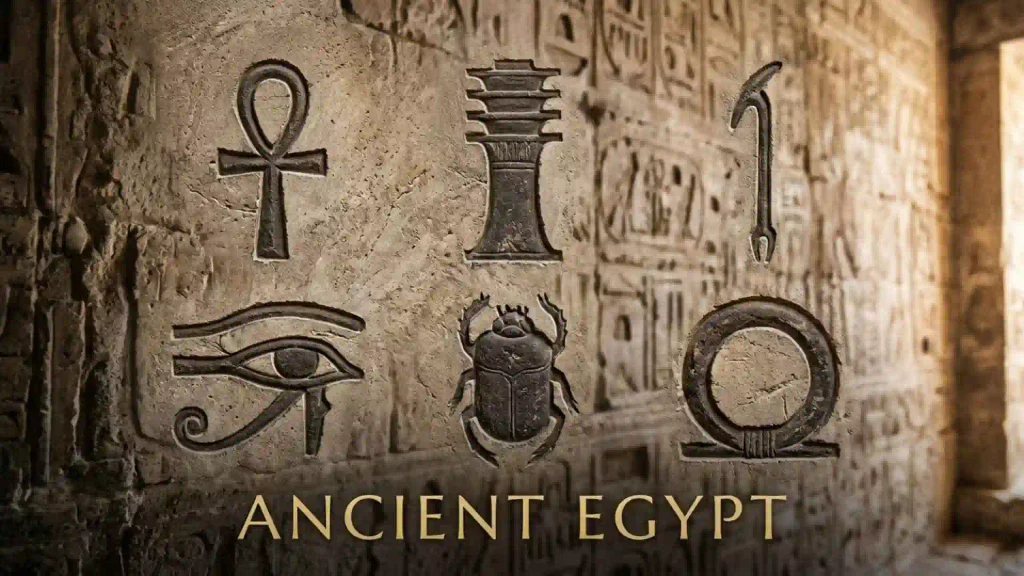
Hera was not an Egyptian goddess, but scholars often compare her cattle symbolism with Hathor, an Egyptian goddess linked with cows, motherhood, music, beauty, and feminine power.
The two should not be treated as identical. Their myths, rituals, and religious roles developed in different cultures. Still, the comparison shows how cattle could symbolize nourishment, status, fertility, and divine femininity in several ancient societies.
Eastern Traditions
No single Eastern goddess is a direct equivalent of Hera. However, royal feminine figures in Hindu, Buddhist, and East Asian traditions may also carry crowns, lotus flowers, thrones, or protective animals.
The lotus is especially important across South and East Asian religions, where it commonly represents purity, spiritual awakening, and transformation. Hera’s lotus staff has a different historical setting, but the shared image shows how flowers can communicate divine dignity.
Indigenous Traditions
There is no universal Indigenous interpretation of Hera because Indigenous cultures contain many distinct nations, languages, and spiritual systems.
Birds, cattle, queenship, and marriage do not carry one shared meaning across all Indigenous traditions. Modern artists may create personal cross-cultural interpretations, but these should not be mistaken for ancient Indigenous beliefs about Hera.
Modern Interpretations
Today, Hera’s symbols often represent feminine leadership, marriage, personal boundaries, loyalty, dignity, and recovery from betrayal.
Some people identify with her as a symbol of commitment. Others see her as a warning about allowing anger toward an unfaithful partner to harm innocent people.
Similar Symbols and Their Meanings
| Symbol | Main Meaning | Connection to Hera | Key Difference |
| Peacock | Beauty and watchfulness | Hera’s royal sacred bird | Also symbolizes pride and vanity |
| Eagle | Kingship and power | Associated with Zeus | Represents sky power and conquest |
| Dove | Love and peace | Linked mainly with Aphrodite | Focuses on affection rather than marriage law |
| Pomegranate | Fertility and renewal | Held by Hera in sacred imagery | Also strongly linked with Persephone |
| Crown | Sovereignty and status | Marks Hera as queen | Used by many gods and rulers |
| Cow | Nourishment and fertility | One of Hera’s oldest animals | Also linked with other mother goddesses |
| Wedding ring | Commitment and union | Matches Hera’s marriage role | A later human custom, not her main ancient emblem |
A common misconception is that every peacock automatically represents Hera. In art, context matters. A peacock beside a crowned goddess strongly suggests Hera or Juno, but the bird can also symbolize luxury, immortality, vanity, or resurrection.
Hera’s Symbols in Mythology and Folklore
The story of Argus is central to the peacock’s meaning. Hera appointed Argus Panoptes, a guardian covered with many eyes, to watch over Io. After Hermes killed Argus, later tradition said Hera honored him by placing his eyes on the peacock’s tail.
The cuckoo comes from the story of Zeus’s courtship. By taking the form of a vulnerable bird, Zeus gained Hera’s sympathy and closeness. The tale gives the cuckoo a double meaning: tenderness and deception.
The cow appears most famously in the myth of Io, who was transformed into a heifer. Yet Hera’s cattle connection is probably older than this story. Her Homeric title “cow-eyed” points to a long-standing association with beauty, majesty, and bovine symbolism.
These myths shaped Hera’s modern image as observant, proud, protective, emotionally wounded, and intensely concerned with loyalty.
Hera’s Symbols in Art, Literature, Movies, and Pop Culture
Ancient Greek and Roman artists showed Hera or Juno seated on a throne, wearing a crown, holding a scepter, or accompanied by a peacock.
Renaissance and Baroque painters used the peacock to make Juno instantly recognizable. In these works, the bird often represents royal splendor, pride, jealousy, or watchfulness.
In literature, Hera appears in Homer’s Iliad, Greek tragedies, Roman poetry, modern novels, fantasy series, and retellings centered on women in mythology.
Films and television often simplify her into a jealous wife. Modern retellings increasingly explore her lack of power within her marriage, her political intelligence, and the emotional cost of repeated betrayal.
In tattoos and fashion, Hera’s crown, peacock feathers, and pomegranate often communicate confidence, feminine authority, marital devotion, or survival after heartbreak.
Spiritual and Dream Meaning of Hera’s Symbols
Dreaming of Hera or her symbols may reflect questions about commitment, loyalty, respect, or control.
A peacock may suggest confidence and visibility, but it can also warn against pride or constant suspicion.
A crown may reflect growing self-respect, leadership, or a desire to be recognized.
A pomegranate may represent fertility, creative potential, family growth, or an important life transition.
A cow may symbolize patience, nurturing, security, and the need for emotional grounding.
A cuckoo may point to courtship or renewal, but it can also suggest hidden motives.
Dream meanings are personal rather than fixed predictions. Your emotions, experiences, and the dream’s setting matter more than a single symbol dictionary.
Positive and Negative Meanings of Hera’s Symbols
| Positive Meaning | Negative Meaning |
| Loyalty | Possessiveness |
| Commitment | Fear of abandonment |
| Queenship | Pride |
| Protection | Control |
| Watchfulness | Suspicion |
| Fertility | Pressure to fulfill social roles |
| Self-respect | Defensiveness |
| Justice | Revenge |
| Emotional strength | Unresolved resentment |
| Sacred marriage | Staying in a harmful relationship |
Hera’s symbolism contains both light and shadow because human relationships do too. Loyalty can become control. Pride can become self-respect or arrogance. Watchfulness can protect a bond, but constant suspicion can destroy it.
Why Humans Are Attracted to Hera’s Symbols
People are drawn to Hera because she is not emotionally simple.
She represents the desire to be chosen, respected, protected, and treated as an equal. These needs remain powerful in modern relationships.
Her symbols also appeal to the human love of patterns. The peacock’s eye-like feathers naturally suggest vision. The pomegranate’s many seeds suggest fertility. The crown signals authority before a single word is spoken.
Cultural memory strengthens these meanings. After centuries of myths, paintings, poems, and ceremonies, Hera’s symbols carry layers of history.
Most importantly, people give them personal meaning. A peacock tattoo may mark recovery from betrayal. A crown necklace may remind someone to protect their dignity. A pomegranate image may celebrate marriage, creativity, or motherhood.
Modern Uses of Hera’s Symbols
Hera’s symbols now appear in many forms of personal and commercial expression:
- Tattoos: Peacock feathers, crowns, pomegranates, and portraits of Hera represent dignity, beauty, loyalty, or feminine power.
- Jewelry: Crowns, scepters, and peacock designs are worn as signs of confidence and sovereignty.
- Fashion: Peacock patterns and royal headpieces create an image of drama, luxury, and bold femininity.
- Branding: Businesses use Hera’s name to suggest elegance, leadership, beauty, or strength.
- Social media: Quotes and artwork present Hera as a symbol of boundaries, marriage, and self-worth.
- Contemporary spirituality: Some modern practitioners honor Hera in rituals connected with commitment, family, protection, and personal authority.
- Home decor: Peacock feathers, pomegranate artwork, and classical goddess statues create a regal or mythological atmosphere.
- Personal expression: Hera imagery can communicate survival, devotion, leadership, and emotional complexity.
Interesting Facts About Hera’s Symbols
- The peacock was probably not Hera’s earliest sacred bird. The cuckoo has deeper roots in her ancient Greek courtship myth.
- Hera’s famous “cow-eyed” title was likely a compliment describing beauty and majesty.
- Her name appears in Mycenaean Linear B records, proving that her worship existed during the Bronze Age.
- A celebrated statue at Argos showed Hera holding a pomegranate and a cuckoo-topped scepter.
- The peacock became more common in Hera’s imagery after contact with regions where the bird was better known.
- Hera’s sacred plants included the pomegranate, willow, lotus, and water lily.
- She was worshipped under different titles connected with stages of female life, marriage, and royal authority.
- Hera’s Roman counterpart, Juno, became an important protector of both women and the Roman state.
- The pomegranate belongs to more than one goddess. It is also closely associated with Persephone and the cycle of life and death.
- Hera’s symbols reveal a broader identity than her popular image as a jealous wife. They present her as an ancient goddess of power, social order, and sacred union.
Frequently Asked Questions
What are the main symbols of Hera?
Hera’s main symbols are the peacock, cow, cuckoo, pomegranate, crown, scepter, lotus staff, wedding veil, and sometimes the lion.
Why is the peacock Hera’s symbol?
The peacock represents Hera’s royal beauty, pride, watchfulness, and immortality. Later mythology connected its eye-like feathers with her hundred-eyed guardian, Argus.
What does Hera’s pomegranate symbolize?
The pomegranate represents fertility, marriage, abundance, renewal, family continuity, and the hidden richness of life.
What animal represents Hera?
The cow is one of Hera’s oldest sacred animals. The peacock is her most recognizable later symbol, while the cuckoo and lion are also associated with her.
What does Hera symbolize spiritually?
Spiritually, Hera can symbolize sacred commitment, self-respect, feminine sovereignty, loyalty, protection, personal boundaries, and transformation through relationship struggles.
Is Hera a symbol of jealousy?
Jealousy is one part of Hera’s mythology, but it does not define her completely. She also symbolizes queenship, marriage, dignity, authority, justice, and protection.
Conclusion
Hera’s symbols tell the story of a goddess who carried beauty, power, loyalty, pride, and pain at the same time.
The peacock, crown, cow, cuckoo, and pomegranate reveal her roles as queen, guardian, wife, and ancient feminine authority.
They also remind us that commitment without respect can become suffering, while dignity can survive even deep betrayal.
Hera’s greatest lesson may be that true sovereignty begins when you recognize your own worth.
 Michael Rivera
 John Mercer