
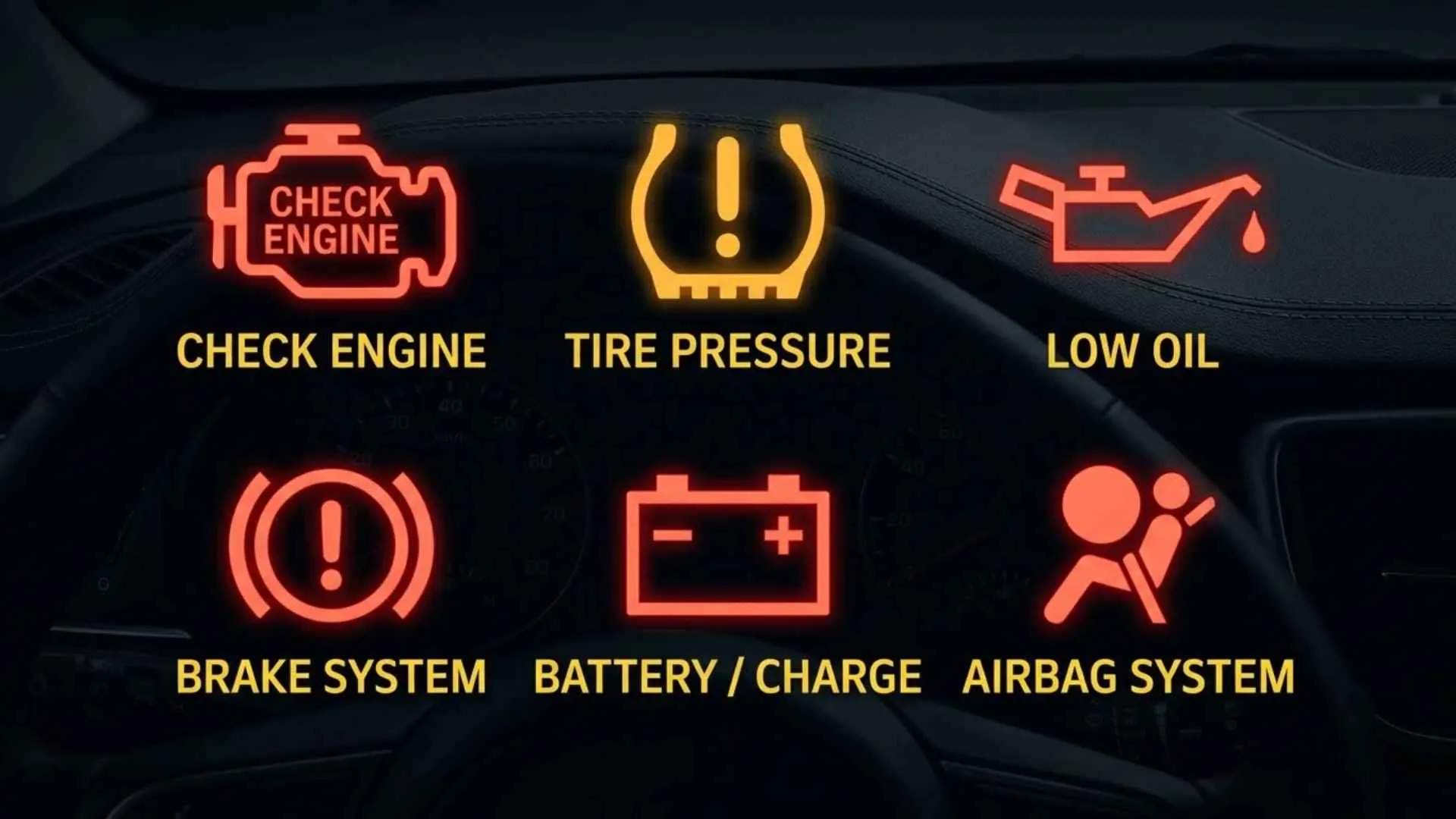
Kia warning lights symbols help drivers understand what is happening inside their vehicles and when something needs attention. These dashboard indicators monitor important systems, including the engine, brakes, battery, oil pressure, tire pressure, airbags, and vehicle stability. Whether you drive a Kia Sportage, Sorento, Forte, K5, Telluride, or another model, recognizing these symbols can help you identify potential problems before they become expensive repairs.
Kia dashboard warning lights appear in different colors to communicate the level of urgency. Red warning lights generally indicate serious problems that may require you to stop driving safely, while yellow or amber lights usually signal a malfunction or maintenance issue that needs attention. Green and blue indicators typically show that a particular vehicle feature or system is active. Understanding these colors, symbols, and their meanings makes it easier to decide whether you can continue driving or should seek professional assistance.
In this complete guide to Kia warning lights symbols, you will learn what common dashboard indicators mean, why they appear, and what actions you should take when they turn on. We will cover engine warnings, battery alerts, oil pressure indicators, brake system lights, tire pressure warnings, ABS symbols, and other important dashboard signals. You will also discover how warning lights differ across Kia models and why checking your owner’s manual is essential for understanding model-specific alerts.
Quick Answer
Kia warning lights symbols are dashboard icons that communicate the condition of the engine, brakes, tires, safety systems, battery, and driver-assistance features. Red lights usually require immediate action, amber lights indicate a fault or maintenance need, while green, blue, and white symbols normally show that a feature is operating.
Quick Facts About Kia Warning Lights Symbols
| Aspect | Information |
| Origin | Developed from standardized automotive instrument-panel signs |
| Historical significance | Replaced text-heavy mechanical gauges with fast visual alerts |
| Main meaning | Warns the driver about faults, unsafe conditions, or active systems |
| Safety meaning | Helps prevent accidents, breakdowns, and serious vehicle damage |
| Color importance | Red means urgent, amber means caution, and green or blue usually means active |
| Modern usage | Appears in digital instrument clusters, hybrid vehicles, EVs, and Kia Connect alerts |
What Are Kia Warning Lights Symbols?
Kia warning lights symbols are visual indicators displayed in the instrument cluster. They monitor important systems such as engine performance, oil pressure, braking, steering, airbags, tire pressure, charging, emissions, and electronic driver assistance.
Most dashboard lights briefly illuminate when you switch the ignition on. This is a normal system check. They should usually turn off after the engine starts. Kia advises that a light remaining on after startup indicates a condition that needs attention.
Dashboard symbols became increasingly important as vehicles changed from simple mechanical machines into computer-controlled systems. Older cars relied mainly on gauges for fuel, temperature, and oil pressure. Modern Kia vehicles use electronic control modules and sensors that can detect problems before the driver notices physical symptoms.
The exact symbols can vary between models such as the Kia Sportage, Sorento, Telluride, Seltos, Soul, Carnival, K5, EV6, EV9, Niro, and Forte. Model year, engine type, drivetrain, trim level, and country can also affect which warning lights appear.
For the most accurate interpretation, compare the light with the owner’s manual for your specific Kia. Kia provides model-specific manuals and symbol guides through its owner resources.
Kia Dashboard Light Colors and Their Meanings
The color of a dashboard symbol often tells you how quickly you need to respond.
| Color | General meaning | Recommended response |
| Red | Serious danger or critical malfunction | Stop safely and investigate immediately |
| Amber or yellow | Fault, caution, or service requirement | Drive carefully and arrange inspection |
| Green | System is active and working | No action usually required |
| Blue | High beams or another selected function is active | Confirm the setting is appropriate |
| White or gray | System information, standby mode, or settings | Monitor the display |
| Flashing light | Active or worsening problem | Treat more seriously than a steady light |
Kia describes red EV indicators as signs of immediate or imminent danger and amber indicators as conditions requiring attention soon. Green generally indicates that a system is active.
Color meanings are helpful, but they are not absolute. A green indicator can still require attention if you activated a feature accidentally. A flashing amber check-engine light can be more urgent than some steady red reminders. Always consider the symbol, color, message, and how the vehicle is behaving.
Most Important Kia Warning Lights Symbols
Engine Oil Pressure Warning Light
Visual description: A red oil can with a drop coming from its spout.
This symbol indicates that the engine may not have enough oil pressure. Low oil level, oil-pump failure, internal engine problems, or a serious leak may cause it.
Safely pull over, switch off the engine, and check the oil level after allowing the vehicle to settle. Add the correct oil only if the level is low and you know the required specification.
Do not continue driving if the light remains on. An engine without proper lubrication can suffer severe damage within a short distance. Kia states that drivers should check the engine-oil level and add oil when necessary if this warning appears.
Charging System Warning Light
Visual description: A red rectangular battery with plus and minus signs.
The battery symbol does not always mean that the battery itself is defective. It can indicate a failed alternator, damaged drive belt, loose electrical connection, battery problem, or charging-system malfunction.
Turn off unnecessary electrical equipment and move to a safe location. If the alternator is not charging, the vehicle may continue running only until stored battery power is exhausted.
Kia advises checking for a loose or broken alternator drive belt and arranging professional inspection when the charging-system light remains illuminated.
Brake Warning Light
Visual description: A red circle containing an exclamation mark or the word “BRAKE.”
The brake warning light may appear because the parking brake is engaged. It may also indicate low brake fluid, a hydraulic-brake problem, or a regenerative-braking issue in an electrified Kia.
First, make sure the parking brake is fully released. If the light stays on, stop safely and inspect the brake-fluid level if you can do so safely.
Do not drive normally if the pedal feels soft, braking power is reduced, or fluid is leaking. Kia manuals note that the red brake indicator can illuminate for an applied parking brake, low brake fluid, or a regenerative-braking problem.
ABS Warning Light
Visual description: The letters “ABS” inside a circle.
ABS stands for Anti-lock Braking System. A steady amber ABS light means the system may not prevent wheel lock during hard braking.
Your normal hydraulic brakes may still work, but emergency braking performance can be reduced. Drive carefully, avoid sudden stops, and arrange service.
When both the ABS and red brake warning lights appear, the problem may also involve electronic brake-force distribution. Treat the combination as more urgent than an ABS light by itself.
Check Engine Light
Visual description: An amber outline shaped like an engine.
The check engine light is also called the Malfunction Indicator Lamp, or MIL. It can appear because of an emissions problem, engine fault, powertrain issue, fuel-system leak, sensor failure, ignition misfire, or loose fuel cap.
A steady check engine light usually means the Kia should be inspected soon. Confirm that the fuel cap is correctly tightened, then watch for rough running, unusual smells, smoke, or power loss.
A flashing check engine light is more serious. It may indicate a severe misfire capable of damaging the catalytic converter. Reduce speed, avoid hard acceleration, and stop driving if the vehicle shakes or performs poorly.
Engine Coolant Temperature Warning Light
Visual description: A thermometer rising from wavy lines.
This red symbol indicates that the engine may be overheating. Common causes include low coolant, a leak, radiator trouble, failed cooling fan, thermostat failure, or water-pump problems.
Turn off the air conditioning, pull over safely, and switch off the engine. Do not open a hot radiator cap because pressurized coolant can cause severe burns.
Wait for the engine to cool before inspecting the coolant reservoir. Continued driving while overheating can damage the cylinder head, head gasket, or engine block.
Tire Pressure Warning Light
Visual description: A horseshoe-shaped tire cross-section with an exclamation mark.
The Tire Pressure Monitoring System, or TPMS, activates when one or more tires are significantly underinflated. NHTSA confirms that this symbol is designed to warn drivers when tire pressure has fallen below a safe level.
Check all tires with an accurate pressure gauge and inflate them to the pressure listed on the driver-side door label, not the maximum number printed on the tire.
If the light flashes for about a minute and then remains on, the TPMS itself may have a fault. Kia recommends professional inspection when this flashing pattern occurs.
Airbag Warning Light
Visual description: A seated passenger with a circle in front of the body.
This symbol indicates a possible problem with the Supplemental Restraint System. The fault may involve an airbag, seat-belt pretensioner, impact sensor, occupant-detection system, wiring connector, or control module.
The vehicle may still drive normally, but one or more airbags might not deploy correctly in a collision. Arrange diagnosis promptly.
Seat belts remain the primary line of protection and should always be worn, even when the airbag system is operating normally.
Electronic Power Steering Warning Light
Visual description: A steering wheel, sometimes with an exclamation mark.
The EPS light indicates a problem with Electronic Power Steering. Steering may suddenly feel much heavier, particularly while parking or turning at low speeds.
Reduce speed and avoid sharp maneuvers. Restarting the vehicle may clear a temporary electronic fault, but a light that stays on requires inspection. Kia recommends service by an authorized dealer when the EPS warning remains illuminated.
Low Fuel Warning Light
Visual description: An amber fuel-pump symbol.
This indicator means the remaining fuel level is low. Refuel as soon as reasonably possible.
Repeatedly operating a gasoline vehicle with very little fuel may place unnecessary stress on the fuel pump. In diesel models, running completely dry can introduce air into the fuel system and make restarting difficult.
Seat Belt Warning Light
Visual description: A seated person wearing a diagonal belt.
The seat-belt symbol reminds the driver or passenger to fasten a belt. Depending on the Kia model, the system may use seat sensors, dashboard messages, and audible chimes.
Bags or heavy objects placed on a passenger seat can sometimes trigger the alert. Secure cargo properly rather than fastening the belt around loose items.
Kia Stability, Traction, and Driver-Assistance Symbols
Electronic Stability Control Light
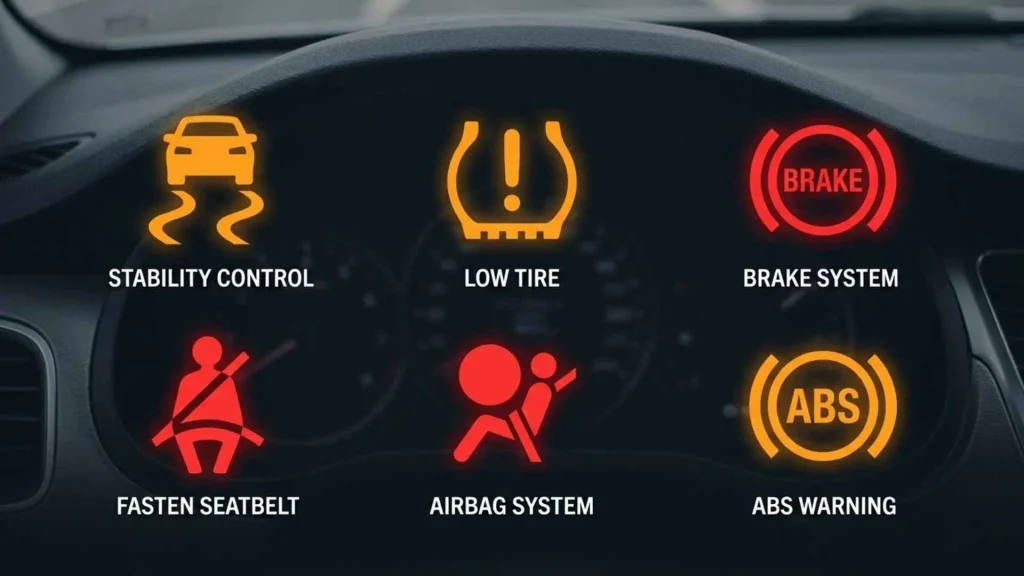
A car with wavy skid marks represents Electronic Stability Control, sometimes called ESC.
A flashing light usually means the system is actively correcting wheel slip or loss of directional control. Slow down and drive smoothly.
A steady light can indicate that ESC has been turned off or that the system has developed a fault.
Forward Collision-Avoidance Warning
A symbol showing two vehicles, a collision star, or an exclamation mark may relate to Forward Collision-Avoidance Assist.
The light can appear when the system detects a collision risk, when a camera or radar sensor is blocked, or when the feature is unavailable. Snow, dirt, rain, glare, and damaged sensors can affect operation.
Driver-assistance technology does not replace attentive driving. NHTSA describes warning and intervention systems as momentary assistance that still requires the driver to remain engaged.
Lane Safety Warning
Lane markings with a vehicle between them may represent Lane Keeping Assist, Lane Following Assist, or Lane Departure Warning.
Green commonly indicates active operation, while white may indicate standby status. Amber or flashing symbols can signal a fault, blocked camera, or detected lane departure.
Blind-Spot Safety Warning
A symbol showing two vehicles beside one another may relate to Blind-Spot Collision Warning.
The indicator can illuminate in the mirror when another vehicle enters the detection zone. A dashboard warning may indicate that the radar is blocked or malfunctioning.
Kia EV and Hybrid Warning Lights Symbols
Electric and hybrid Kia vehicles contain several symbols that are not found in conventional gasoline models.
READY Indicator
The green READY light means the high-voltage system is active and the vehicle can move, even if no engine sound is present.
Kia states that normal driving is possible when the READY indicator is on. If it turns off or blinks unexpectedly, a system problem may be present.
EV Service Warning Light
A vehicle outline with an exclamation mark may indicate an electric-drive control-system fault.
The vehicle may enter reduced-power mode or become unable to drive. Follow any text message displayed in the instrument cluster and arrange inspection.
Reduced Power Warning
A turtle symbol usually means power has been limited. This can occur because of low high-voltage battery charge, extreme temperature, battery protection, or an EV-system problem.
Avoid rapid acceleration and move to a safe charging or service location.
High-Voltage Battery Warning
Battery temperature, charging-system, or high-voltage warnings may indicate conditions requiring specialist attention. Do not attempt to open or repair high-voltage components yourself.
Positive and Negative Meanings of Kia Dashboard Symbols
| Positive or normal meaning | Negative or warning meaning |
| Green system indicator shows a feature is active | Red symbol warns of danger or serious failure |
| Brief startup illumination confirms a bulb check | A light staying on suggests a fault |
| Flashing ESC light shows traction control working | Steady ESC light may indicate malfunction |
| Blue high-beam symbol confirms selected lighting | High beams may blind other road users |
| READY light confirms an EV can be driven | Missing or blinking READY light may indicate a fault |
| Turn-signal arrows confirm signaling | Rapid flashing may suggest a failed bulb |
The same symbol can carry different meanings depending on whether it is steady, flashing, red, amber, or green. Context is more important than the icon alone.
Why Drivers React Strongly to Warning Lights
Dashboard lights are designed to capture attention quickly. Their bright colors, simple shapes, and sudden appearance trigger the brain’s threat-detection system.
Red naturally feels urgent because people connect it with heat, blood, danger, and stopping. Amber suggests caution, while green feels safe and active. These learned associations allow drivers to react without reading a long message.
However, fear can also cause poor decisions. Some drivers ignore a symbol because the car still feels normal. Others panic and stop in an unsafe lane. The safest response is controlled attention: identify the light, notice how the car behaves, move somewhere safe, and consult the correct manual.
What to Do When a Kia Warning Light Appears
First, stay calm and keep control of the vehicle.
Next, note the symbol’s color and whether it is flashing. Pay attention to unusual sounds, smoke, vibration, steering changes, reduced power, burning smells, or braking difficulty.
Pull over immediately when you see a critical red warning involving oil pressure, overheating, brakes, steering, charging, or an EV high-voltage system.
For an amber light, reduce stress on the vehicle and arrange diagnosis as soon as practical. Do not erase diagnostic trouble codes before the problem has been recorded, because stored information can help a technician find the cause.
Finally, check the exact instructions in your Kia owner’s manual. Dashboard functions vary by model and year, so a general guide should never replace model-specific information.
Interesting Facts About Kia Warning Lights Symbols
- Many warning lights illuminate briefly at startup as part of a self-check.
- A battery symbol normally relates to the charging system, not only the battery.
- Cold weather can temporarily lower tire pressure and activate the TPMS light.
- A loose fuel cap can trigger the check engine light in some Kia models.
- A flashing warning light is generally more urgent than the same light displayed steadily.
- Dirty cameras or radar sensors can disable lane and collision-assistance features.
- An electric Kia may be ready to move without making traditional engine noise.
- Kia Connect can provide diagnostic alerts for supported vehicles, although Kia states that connected diagnostics do not replace scheduled maintenance.
- A dashboard symbol may have a different appearance or wording depending on the sales region.
- Multiple warning lights can appear because of one shared electrical or sensor problem.
Frequently Asked Questions
What is the most serious warning light on a Kia?
Red oil-pressure, brake, overheating, charging-system, and high-voltage warnings are among the most serious. Stop safely and check the owner’s manual before continuing.
Can I drive my Kia with the check engine light on?
You may be able to drive cautiously with a steady light if the vehicle runs normally. A flashing light, shaking engine, smoke, or severe power loss requires immediate attention.
Why did all my Kia warning lights come on at once?
Possible causes include low battery voltage, charging-system failure, wiring trouble, communication errors, or several related faults. A professional diagnostic scan is usually needed.
What does the triangle with an exclamation mark mean in a Kia?
It is commonly a master warning light. Check the instrument-cluster message for details such as low fluid, driver-assistance trouble, tire pressure, or another detected condition.
Why is my Kia tire-pressure light on after inflating the tires?
A tire may still be underinflated, the system may need driving time to update, outside temperature may have changed, or a TPMS sensor may be faulty.
Where can I find the exact meaning of my Kia dashboard symbol?
Use the owner’s manual for your vehicle’s model, year, powertrain, and market. Kia provides electronic manuals through its official owner portal.
Conclusion
Kia warning lights symbols are not random decorations. They are an early communication system designed to protect you, your passengers, and your vehicle.
Red lights demand urgent attention, amber lights call for timely inspection, and green or blue lights usually confirm active features.
Learning these symbols replaces fear with informed action and helps prevent small faults from becoming expensive repairs.
When a light appears, stay calm, respond safely, and trust the instructions written for your exact Kia model.
 Sarah Thompson
 John Mercer