
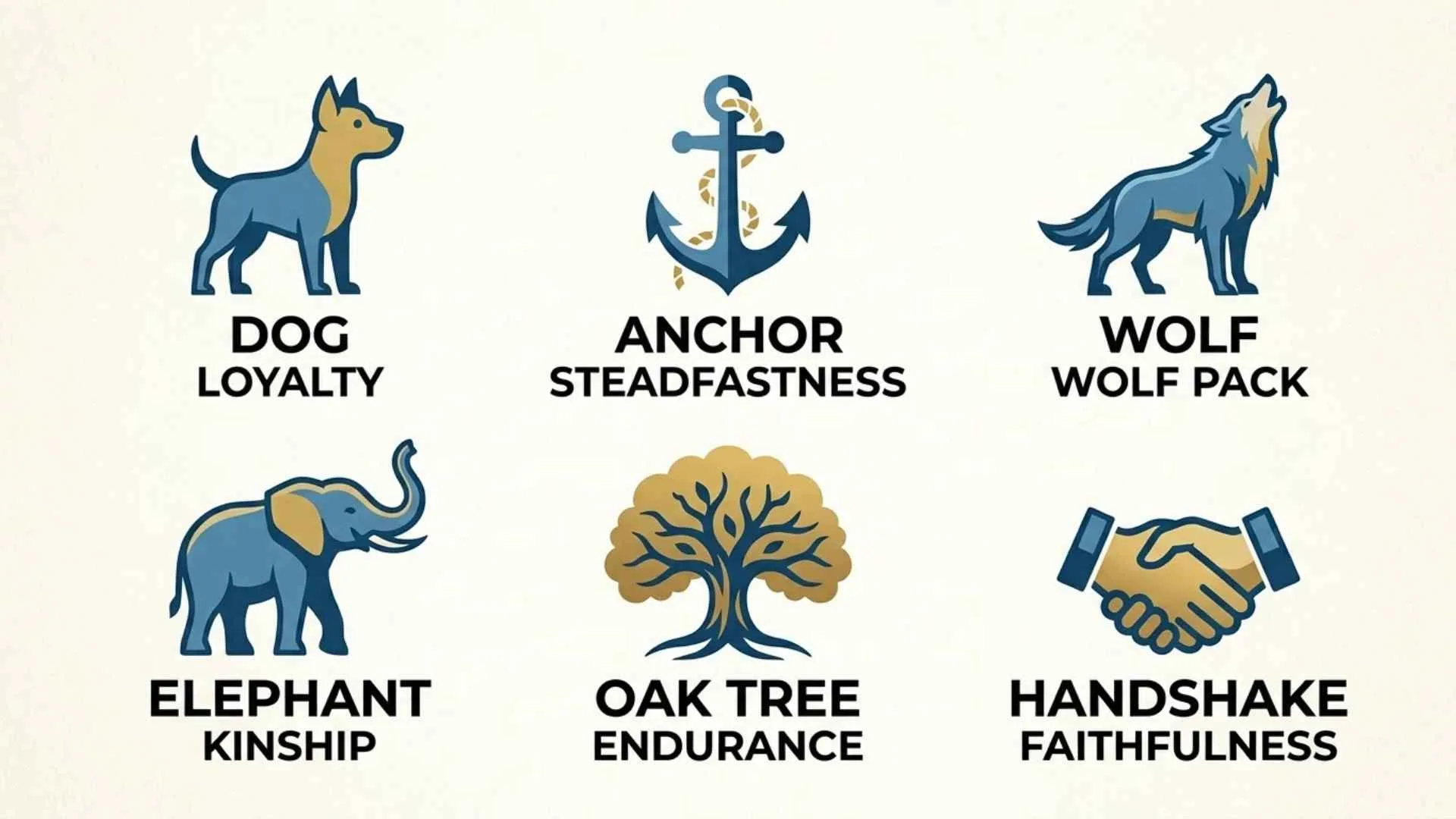
Loyalty is one of the most meaningful qualities in human relationships. It represents trust, honesty, commitment, devotion, and the willingness to stand by someone through good times and difficult moments. Throughout history, people have used powerful symbols to express these values, from the faithful dog and the enduring oak tree to interlocking rings, hearts, knots, and meaningful ancient emblems. These loyalty symbols communicate feelings that words sometimes cannot fully express.
Different cultures and traditions use unique signs to represent loyalty, faithfulness, and unbreakable bonds. For example, the dog symbolizes unconditional devotion, the heart represents emotional commitment, and the Celtic knot reflects an everlasting connection. Other symbols, such as the anchor, dove, infinity sign, and Claddagh ring, carry associations with trust, friendship, love, and lasting promises. Their meanings can vary depending on cultural background, historical context, and personal interpretation.
In this guide, you will discover the most meaningful loyalty symbols and their hidden messages. We will explore their origins, cultural significance, spiritual connections, and modern uses in jewelry, tattoos, artwork, and relationships. Whether you want to celebrate a lifelong friendship, honor family devotion, express romantic commitment, or find a meaningful symbol of trust, these powerful signs can help you represent the bonds that matter most.
Quick Answer
Loyalty symbols are animals, plants, objects, colors, and sacred designs that represent faithfulness, devotion, trust, and commitment. Common examples include dogs, wolves, elephants, rings, anchors, knots, and forget-me-not flowers. Their meanings often come from mythology, religion, natural behavior, historical traditions, and emotional associations.
Quick Facts About Loyalty Symbols
| Aspect | Information |
| Origin | Ancient religious practices, myths, family traditions, and observations of animal behavior |
| Historical Significance | Used in marriage ceremonies, military emblems, royal crests, friendship gifts, and sacred art |
| Main Meaning | Faithfulness, trust, devotion, protection, and lasting commitment |
| Spiritual Meaning | Dedication to a higher purpose, divine faith, and loyalty to the soul’s path |
| Cultural Importance | Strengthens family identity, community bonds, romantic promises, and social responsibility |
| Modern Usage | Tattoos, jewelry, logos, wedding rings, friendship gifts, clothing, and home decor |
What Are Loyalty Symbols?
Loyalty symbols are visual signs that communicate faithfulness without needing words. They may represent loyalty to a person, family, belief, nation, community, or personal principle.
The earliest loyalty symbols developed from human observation. People noticed that certain animals stayed with their mates, defended their groups, or returned home after long journeys. Wolves protected their packs, dogs remained close to human companions, and elephants appeared to maintain strong family bonds.
Ancient societies also used objects to represent commitment. A ring suggested an endless promise because its circular shape had no clear beginning or end. Knots represented bonds that were difficult to break. Anchors suggested stability during emotional or physical storms.
Over time, loyalty symbols became part of religion, mythology, heraldry, marriage, military culture, and art. Today, they remain meaningful because humans still need visible reminders of trust and belonging.
Deep Symbolic Meaning of Loyalty Symbols
Spiritual Meaning
Spiritually, loyalty often represents devotion to truth, faith, or a sacred path. A loyal person remains committed even during uncertainty.
In many religious traditions, loyalty to God, moral duty, or spiritual teaching is treated as a form of inner strength. Symbols such as anchors, sacred knots, and rings may remind believers to stay grounded when life becomes difficult.
Loyalty can also represent alignment between the outer life and the inner soul. When your actions match your values, you show loyalty to your true self.
Psychological Meaning
Psychologically, loyalty symbols satisfy the human need for safety and dependable connection. Trust becomes stronger when people believe they will not be abandoned during hardship.
Carl Jung’s ideas about archetypes can help explain why certain loyalty symbols appear across cultures. The faithful dog resembles the companion archetype. The protective wolf reflects both the guardian and the group identity. The ring represents wholeness, continuity, and completion.
However, loyalty also has a shadow side. Healthy devotion creates security, while blind loyalty may keep someone attached to harmful relationships, beliefs, or leaders. A symbol of loyalty should therefore represent trust with wisdom, not obedience without thought.
Cultural Meaning
At the cultural level, loyalty symbols protect shared identity. Family crests, national emblems, clan animals, and military insignia show commitment to a group.
These symbols often become powerful during times of conflict or change. A person wearing a family ring, tribal pattern, or friendship bracelet may be saying, “I remember where I belong.”
Types and Variations of Loyalty Symbols
Dog
Visual description: A dog sitting beside a person, guarding a home, or following a path.
Meaning: Faithfulness, companionship, protection, and unconditional affection.
Cultural connection: Dogs have lived beside humans for thousands of years. Their protective and social behavior made them natural symbols of loyalty.
Where it appears: Folklore, memorial art, family emblems, tattoos, movies, and literature.
Wolf
Visual description: A single wolf, two wolves together, or a pack under the moon.
Meaning: Loyalty to family, teamwork, courage, and protection.
Cultural connection: Wolves live in structured social groups and cooperate in raising young and defending territory.
Where it appears: Indigenous stories, Roman mythology, fantasy fiction, jewelry, tattoos, and modern branding.
Elephant
Visual description: An adult elephant walking beside a calf or a herd moving together.
Meaning: Family devotion, memory, protection, and emotional strength.
Cultural connection: Elephants are strongly associated with family groups and protective care.
Where it appears: Hindu and Buddhist art, African-inspired design, home decor, jewelry, and spiritual imagery.
Ring
Visual description: A circular band, sometimes engraved or decorated with gemstones.
Meaning: Eternal commitment, unity, marriage, and unbroken trust.
Cultural connection: Rings have been used in marriage and formal agreements since ancient times.
Where it appears: Weddings, royal ceremonies, friendship gifts, religious vows, and family heirlooms.
Celtic Knot
Visual description: Interwoven lines with no visible beginning or ending.
Meaning: Eternal connection, interconnected lives, and unbreakable devotion.
Cultural connection: Knot designs are closely associated with Celtic art, especially decorated manuscripts and stone carvings.
Where it appears: Jewelry, tattoos, wedding designs, memorials, and spiritual art.
Anchor
Visual description: A traditional ship anchor, often combined with rope, hearts, or names.
Meaning: Stability, faithfulness, hope, and staying grounded.
Cultural connection: Sailors used anchors as signs of safety and secure return. Early Christians also used anchor imagery as a symbol of hope.
Where it appears: Maritime art, Christian symbolism, tattoos, military insignia, and jewelry.
Forget-Me-Not Flower
Visual description: Small blue flowers with yellow centers.
Meaning: Remembrance, faithful love, and emotional loyalty across distance.
Cultural connection: European legends connected the flower with remembrance and promises not to forget a loved one.
Where it appears: Memorial gardens, romantic gifts, poetry, jewelry, and remembrance art.
Swans
Visual description: Two swans facing each other, sometimes forming a heart shape with their necks.
Meaning: Romantic loyalty, grace, partnership, and lifelong devotion.
Cultural connection: Swans became associated with faithful love because some species form long-term pair bonds.
Where it appears: Wedding decor, paintings, poetry, fairy tales, and romantic jewelry.
Loyalty Symbols Across Different Cultures
Ancient Egypt
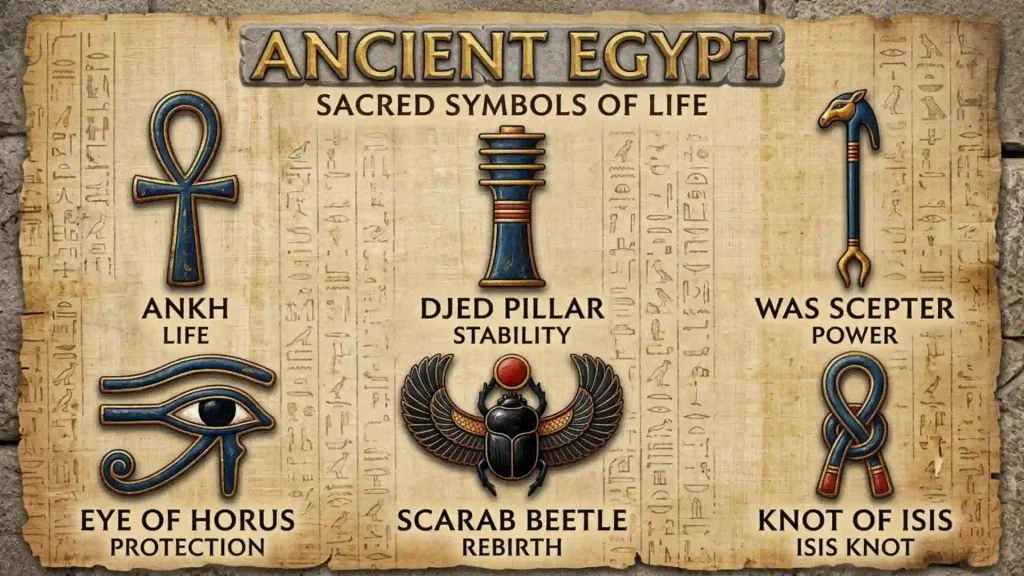
Ancient Egyptian culture valued order, duty, and devotion to family and the gods. Dogs were respected as guardians and companions. Deities connected with canine imagery, such as Anubis, represented protection, burial rites, and safe passage into the afterlife.
The scarab also reflected renewal and faith in cosmic order, although it was not exclusively a loyalty symbol.
Ancient Greece
Greek myths often explored loyalty through heroes, spouses, friends, and animals. In Homer’s Odyssey, the dog Argos recognizes Odysseus after his master returns home following many years of absence. Argos became one of literature’s strongest images of faithful companionship.
Penelope also represents marital loyalty because she waits for Odysseus while resisting unwanted suitors.
Roman Culture
Romans valued loyalty through the concept of fides, meaning trust, good faith, and reliability. Fides was also personified as a goddess associated with honesty and keeping promises.
The she-wolf became a symbol of protection and Roman identity through the legend of Romulus and Remus.
Eastern Traditions
In China, paired mandarin ducks traditionally symbolize marital affection and loyalty. They often appear in wedding art, textiles, and home decorations.
In Hindu traditions, elephants can represent wisdom, protection, family strength, and devotion. Hanuman is also widely honored as a symbol of courage, service, and unwavering loyalty to Rama.
In Japan, the story of Hachikō, an Akita dog who continued waiting for his deceased owner, became a national example of loyalty and remembrance.
Indigenous Traditions
Indigenous cultures are diverse, so no single meaning applies to every community. In some Native American traditions, wolves may represent family cooperation, guardianship, teaching, or strong social bonds.
Animal symbolism must be understood within its specific nation, story, and ceremonial context. It should not be reduced to a universal decorative meaning.
Modern Interpretations
Today, loyalty symbols often combine several traditions. A person may choose a wolf tattoo for family devotion, an anchor necklace for emotional stability, or a knot design to honor a lifelong friendship.
Modern meanings are deeply personal, but their emotional power still comes from older cultural stories.
Similar Symbols and Their Meanings
| Symbol | Main Meaning | Connection to Loyalty | Important Difference |
| Heart | Love and emotion | Loyalty often grows from love | Love can exist without commitment |
| Ring | Eternal union | Represents lasting promises | Often linked specifically to marriage |
| Anchor | Stability and hope | Suggests remaining dependable | Focuses more on steadiness than affection |
| Knot | Unbreakable bond | Represents connected lives | Can also symbolize complexity |
| Dog | Faithful companionship | Shows personal devotion | Usually linked to friendship and protection |
| Wolf | Pack loyalty | Represents family and group unity | Also symbolizes independence and instinct |
| Elephant | Family devotion | Suggests protection and memory | Often connected to wisdom and ancestry |
| Shield | Defense and duty | Protects people or values | Represents protection more than emotional closeness |
A common misconception is that every symbol has one fixed meaning. In reality, symbolism changes with culture, history, design, and personal experience.
Loyalty Symbols in Mythology and Folklore
Myths often test loyalty through separation, danger, temptation, and sacrifice.
In Greek mythology, Penelope remains devoted to Odysseus during his long absence. Her unfinished weaving becomes part of a clever plan to delay remarriage.
The story of Damon and Pythias, associated with ancient Greek tradition, celebrates friendship based on complete trust. One friend offers his own life as security for the other’s return.
In Hindu epic tradition, Hanuman’s devotion to Rama represents selfless service, courage, and faith. His loyalty is active, not passive. He crosses great distances and faces danger to fulfill his duty.
European folklore often uses faithful dogs, paired birds, rings, and flowers as signs of love that survives distance or death. These stories shaped the modern idea that true loyalty reveals itself during hardship.
Loyalty Symbols in Art, Literature, Movies, and Pop Culture
Artists use loyalty symbols to make emotional bonds visible. A dog beside a grave may represent devotion beyond death. Two clasped hands can symbolize trust, agreement, or friendship.
Literature frequently uses faithful companions to show moral strength. Argos in The Odyssey and Samwise Gamgee in The Lord of the Rings represent loyalty that survives fear, distance, and exhaustion.
Movies and television often use dogs, wolves, rings, uniforms, and family emblems to show allegiance. Superhero stories may explore loyalty to friends, teams, cities, or moral principles.
In tattoo culture, loyalty symbols are especially common. Names, dates, paw prints, wolves, anchors, knots, and infinity designs may honor a partner, parent, child, friend, or pet.
Fashion brands and sports teams also use loyalty imagery to create belonging. However, commercial loyalty is different from personal devotion because it may be influenced by marketing and identity-based attachment.
Spiritual and Dream Meaning of Loyalty Symbols
Dreaming of loyalty symbols may reflect questions about trust, commitment, and emotional safety.
A friendly dog may suggest dependable support or a desire for companionship. A threatening dog could point to betrayal fears, broken trust, or defensive behavior.
A wolf pack may represent family unity, teamwork, or pressure to conform. A lone wolf may symbolize independence, isolation, or conflict between personal freedom and group loyalty.
A ring may reflect commitment, promises, completion, or fear of being trapped. A broken ring can suggest anxiety about a relationship or agreement.
An anchor may appear during unstable periods as a reminder to find emotional grounding. A knot may represent a strong bond, but a tangled knot could suggest unresolved obligations.
Dream symbols are not predictions. Their meaning depends on your feelings, relationships, memories, and current life situation.
Positive and Negative Meanings of Loyalty Symbols
| Positive Meaning | Negative Meaning |
| Trust | Blind obedience |
| Faithfulness | Fear of change |
| Protection | Possessiveness |
| Commitment | Unhealthy attachment |
| Dependability | Loss of independence |
| Family unity | Group pressure |
| Shared purpose | Loyalty to harmful beliefs |
| Emotional security | Refusal to accept betrayal |
The same symbol can carry light and shadow. A wolf pack may represent family protection, but it can also represent exclusion. A ring may symbolize loving commitment, yet it may feel restrictive in an unhealthy relationship.
Context determines meaning.
Why Humans Are Attracted to Loyalty Symbols
Humans are social beings. Survival once depended heavily on reliable families, tribes, and allies. Because of this, signs of loyalty create emotional comfort.
Symbols also make complex feelings easier to understand. Trust cannot be touched, but a ring can be worn. Devotion cannot be seen directly, but a dog waiting beside a door can express it clearly.
Pattern recognition strengthens these meanings. When people repeatedly see anchors connected with stability or wolves connected with packs, those associations become part of cultural memory.
Personal experience matters too. A forget-me-not flower may seem ordinary to one person but deeply meaningful to someone who received it from a loved one.
Modern Uses of Loyalty Symbols
Loyalty symbols continue to appear in many parts of everyday life:
- Tattoos: Wolves, dogs, anchors, rings, knots, initials, and meaningful dates.
- Jewelry: Friendship bracelets, family rings, lockets, pendants, and matching necklaces.
- Fashion: Clan patterns, team symbols, animal designs, and meaningful embroidery.
- Branding: Shields, dogs, lions, anchors, and linked shapes that suggest trust.
- Social media: Heart icons, infinity signs, matching profile images, and friendship posts.
- Contemporary spirituality: Sacred knots, protective animals, devotional symbols, and meditation objects.
- Home decor: Family crests, elephant figures, paired birds, and inspirational signs.
- Personal expression: Gifts that honor friendship, marriage, family, military service, or remembrance.
Before using a sacred or Indigenous symbol, it is respectful to learn its cultural background and avoid treating ceremonial imagery as a trend.
Interesting Facts About Loyalty Symbols
- The ancient Roman idea of fides connected loyalty with trust, honesty, and the keeping of agreements.
- Argos, the dog in The Odyssey, remains one of the oldest famous examples of animal loyalty in Western literature.
- The Hachikō statue near Shibuya Station in Tokyo became a well-known meeting place and symbol of devotion.
- Wedding rings symbolize continuity partly because the circle has no visible beginning or ending.
- Anchors were used in early Christian art as symbols of hope and spiritual security.
- Forget-me-not flowers became connected with remembrance through European legends and romantic tradition.
- Hanuman represents devotion expressed through courage, action, service, and self-discipline.
- Some animals associated with lifelong loyalty do not always remain with one mate forever, so symbolic meaning should not be confused with a universal biological rule.
- Clasped hands have represented friendship, agreement, farewell, and loyalty in art, jewelry, and gravestone carvings.
- Loyalty symbols often become most meaningful after separation, loss, hardship, or reunion.
Frequently Asked Questions
What is the strongest symbol of loyalty?
The dog is one of the strongest and most widely recognized loyalty symbols because it represents faithful companionship, protection, and dependable love.
What flower symbolizes loyalty?
The forget-me-not commonly symbolizes faithful love, remembrance, and loyalty across time or distance. Blue violets may also represent devotion and faithfulness.
What animal represents loyalty and family?
Wolves and elephants are strongly associated with family loyalty. Wolves represent pack cooperation, while elephants symbolize protective family bonds and memory.
What symbol represents eternal loyalty?
A ring, infinity symbol, or endless knot can represent eternal loyalty because each design suggests continuity without a clear ending.
What symbol represents loyalty in friendship?
Clasped hands, friendship knots, matching bracelets, dogs, and forget-me-not flowers can all symbolize loyal friendship and lasting trust.
Is an anchor a loyalty symbol?
Yes. An anchor represents stability, faith, hope, and the willingness to remain dependable during difficult times.
Conclusion
Loyalty symbols give visible form to trust, commitment, and devotion.
From the faithful dog and protective wolf to the endless ring and steady anchor, each symbol tells a story about staying connected.
Their meanings can be spiritual, cultural, psychological, or deeply personal.
In the end, the most powerful loyalty symbol is one that reminds you to protect trust while remaining honest, wise, and true.
 Sarah Thompson
 John Mercer