
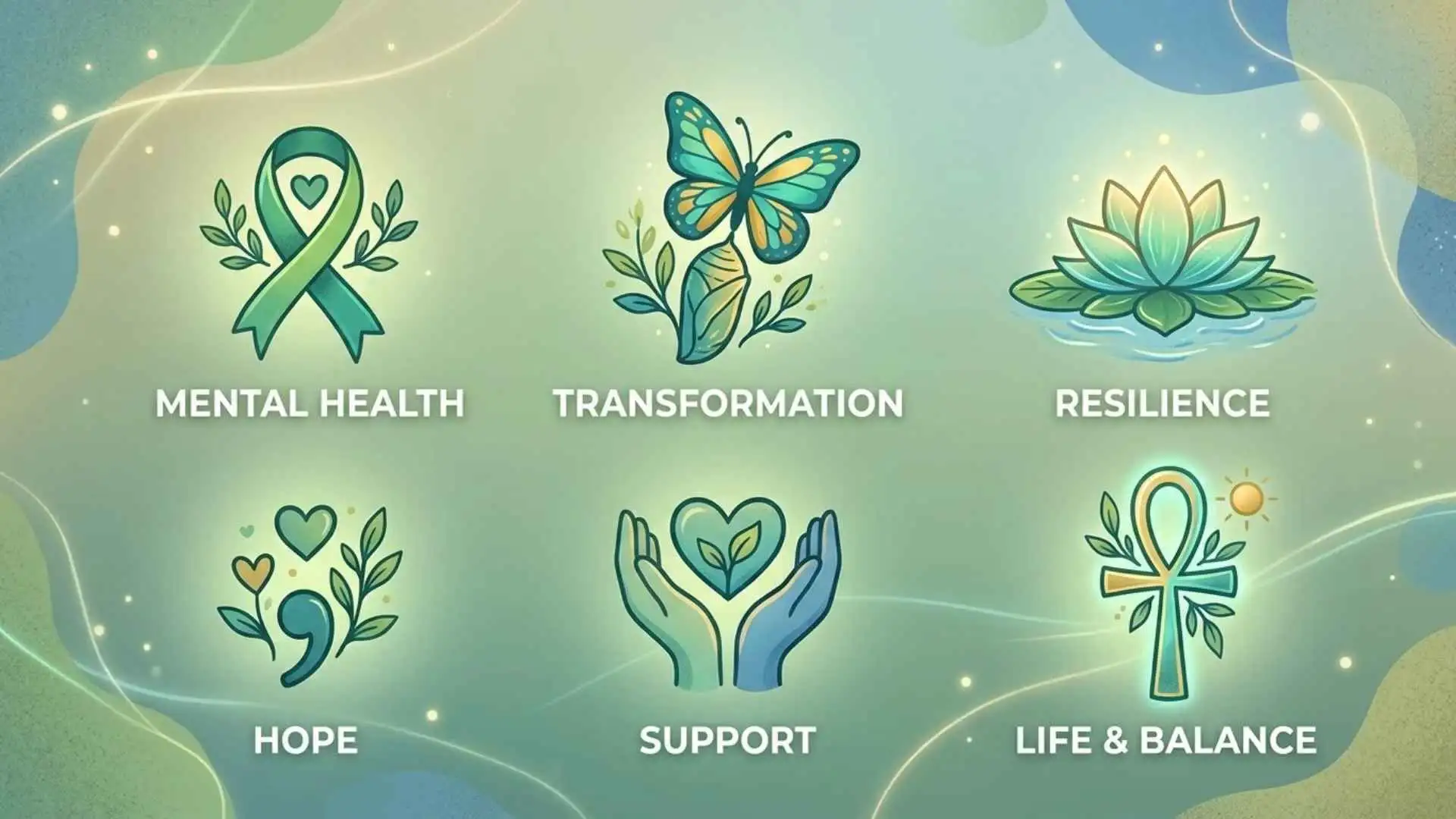
Mental health symbols represent hope, healing, awareness, strength, and the importance of emotional well-being. From the green mental health awareness ribbon to semicolons, butterflies, lotus flowers, and puzzle-inspired designs, these symbols communicate messages that words sometimes cannot express. They help people recognize mental health struggles, show support for others, and encourage open conversations about conditions such as anxiety, depression, trauma, and other emotional challenges.
Different mental health symbols carry different meanings and cultural associations. Some represent recovery and personal growth, while others promote suicide prevention, mental health awareness, self-acceptance, and emotional resilience. For example, the green ribbon is widely recognized as a mental health awareness symbol, while the semicolon has become associated with continuing life despite difficult experiences. Understanding these signs can help you appreciate their messages and use them respectfully to support meaningful conversations.
In this complete guide to mental health symbols, you will discover their meanings, origins, colors, and significance in modern society. You will also explore popular awareness symbols, healing imagery, suicide prevention signs, and designs used to express solidarity and encouragement. Whether you are looking for a meaningful symbol for a tattoo, artwork, awareness campaign, or personal reminder, this guide will help you understand the powerful messages behind these symbols of hope and human connection.
Quick Answer
Mental health symbols are images, colors, signs, and objects used to represent emotional well-being, psychological struggles, recovery, awareness, and hope. Common examples include the green ribbon, semicolon, butterfly, lotus flower, brain imagery, and awareness tattoos. Their meanings may be personal, cultural, spiritual, or connected to public advocacy.
Quick Facts About Mental Health Symbols
| Aspect | Information |
| Origin | Drawn from modern awareness campaigns, psychology, religion, nature, art, and ancient healing traditions |
| Historical Significance | Reflect humanity’s long effort to understand the mind, emotions, suffering, and recovery |
| Main Meaning | Awareness, emotional healing, resilience, support, and freedom from stigma |
| Spiritual Meaning | Transformation, inner peace, renewal, consciousness, and hope |
| Cultural Importance | Helps communities discuss psychological well-being and support people experiencing distress |
| Modern Usage | Ribbons, tattoos, jewelry, campaigns, clothing, social media, art, and wellness branding |
What Are Mental Health Symbols?
Mental health symbols are visual signs associated with psychological well-being, mental illness awareness, suicide prevention, recovery, and emotional support. They allow people to communicate complex experiences without needing to explain every detail.
The World Health Organization describes mental health as a state of mental well-being that helps people manage life’s stresses, develop their abilities, learn, work, and contribute to their communities. This means mental health is not simply the absence of illness. It is part of a person’s overall quality of life.
There is no single universal symbol for every mental health experience. Instead, different communities have adopted different signs. The green ribbon represents broad mental health awareness, while the semicolon is strongly connected with survival and suicide prevention.
Many other images, such as the lotus, butterfly, phoenix, tree, heart, and open hands, gained meaning through religion, folklore, psychology, and nature. Over time, people connected these older ideas of growth and rebirth with modern emotional recovery.
Mental health symbols became especially important as advocacy groups began challenging shame and discrimination. A visible sign can start a conversation, show solidarity, and tell someone, “You are not alone.”
Deep Symbolic Meaning of Mental Health Symbols
Spiritual Meaning
On a spiritual level, mental health symbols often represent movement from darkness toward light. They may express awakening, self-acceptance, forgiveness, or the gradual rebuilding of inner peace.
A lotus rising from muddy water suggests that beauty and awareness can develop during difficult circumstances. A phoenix rising from ashes represents renewal after destruction. A spiral may symbolize the inward journey of understanding oneself.
These meanings do not promise that pain disappears instantly. Instead, they show that suffering can become part of a larger story of growth.
Psychological Meaning
Psychologically, symbols help people give structure to emotions that may feel confusing or overwhelming. An image can become a mental anchor, reminding someone of a promise, coping skill, relationship, or reason to continue.
Carl Jung viewed symbols as important bridges between conscious thought and the deeper unconscious mind. In a Jungian interpretation, images such as shadows, circles, trees, and journeys can reveal inner conflict, wholeness, fear, or transformation.
However, a symbol does not diagnose a mental health condition. Its meaning depends on the person, their experiences, and the context in which it appears.
Cultural Meaning
At the cultural level, mental health symbols build shared language. Wearing a ribbon or posting an awareness image can signal compassion, community, and willingness to listen.
Symbols also challenge the old belief that psychological pain should remain hidden. When thousands of people use the same sign, private suffering becomes a public issue deserving care, research, and respectful discussion.
Types and Variations of Mental Health Symbols
The Green Ribbon
Visual description: A looped ribbon in a bright or dark green shade.
Meaning: Mental health awareness, support, and freedom from stigma.
Symbolism: Green is often linked with life, growth, balance, and renewal.
Cultural connection: The Mental Health Foundation identifies the green ribbon as the international symbol of mental health awareness. NAMI has also used green ribbon imagery in awareness communication.
Where it appears: Awareness events, clothing, badges, social media graphics, workplaces, schools, and fundraising campaigns.
The Semicolon
Visual description: A period placed above a comma.
Meaning: Continuation, survival, and the decision to keep living.
Symbolism: In grammar, a semicolon appears where a sentence could have ended but continues. As a mental health symbol, the writer represents the person, and the sentence represents life.
The semicolon became widely associated with mental health advocacy through Project Semicolon, founded in 2013. It is especially connected with suicide prevention, depression, addiction, and self-harm recovery.
Where it appears: Tattoos, bracelets, artwork, clothing, jewelry, and online support communities.
The Butterfly
Visual description: A winged insect, often shown with colorful or symmetrical wings.
Meaning: Change, freedom, sensitivity, and recovery.
Symbolism: The butterfly’s transformation from caterpillar to winged adult makes it a natural image of emotional growth.
Cultural connection: Butterflies have represented the soul, rebirth, and transformation in several artistic and spiritual traditions.
Where it appears: Tattoos, therapy art, memorial designs, journals, jewelry, and wellness spaces.
The Lotus Flower
Visual description: A many-petaled flower rising above water.
Meaning: Inner peace, resilience, awakening, and purity.
Symbolism: The lotus grows through mud before opening above the water, making it a meaningful image for people rebuilding their lives after hardship.
Cultural connection: It holds sacred importance in Hindu, Buddhist, and other Asian traditions.
Where it appears: Meditation art, tattoos, yoga spaces, jewelry, paintings, and spiritual literature.
The Phoenix
Visual description: A powerful bird surrounded by flames.
Meaning: Rebirth, survival, courage, and starting again.
Symbolism: The legendary phoenix is destroyed by fire and rises again from its ashes.
Cultural connection: Phoenix-like birds appear in Greek, Roman, Egyptian, Persian, and later European traditions, although their stories differ.
Where it appears: Literature, film, tattoos, fantasy art, recovery communities, and personal emblems.
The Brain and Heart
Visual description: A brain, heart, or a combined brain-and-heart design.
Meaning: Balance between thoughts and emotions.
Symbolism: The image can represent self-awareness, emotional intelligence, therapy, neuroscience, and compassionate decision-making.
Where it appears: Counseling logos, health campaigns, educational materials, clothing, and digital illustrations.
The Tree of Life
Visual description: A tree with spreading branches and visible roots.
Meaning: Stability, connection, growth, and strength.
Symbolism: Roots suggest grounding, while branches represent development and possibility.
Where it appears: Spiritual art, family traditions, jewelry, tattoos, therapy rooms, and home decor.
Mental Health Symbols Across Different Cultures
Modern mental health advocacy did not exist in ancient societies in its present form. However, many cultures created symbols connected with the mind, healing, protection, balance, and rebirth.
Ancient Egypt
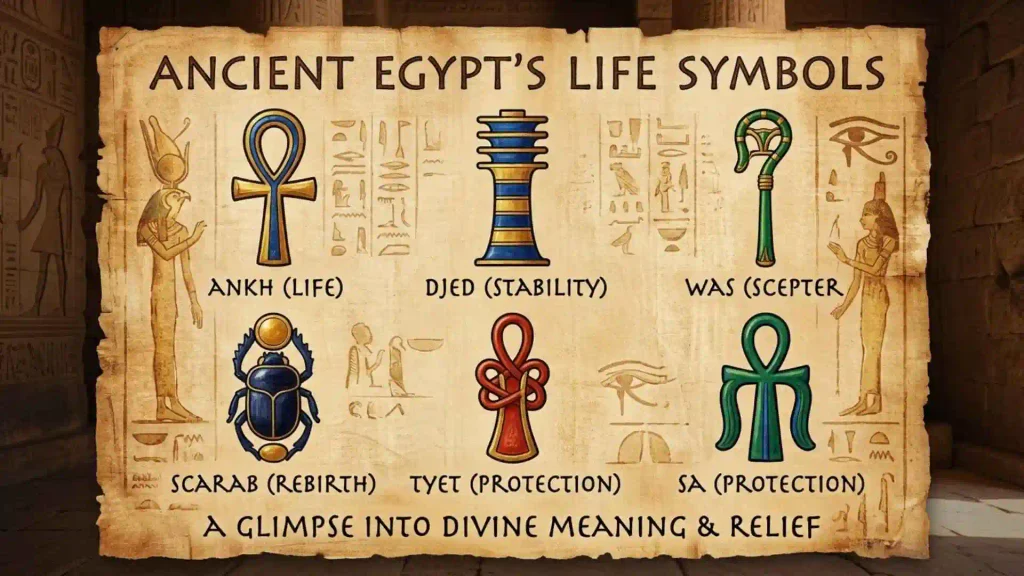
Ancient Egyptians often connected health with spiritual and physical harmony. The ankh represented life, while the scarab symbolized renewal and regeneration. These were not clinical mental health signs, but modern viewers may connect their meanings with vitality and emotional restoration.
Ancient Greece
Greek culture explored emotion, reason, memory, and human behavior through philosophy, drama, and medicine. The myth of the phoenix later became a strong symbol of recovery. The labyrinth can also represent confusion, self-discovery, and the difficult path toward understanding.
Roman Culture
Romans adopted and adapted many Greek symbols. Images of Minerva, associated with wisdom, could suggest disciplined thought, while laurel wreaths represented victory and endurance. Modern recovery imagery sometimes uses these ideas to express overcoming internal struggles.
Eastern Traditions
The lotus is one of the most important symbols of spiritual growth in Hindu and Buddhist traditions. The yin-yang symbol from Chinese philosophy represents complementary forces and dynamic balance. In modern wellness culture, it is often used to express harmony between emotion, body, environment, and thought.
Indigenous Traditions
Indigenous cultures are highly diverse, so their symbols should not be treated as interchangeable. Many traditions emphasize relationships among community, land, ancestors, body, and spirit. Circles, animals, plants, and medicine wheels may represent balance or connection within particular nations and teachings.
These symbols should be used respectfully. A design may have a sacred meaning that cannot be separated from its cultural context.
Modern Interpretations
Today, people combine traditional images with mental health awareness signs. A lotus may contain a semicolon. A butterfly may be drawn with a green ribbon. These combinations create personal symbols that connect ancient themes of renewal with present-day recovery.
Similar Symbols and Their Meanings
| Symbol | Primary Meaning | Connection to Mental Health | Important Difference |
| Green ribbon | Awareness and solidarity | Supports mental health conversations | Broad public awareness symbol |
| Semicolon | Continuation and survival | Often linked with suicide prevention | Carries a more specific survival message |
| Butterfly | Transformation | Represents change and recovery | Drawn mainly from nature |
| Lotus | Growth through difficulty | Suggests healing and inner peace | Has deep religious significance |
| Phoenix | Rebirth after destruction | Represents rebuilding after crisis | Comes from mythology |
| Tree of life | Stability and connection | Suggests grounding and development | Often linked with family and spirituality |
| Puzzle piece | Complexity or missing understanding | Sometimes used in neurodiversity contexts | Can be controversial and is not a universal mental health symbol |
A common misconception is that one symbol has exactly the same meaning for everyone. Symbols are shaped by community use, culture, personal memory, and intention.
Mental Health Symbols in Mythology and Folklore
Myths often place characters in dark forests, caves, underworlds, storms, or impossible mazes. These settings can be interpreted as symbolic journeys through fear, grief, isolation, or uncertainty.
The phoenix offers one of the clearest recovery stories. Fire represents destruction, yet it also prepares the way for renewal.
The Greek story of Ariadne’s thread provides another useful image. Ariadne gives Theseus a thread so he can find his way out of the labyrinth. In a psychological reading, the labyrinth resembles emotional confusion, while the thread represents guidance, therapy, friendship, or hope.
Such stories shaped modern symbolic language because they turn invisible inner struggles into journeys that can be pictured and understood.
Mental Health Symbols in Art, Literature, Movies, and Pop Culture
Artists have long used broken mirrors, storms, masks, cages, empty rooms, and fading light to express psychological distress. In contrast, open windows, sunrise, blooming flowers, and birds in flight often suggest recovery.
Literature uses symbolic settings to place readers inside a character’s emotional world. A locked room may represent isolation. A long road can suggest healing. A mask may show the difference between outward behavior and hidden pain.
The semicolon became especially visible through tattoos and social media. It also appeared in discussions surrounding the television adaptation of 13 Reasons Why, whose cast members used semicolon tattoos to show support for mental health awareness.
In fashion and design, mental health imagery appears on shirts, pins, bracelets, and posters. These items may encourage conversation, although meaningful advocacy requires more than simply displaying a symbol.
Spiritual and Dream Meaning of Mental Health Symbols
Seeing a mental health symbol in a dream does not have one medically proven interpretation. Dreams are influenced by personal memories, stress, beliefs, and recent experiences.
A butterfly may suggest that the dreamer feels ready for change. A tangled path might reflect uncertainty. A growing tree can represent stability or personal development. A broken object may point to feelings of vulnerability, but it can also represent the chance to rebuild.
During meditation, symbols may work as points of focus. A person might imagine roots growing into the ground to feel safer or picture a calm light during breathing exercises.
These interpretations can support reflection, but they should not replace professional care when someone is experiencing serious or lasting distress.
Positive and Negative Meanings of Mental Health Symbols
| Positive Meaning | Negative or Cautionary Meaning |
| Hope | Pain that remains unspoken |
| Recovery | Fear of returning symptoms |
| Connection | Loneliness or exclusion |
| Courage | Emotional exhaustion |
| Transformation | Unwanted or difficult change |
| Awareness | Stigma and misunderstanding |
| Survival | Memory of a crisis |
| Inner peace | Conflict that still needs attention |
A symbol can hold both light and shadow. A semicolon may represent survival, but it may also carry memories of an extremely painful period. A butterfly can suggest freedom while also reflecting the uncertainty of change.
Context, consent, and personal meaning matter.
Why Humans Are Attracted to Mental Health Symbols
The human mind naturally looks for patterns and meaning. Symbols simplify large ideas into images that can be remembered quickly.
A person may struggle to describe anxiety, grief, trauma, or depression. Yet they may point to a storm cloud, cracked heart, green ribbon, or semicolon and feel understood.
Symbols also create belonging. When someone notices another person wearing the same ribbon or tattoo, the image can become a quiet sign of shared experience.
Most importantly, symbols give people a sense of authorship. Choosing an image allows someone to decide how their story will be represented rather than allowing illness, stigma, or other people to define it.
Modern Uses of Mental Health Symbols
Mental health symbols now appear in many forms:
- Tattoos: Permanent reminders of recovery, survival, or personal promises.
- Jewelry: Discreet symbols worn close to the body.
- Fashion: Shirts, pins, and accessories used to raise awareness.
- Branding: Logos for counselors, charities, wellness programs, and support groups.
- Social media: Profile frames, hashtags, illustrations, and campaign graphics.
- Contemporary spirituality: Meditation cards, journals, crystals, and sacred imagery.
- Home decor: Prints and objects that create a calming or encouraging environment.
- Personal expression: Drawings, poetry, photography, and handmade art.
People should avoid treating a symbol as proof of diagnosis or recovery. A tattoo, ribbon, or social media post cannot reveal a person’s full mental health condition.
Interesting Facts About Mental Health Symbols
- The green ribbon is internationally recognized as a sign of mental health awareness.
- Green is also associated with growth, nature, renewal, and balance.
- The semicolon uses a rule of grammar to communicate a message about continuing life.
- Project Semicolon helped turn a punctuation mark into a global advocacy image beginning in 2013.
- Mental health symbols can communicate solidarity without revealing a specific diagnosis.
- Traditional spiritual symbols may carry meanings that are older and more complex than their modern wellness use.
- The same image can represent recovery for one person and painful memories for another.
- Combining symbols, such as a semicolon butterfly, allows people to create highly personal meanings.
- Awareness symbols can open conversations, but they do not replace accessible treatment and community support.
Frequently Asked Questions
What is the main symbol for mental health?
The green ribbon is widely recognized as the international symbol of mental health awareness. It represents support, open conversation, and efforts to reduce stigma.
What does the semicolon mean in mental health?
The semicolon represents a life story that could have ended but continued. It is closely associated with survival, suicide prevention, and hope.
What flower symbolizes mental health?
The lotus is commonly linked with mental health because it represents peace, resilience, spiritual growth, and beauty emerging from difficult conditions.
What animal represents mental health recovery?
The butterfly often represents emotional transformation and recovery. The phoenix, although mythical, symbolizes rebuilding life after loss or crisis.
Can I create my own mental health symbol?
Yes. Personal symbols can combine colors, words, plants, animals, or meaningful objects. The most important factors are personal relevance and respectful use of cultural or sacred imagery.
Are mental health symbols medically recognized?
Most are awareness or cultural symbols rather than medical signs. They can encourage support and conversation, but they cannot diagnose illness or replace professional evaluation.
Conclusion
Mental health symbols turn invisible emotions into signs people can see, share, and understand.
From the green ribbon to the semicolon, each image carries stories of awareness, courage, struggle, and renewal.
Their deepest value comes not from the design alone, but from the human experience behind it.
Sometimes a small symbol becomes a powerful reminder that healing is not always simple, but no one has to walk the path alone.
 Sarah Thompson
 Michael Rivera