
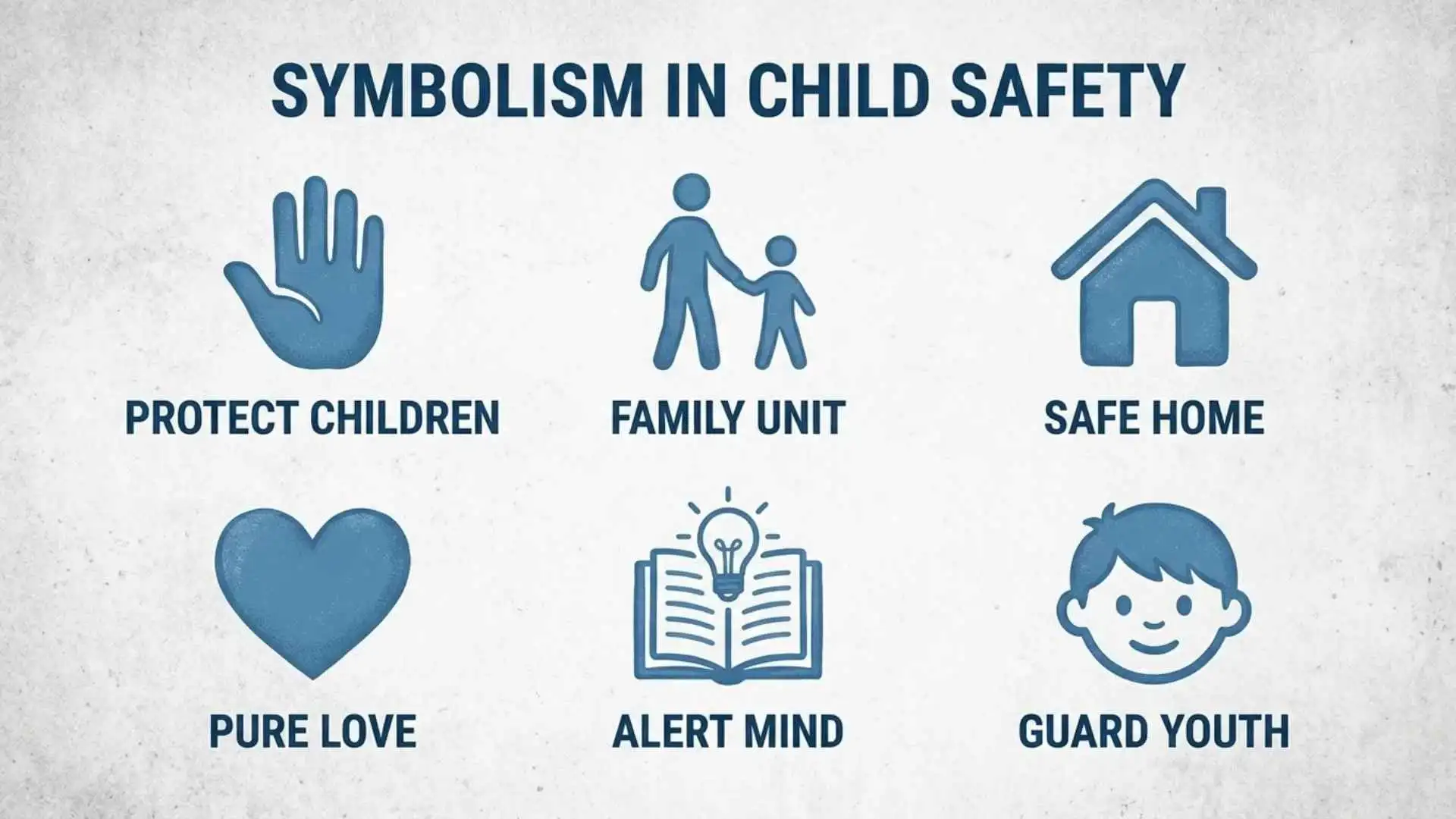
Pedo symbols are a topic that often raises questions about online safety, child protection, and the signs people associate with child sexual abuse. These symbols are sometimes discussed on social media, online forums, and awareness websites, where claims about their meanings can spread quickly. Understanding the subject requires careful research, reliable information, and a clear distinction between verified evidence and unsubstantiated internet rumors.
Some online discussions claim that particular logos, shapes, colors, or coded signs are associated with people who sexually exploit children. However, a symbol, logo, accessory, or visual design alone cannot reliably identify someone as a child abuser. Many images shared online have ordinary meanings or lack credible evidence connecting them to criminal activity. Instead of relying on viral claims, it is important to understand documented warning signs of grooming, recognize potentially unsafe behavior, and know how to respond when a child may be at risk.
In this guide, you will explore the facts and myths surrounding alleged pedophile symbols, learn how misinformation spreads online, and understand the difference between visual symbols and genuine safeguarding concerns. You will also discover practical ways to recognize possible grooming behaviors, protect children in digital spaces, report suspicious online activity, and find trustworthy child-protection resources. The goal is to promote informed awareness and help readers focus on evidence, behavior, and children’s safety rather than unsupported accusations.
Quick Answer
Pedo symbols are claimed visual codes associated with child sexual offenders or communities that normalize sexual interest in minors. The best-known examples come from a 2007 intelligence document attributed to the FBI. These designs should never be treated as proof of abuse because symbols can be copied, altered, misunderstood, or used innocently.
Quick Facts About Pedo Symbols
| Aspect | Information |
| Origin | Primarily linked to a widely circulated 2007 intelligence bulletin attributed to an FBI child-exploitation initiative |
| Historical Significance | The bulletin suggested that some offenders used logos to express sexual preferences or recognize like-minded individuals |
| Main Meaning | Alleged identification, communication, normalization, or group affiliation |
| Spiritual Meaning | No recognized spiritual meaning |
| Cultural Importance | Often discussed in online safety, criminal investigations, misinformation, and child-protection education |
| Modern Usage | Possible use in usernames, private groups, coded language, altered logos, memes, emojis, and online communities |
| Evidentiary Value | A symbol by itself is not reliable proof of a crime |
| Best Response | Document concerning behavior and report credible evidence to the appropriate platform or authority |
What Are Pedo Symbols?
The term “pedo symbols” is an informal phrase used to describe alleged symbols connected with people who have a sexual interest in children or who participate in child sexual exploitation.
The word “pedo” is often used online as an abbreviation for “pedophile.” However, professional organizations usually use more precise terms, such as child sexual offender, online predator, child sexual exploitation, grooming, or child sexual abuse material.
The phrase became widely known after a 2007 document titled Symbols and Logos Used by Pedophiles to Identify Sexual Preferences appeared online. The document was presented as an intelligence bulletin associated with the FBI’s Innocent Images National Initiative. It described several simple logos and suggested that certain offenders might use them to communicate preferences or identify one another.
This historical document should be interpreted carefully. It was intelligence material from a specific period, not a universal dictionary that can identify offenders in every situation. Symbols change, internet communities evolve, and common geometric shapes can appear in innocent logos, jewelry, artwork, clothing, or graphic design.
The FBI’s broader Innocent Images program began after investigators discovered people using computer networks to exchange child sexual abuse imagery and target minors. Its work developed into investigations involving online exploitation, victim identification, and offender networks.
The Meaning Behind Alleged Pedo Symbols
Unlike religious, national, or mythological symbols, alleged pedo symbols do not have a meaningful spiritual tradition. Their importance comes from criminal communication, group identity, secrecy, and internet culture.
Psychological Meaning
Symbols can help people feel connected to a group. This is true in healthy communities, but it can also occur in harmful or criminal networks.
A person involved in an abusive community may use a coded image to:
- Signal belonging
- Search for people with similar interests
- Reduce fear of rejection
- Hide harmful intentions
- Make abusive ideas appear normal
- Create distance from the reality of the victim’s suffering
Psychologists sometimes describe this process as moral disengagement. A person changes the language or symbols surrounding harmful behavior so that it feels less serious, less personal, or less criminal.
For example, an offender may replace direct descriptions of abuse with harmless-sounding labels, initials, jokes, numbers, or emojis. This language can make exploitation appear like a shared interest instead of violence against a child.
Social and Cultural Meaning
Within a hidden online group, a symbol may act like a badge. Outside that community, the same shape may mean nothing at all.
This difference in meaning is important. Symbols are interpreted through context. A triangle in one private discussion could have an intended coded meaning, while the same triangle on a road sign, company logo, game, tattoo, or child’s drawing could be completely ordinary.
For that reason, trained investigators look at the full situation rather than one image.
Types and Variations of Alleged Pedo Symbols
The 2007 bulletin described several simple spiral and heart-like designs. Because reproducing a visual catalogue can encourage misidentification, the designs are better understood by category rather than used as a public identification chart.
Spiral or Triangular Designs
These are usually described as rounded triangles, spirals, or shapes placed inside larger versions of themselves.
Alleged meaning: The historic bulletin associated certain variations with sexual interest in boys.
Where they may appear: Online profiles, graphics, jewelry, altered logos, avatars, or private communities.
Important limitation: Spirals and triangles are among the oldest and most common forms in art, mathematics, religion, nature, and design. Their presence alone proves nothing.
Heart-Based Designs
Some reported symbols use a heart inside another heart or a heart combined with other shapes.
Alleged meaning: The historic document connected some heart variations with interest in girls.
Where they may appear: Graphic designs, pendants, social profiles, drawings, clothing, or online communities.
Important limitation: Hearts are universal symbols of love, affection, family, friendship, health, and charity. A heart design is not evidence of abuse.
Butterfly-Like or Combined Shapes
Some online discussions describe butterfly-like designs or combinations of hearts, spirals, and triangular forms.
Alleged meaning: These may be interpreted as references to attraction involving children of different sexes.
Important limitation: Butterfly imagery commonly represents growth, beauty, freedom, change, childhood, and nature. Context is essential.
Emojis, Numbers, and Coded Language
Modern harmful communities do not always rely on fixed logos. They may use:
- Deliberately misspelled words
- Initials and acronyms
- Age-related numbers
- Food or animal terms
- Harmless-looking emojis
- Private jokes
- Hashtags
- Altered usernames
- Symbols that change after public exposure
There is no permanent public list that can identify every coded term. Criminal communities often change their vocabulary when a code becomes widely known.
Pedo Symbols Across Different Cultures
It would be historically inaccurate to claim that ancient civilizations had “pedo symbols” in the modern criminal sense. Ancient cultures used spirals, hearts, knots, circles, and triangles for many unrelated purposes.
Ancient Egypt
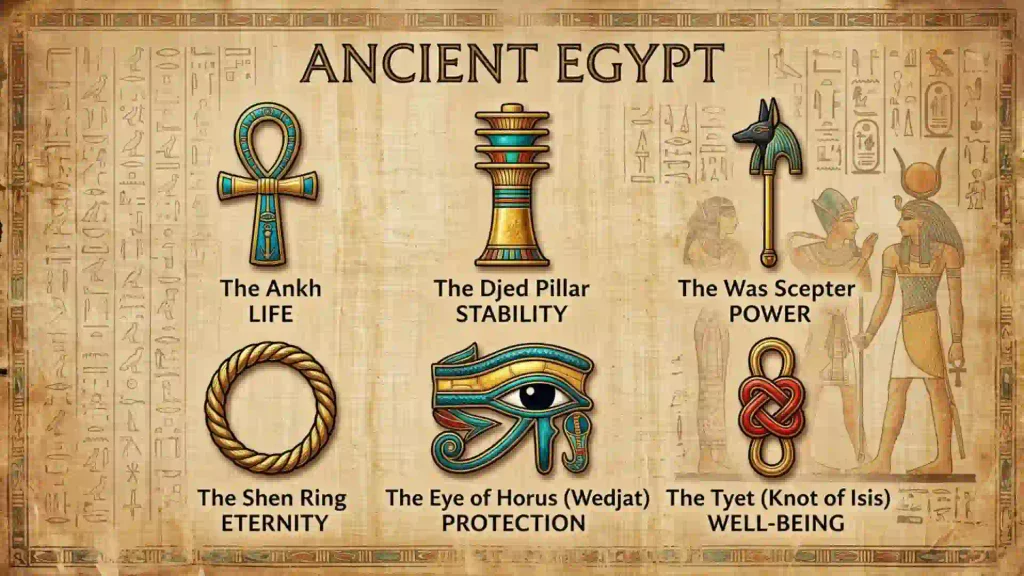
Egyptian art used geometric forms, animals, plants, eyes, and sacred objects to represent protection, authority, death, rebirth, and divine power.
There is no accepted historical evidence that common Egyptian symbols functioned as modern offender-identification logos.
Ancient Greece
Greek art frequently used spirals, meanders, triangles, and repeated borders. These appeared in pottery, buildings, textiles, and religious objects.
Modern claims that every spiral has an abusive meaning ignore thousands of years of artistic history.
Roman Culture
Roman mosaics included hearts, knots, leaves, circles, and geometric patterns. These designs were decorative, religious, political, or connected with daily life.
Their similarity to a modern internet graphic does not create a criminal connection.
Eastern Traditions
Spirals and circular forms appear throughout Hindu, Buddhist, Chinese, Japanese, and other Asian traditions. They may symbolize cycles, balance, energy, continuity, enlightenment, or nature.
Using the term “pedo symbol” for these traditional designs without evidence can damage cultural understanding and spread harmful misinformation.
Indigenous Traditions
Many Indigenous cultures use spirals, animals, hands, circles, and geometric designs. Their meanings can relate to ancestry, land, movement, community, weather, identity, or spiritual relationships.
These symbols belong to specific living cultures and should not be redefined through internet rumors.
Modern Western Internet Culture
In modern online spaces, meaning can change rapidly. A harmless image may be adopted by a group, used as a joke, falsely labeled by conspiracy communities, or deliberately placed to provoke reactions.
This is why responsible interpretation requires evidence, context, and behavior.
Similar Symbols and Common Misconceptions
| Symbol or Sign | Common Innocent Meaning | Possible Concern | What It Proves |
| Spiral | Nature, growth, art, mathematics, spirituality | May resemble a historically alleged logo | Nothing by itself |
| Triangle | Direction, strength, geometry, warning, design | Certain stylized versions were discussed in old intelligence material | Nothing by itself |
| Heart | Love, family, friendship, charity | Some nested-heart versions were alleged codes | Nothing by itself |
| Butterfly | Change, beauty, freedom, childhood | Sometimes misidentified in online posts | Nothing by itself |
| Numbers | Age, dates, sports, usernames | May have coded meaning in a specific conversation | Meaning depends on context |
| Emojis | Humor, emotion, everyday communication | May be used as grooming shorthand | Requires conversation evidence |
A common misconception is that seeing one symbol confirms that someone is a child abuser. It does not.
Another mistake is assuming that a symbol chart circulating on social media is current law-enforcement guidance. Images are frequently reposted without their original date, source, limitations, or investigative context.
Pedo Symbols in Online Communities and Folklore
Traditional folklore is built from stories passed through communities. Internet culture creates a similar process, but at much greater speed.
A rumor may begin with a real document, then lose its context as it is reposted. Users add new symbols, connect unrelated brands, and claim that ordinary designs reveal a secret global network.
This creates modern digital folklore.
Some claims may begin with genuine concerns about criminal communication. Others become conspiracy theories that falsely target individuals, businesses, charities, artists, or minority communities.
Responsible child protection requires separating evidence from viral speculation.
Pedo Symbols in Art, Media, and Pop Culture
Movies and television often use secret symbols to build suspense. A detective notices a repeated mark, follows the clue, and uncovers a hidden group.
This storytelling pattern is emotionally powerful because humans naturally search for hidden meaning. However, real investigations are rarely solved by a single symbol.
In journalism, documentaries, and crime reporting, alleged symbols may appear as part of discussions about offender networks. Ethical reporting should explain that a symbol is only one possible intelligence indicator.
In tattoo culture, geometric shapes, hearts, butterflies, spirals, and triangles are extremely common. Accusing someone based on a tattoo can cause serious harm.
Fashion and branding also rely on simple forms because they are easy to remember. Similarity to an alleged code may be accidental.
Do Pedo Symbols Have a Spiritual or Dream Meaning?
Pedo symbols do not have an established spiritual meaning.
A person may dream about a frightening symbol after reading disturbing material, watching a documentary, or worrying about a child’s safety. In that case, the dream may reflect fear, vigilance, helplessness, or the desire to protect someone.
Dreams are not evidence that a specific person is dangerous. They are personal psychological experiences shaped by memory and emotion.
If a symbol creates anxiety, focus on observable facts:
- Has an adult requested secrecy from a child?
- Has someone sent sexual messages?
- Is an adult attempting private contact?
- Has a child received gifts, threats, or requests for images?
- Is someone saving or sharing illegal content?
- Has a child’s behavior changed suddenly?
These questions are more useful than symbolic interpretation.
Positive and Negative Meanings
| Positive or Innocent Meaning | Negative or Concerning Meaning |
| Art, decoration, affection, nature, identity | Possible coded group affiliation |
| Cultural or religious tradition | Attempt to normalize abusive interests |
| Personal creativity | Concealed communication |
| Brand or organization logo | Recruitment into a harmful community |
| Harmless tattoo or jewelry | Deliberate signaling within a known offender context |
The same visual shape can carry very different meanings depending on who uses it, where it appears, what is being discussed, and what behavior surrounds it.
Why Humans Are Attracted to Hidden Symbols
The human brain is designed to find patterns. This ability helps us recognize faces, understand language, and notice danger.
However, pattern recognition can also produce false connections. Once someone believes a certain shape is suspicious, they may begin seeing it everywhere.
This is called confirmation bias. A person notices information that supports a belief while overlooking ordinary explanations.
Fear strengthens this effect. Because child abuse is emotionally horrifying, people naturally want a clear warning sign that makes danger easy to identify. Unfortunately, genuine offenders do not always wear visible signs.
Real prevention depends on communication, education, boundaries, reporting systems, and attention to behavior.
Modern Uses and Real Warning Signs
Modern offenders may use coded communication, but parents and caregivers should focus on grooming patterns.
Online enticement involves communicating with someone believed to be a child with the intent to commit a sexual offense, obtain sexual content, or arrange contact. It may include sextortion, sexual conversations, requests for images, or attempts to move a child into a private platform.
Warning signs can include:
- Asking a child to keep conversations secret
- Giving unexplained gifts, game credits, or money
- Requesting private photos
- Sending sexual material
- Pretending to be younger
- Isolating a child from trusted adults
- Threatening to publish an image
- Moving conversations to encrypted or disappearing-message apps
- Repeatedly discussing a child’s body or sexual experience
- Pressuring a child to meet offline
NCMEC operates the CyberTipline as a centralized reporting system in the United States for suspected online child sexual exploitation, including online enticement, child sexual abuse material, trafficking, and unsolicited sexual content sent to minors.
If illegal imagery is discovered, do not download, forward, repost, or share it to warn others. The FBI advises reporting it rather than circulating it, because repeated viewing and distribution continue the victimization of the child.
Interesting Facts About Pedo Symbols
- The most widely shared symbol chart is linked to intelligence from 2007, so it should not be treated as a complete modern guide.
- Simple shapes have a high risk of false identification because they appear in countless cultures and designs.
- Criminal communities may change codes after public exposure.
- Investigators generally evaluate symbols alongside messages, files, contacts, account history, financial activity, and known behavior.
- Child-protection experts increasingly prefer the term “child sexual abuse material” rather than “child pornography” because children cannot consent to their exploitation.
- Online grooming may involve affection, praise, gifts, threats, impersonation, or financial pressure rather than recognizable logos.
- A person can pose a risk without displaying any known symbol.
- A person using a similar-looking symbol may be completely innocent.
- Public accusations can interfere with investigations and expose innocent people to harassment.
- Reporting credible evidence is more effective than creating viral accusation posts.
Frequently Asked Questions
What do pedo symbols look like?
Historic reports described stylized spirals, triangles, hearts, and combined geometric shapes. However, common versions of these designs are widely used for innocent purposes and cannot identify an offender by themselves.
Are pedo symbols officially recognized by law enforcement?
A widely circulated 2007 intelligence bulletin attributed certain designs to offender communities, but it should not be treated as a current universal identification system.
Does wearing a spiral or triangle mean someone is a pedophile?
No. Spirals and triangles appear in art, religion, mathematics, fashion, nature, architecture, tattoos, and company logos. Context and behavior matter.
What should I do if I see a suspicious symbol online?
Do not publicly accuse anyone based only on the symbol. Save non-illegal contextual details, such as usernames, messages, profile links, and dates, then report credible concerns to the platform or relevant authority.
What should I do if someone sends sexual content to a child?
End contact, preserve relevant account and message information, avoid redistributing illegal material, report the account to the platform, and contact the appropriate child-protection or law-enforcement service.
What are stronger warning signs than symbols?
Secret communication, sexual messages, requests for images, threats, gifts, impersonation, isolation, age deception, and attempts to arrange private meetings are much stronger warning signs.
Conclusion
Pedo symbols are best understood as possible historical or contextual clues, not proof of abuse.
Ordinary shapes can carry innocent, cultural, artistic, or personal meanings.
The strongest protection comes from recognizing grooming behavior, listening to children, preserving credible evidence, and reporting concerns responsibly.
Child safety grows when careful awareness replaces rumor, panic, and public accusation.
 Sarah Thompson
 Michael Rivera